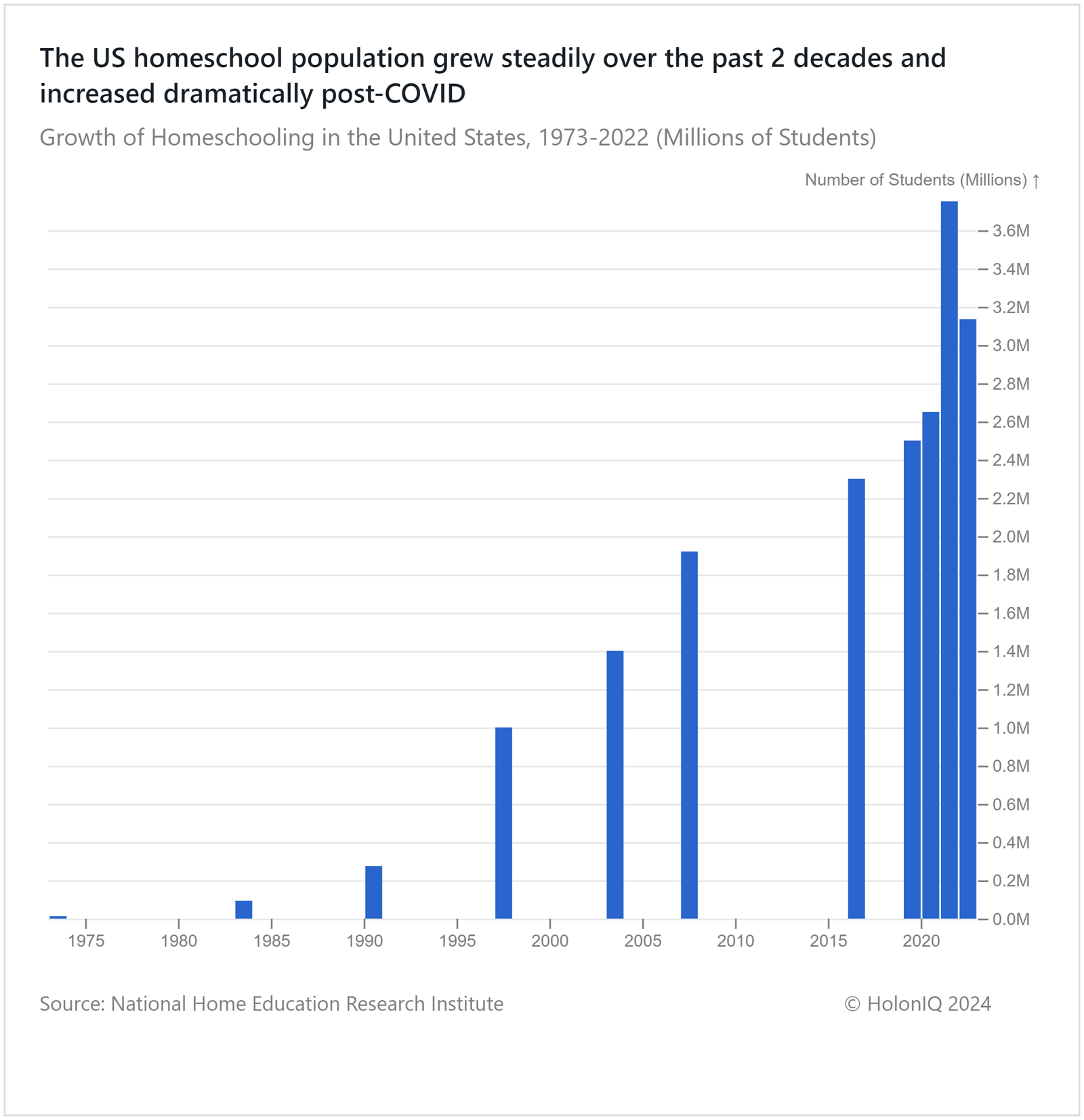
Homeschooling is becoming mainstream in many countries including the USA, Canada, UK, Australia and New Zealand, where demand is increasing and well-established legal frameworks are in place. In the USA about 3 million students (6% of total) were homeschooled in 2021-2022, an increase of 25% from 2019-2022 and a step increase from the trend growth rate of 2-8% per year since the 1990’s.
Why homeschool?
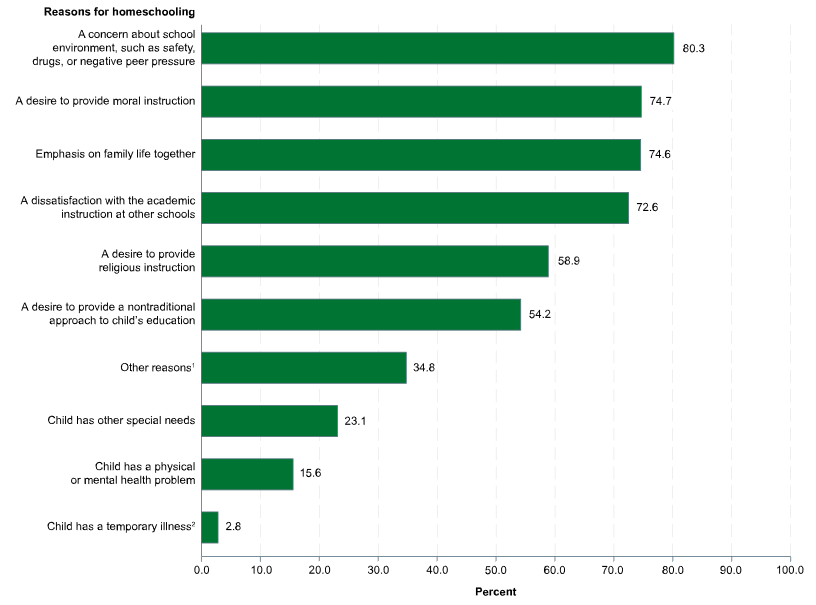
Research from the National Center for Education Statistics from 2022 shows that four of the five most popular reasons why parents decide to homeschool their children are social-cultural rather than academic:
- concerns about the school environment (safety, drugs, peer pressure)
- wanting to provide moral instruction
- emphasis on a family life together
- wanting to provide religious instruction.
In the meantime, growth in the market for education technology solutions, in part further stimulated by the pandemic, has ensured that good quality learning resources are available at scale in the home environment, thereby lowering this particular former barrier to homeschooling.
“Old school”, “new school”, “not school”?
The trend towards homeschooling reminded me of the scenario planning we had done at Sanoma about the future of education some 15 years ago, especially considering three main scenarios i) “old school” ii) “new school” and iii) “not school”. I had personally not expected the “not school” model to break through due to the high value-add of the professional teacher and the high economic and organisational implications for the family (typically requiring one parent to stay at home). I had expected technology to underpin the further development of all three scenarios but had not foreseen the pandemic nor the increased polarisation of society at the time, which are surely factors that have made some impact on the growth of homeschooling.
I wonder what the trend to homeschooling might mean for homeschooled children and families? What impact will it have on public education systems and society as a whole?
Should we take the child out of the school, or bring the parent into the pedagogy?
School is in some ways already a limited intervention in the learning and development of a child, after all more than 80% of their time is spent outside of school. To what extent might approaches that encourage greater parental engagement in education help to support the learning of the child and help to remedy some of the social and cultural concerns that some parents have about schools?
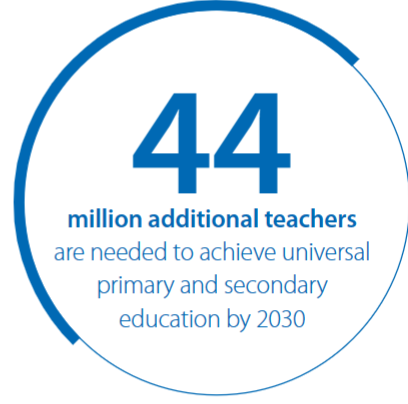
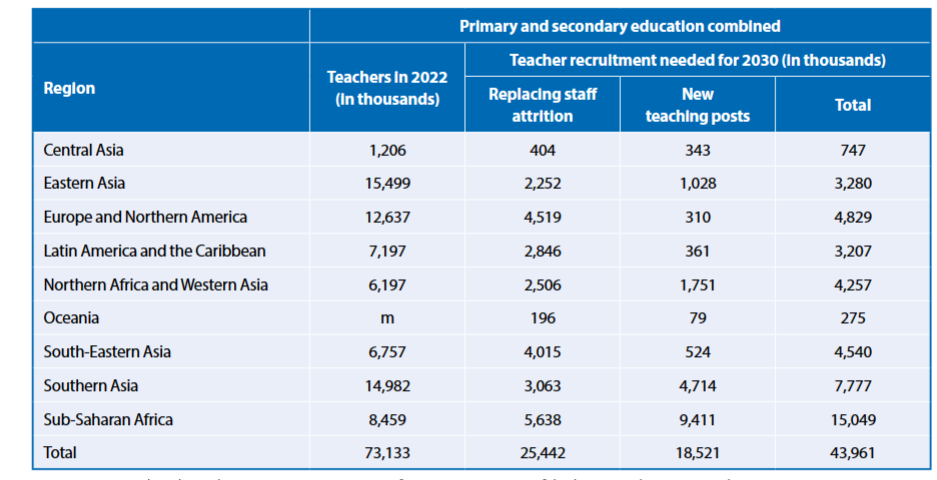
It seems likely that more hybrid models might emerge, combining the professional and economic benefits of the school with the social and cultural engagement of the family. Typically, an encouraging home environment, a high level of personal attention and more personalisation, tend to support learning. Have we “outsourced” too much to schools? Especially in a world of increasing teacher shortages, might greater involvement of parents be part of the solution?
 John Martin