Category Archives: Innovation

Enabling commerce through open innovation: the #CommerceAccelerator

New launch

This week we launched the #CommerceAccelerator in Helsinki and Amsterdam. This is the third accelerator so far in the series. We began in the Autumn last year with the #MobileAccelerator and continued in the Spring with the #ContentAccelerator.

Intrapreneur Nikky Hofland at the Helsinki launch

Intrapreneur Nikky Hofland at the Helsinki launch

I notice the Finnish contingent of the team in particular has become increasingly creative in finding launch venues. The first round was in the auditorium at Sanoma House. The second round was at Adams and was the first time I have given a corporate presentation under a disco ball. This round was at cultural arena “Gloria” where Finnish Eurovision Song Contest 2006 winner “Lordi” has recorded some music video – I will spare you the footage of that here. We are considering video and vlogging as the focus for the fourth accelerator – I am already wondering with some trepidation where we will meet for that kick-off.

New business and new skills

We have two big goals for our Innovation Accelerators: i) to build new business lines and ii) to learn new skills.  As a direct result of the first two accelerators we have established six new start-ups and by the end of this accelerator almost 450 of our most talented employees will have learned new skills about Lean Innovation.  Learning by doing.

This accelerator has two new aspects.

Enabling commerce

Firstly, we are focusing on developing concepts that can “enable commerce” – “content” is not necessarily central to our thinking in this accelerator.  How can we use our ability to reach, inspire and engage consumers to enable commerce?

Open innovation

Secondly, we have opened up the process.  We are joined on this journey by approximately 70 students from 6 European universities, along with a handful of participants from a leading e-commerce player and leading telecoms operator.  We are looking to the outside world and want to bring in new talent and ideas.

Positive spirit

I felt excited at the kick-offs– the same way I used to feel when starting a new academic year – a time of new beginnings and new opportunities.  Program leaders Lassi Kurkijärvi (@lassi, Director of Innovation & Development at Sanoma) and Joris van Heukelom (@jorisheuk, Partner at Makerstreet) were in good form and inspiring as always.  What I especially liked at both kick-offs was the positive and optimistic spirit of the participants. I can sense the ambition of my colleagues, an eagerness to learn and to develop something new.  It felt good.

Good luck!

So, after the kick-offs we will be moving on to the ideation and learning experience and then taking the best 5 ideas to bootcamp to build functional prototypes. I am extremely curious to see what this accelerator brings us.  Good luck to all participants and respect to you for going for it!

MOOC meets Big Data in Education

Big Data in Education

Big Data in Education

Two of the hottest developments in education at the moment are the MOOCs (Massively Open Online Courses) and Big Data.

Peak of Inflated Expectations in the Hype Cycle

Peak of Inflated Expectations in the Hype Cycle

Some have argued that both are currently at the “Peak of Inflated Expectations” in the Hype Cycle. Expectations are indeed high, maybe rightly so. Imagine my pleasure this weekend when I discovered the course about “Big Data in Education” at the MOOC Coursera by Ryan Baker from Columbia University. I registered immediately. What a great way to kill two birds with one stone!  I can experience one of the leading MOOCs first hand and learn more about big data in education at the same time.

MOOCs

MOOCs emerged from the Open Educational Resources movement in the second half of the noughties. Leading players include edX, Coursera and Udacity, which are all well-funded and have excellent connections to world-class institutions. Two things in particular excite me about them: opening up access and improving quality in education.

Access to world-class education has historically been restricted to the happy few. However, anyone (with access to the internet) can take a course on a MOOC, unrestricted by price, the requirement to commit to several years of full time study, geography, or capped class-sizes. As Time put it. ”MOOCs open the door to the Ivy League for the Masses.”  Imagine the possibilities that his will give to improve the life chances of individuals across the globe.  And also the benefits to society as a whole of broad access to exceptionally good education.

The quality of education can also be boosted by the success of the MOOCs. Competition should play its part in raising teaching standards and spurring innovation.  Everyone should get access to the most talented professors with the highest quality content and best teaching methods, leading to a focus on excellent teaching and the weeding out of mediocrity. And the ability to mine the data created through participation in the MOOCs should bring new insights in teaching and learning that can drive further improvements in quality and efficiency.

Big Data

In my opinion, insights derived from big data will eventually transform education through personalisation.  By this I mean the tailoring of pedagogy, curriculum and learning support to the needs and aspirations of the individual.  I believe this will help learners to achieve better outcomes, in more efficient ways. And about subjects that both play to their strengths and support the development of their core life skills. Big data will be a core ingredient in that transformation.

Sanoma Learning (I am employed by Sanoma Group) is predominantly active in K-12 markets in Europe at this time. The amount of data available in K-12 education today is limited, and the insights offered rather poor. One reason for this is the still low availability of technology in schools (typically of the order of one device per 5-10 pupils) and the lack of any platform with real scale in collecting, analysing and providing insights from data. This will probably improve significantly in the coming years as schools take further strides in adopting technology.

Three sorts of data particularly interest me in this coming transformation journey: inferred student data, inferred content data and system-wide data. Put another way: how do students, content and education systems perform, why is that so, and what can we do to improve that performance?  I believe the next generation of Learning will be engineered from the insights derived from the interplay between these three datasets.  The promise is significant, although given the sometimes slow pace of change in education, I think it will be a long journey.

Passion for learning

I consider myself lucky to have been born with a passion for learning. I think technology will enable teachers (who are central to achieving success in learning) to transform education for the better. I’m excited about participating in this program on Big Data in Education at Coursera. Typically about 90% those who start a course on a MOOC drop out along the way. I hope I won’t be one of them. I’m curious to try it. Anyone care to join me?

Making innovation happen: how to organize for disruptive growth?

video-screenshot

One of our new intrapreneurs is building a marketplace for fashionista’s.

Following excellent performances at the bootcamp of the #contentaccelerator in June, two of our top talents have taken new roles as intrapreneurs at Sanoma this week. Making it happen!  This innovative burst immediately caused temperatures to sky-rocket to a sweltering 33°C at the office. Respect to them for showing the courage of their convictions and going for it. And thanks especially to the local organisation for supporting a speedy transition.

Creativity and customer-focus sit deep in Sanoma’s character.  However, we have deliberately organized these and other new ventures separately from the core business, yet cooperative with it.  We wanted to establish a model which gave the accelerators and new ventures the liberty to exploit their disruptive opportunity unrestricted by the core, yet in a way which supported both the new venture and the core. In my view, the process of the accelerator (ideation and competence development for hundreds of people from the core) and the sharing of various capabilities in the operation (mainly marketing, technology and expertise) achieve that.

Dual Transformation

I recently came across an excellent article by Gilbert, Eyring & Foster, in the Harvard Business Review called Two Routes to Resilience which clearly articulates the case for developing disruptive and core businesses separately yet under one umbrella. How to organize for new growth?

The authors make the case that when your industry is undergoing disruptive change, companies should respond by making two distinct transformations in parallel. Transformation A focuses on repositioning the core business to its altered circumstances. Transformation B should create disruptive innovations that will eventually bring new growth. And the structure should work for both through a “capabilities exchange” that allow the sharing of select resources for the benefit of both parties, without changing the mission of either. Each transformation needs a leader fully convinced of the future success of their mission. Both pillars of the transformation have to act in the market as if the future of the company depended on it alone.

“Capabilities Exchange”

The “capabilities exchange” should in principle bring competitive advantage to each pillar in the transformation. In the case of our accelerators and new ventures, some important shared resources come to mind. The Sanoma brand helps us to build connections to consumers, advertisers and schools.  Easy access to media and traffic help support existing brands and build new brands. Expertise in content, advertising, learning and other capabilities required in managing a company, such as finance and HR can support each transformation. The re-use of content and technology can reduce unit costs and bring speed to innovation. An international network can bring scale. Access to a skilled talent pool and methods of developing new skills on innovation are required in both tracks. And a dual transformation can support the financing of the respective pillars. That’s quite an exchange when you come to think of it!

Boosting Transformation B

For the sake of good order, Sanoma has many growing, successful and disruptive business lines and I would not for one moment say that the ventures born from the accelerators are the only seeds of the next generation of our products and services and everything else is legacy. That’s clearly not the case. The new ventures are just one of the pockets of innovation and digital disruption in the company. And we have many other business lines which would not count as digital disruptions but are far from legacy status.

Yet the argumentation in the HBR article is good and sharp. I believe it’s a credible approach and our actions and investments in new ventures are for their part consistent with it. Bringing additional relative scale to what the HBR article refers to as transformation B (the new growth businesses) would help to support the dual transformation. Increasing the pipeline of new ventures would be one way to achieve that.

I’m interested to know your opinion about this.  Feel free to leave a comment or send me an email.

Sexiest Job at Sanoma: Data Scientist

During a recent webinar I gave about our strategy, Lassi Kurkijärvi (Director of Innovation & Development) was voted to have the sexiest job at Sanoma. This victory was by a comfortable margin, getting about twice as many votes as the second placed “my own job”. I agree that our Mobile Superhero has got a hot job. However, in my view, the sexiest jobs at Sanoma in the next few years will be those of the Data Scientists.

I realize not everybody will share my view and I am arguably biased due to my background (a lot of Bioinformatics in my PhD). Yet I believe there’s a big opportunity for us to be even more relevant to our customers (and make more money) by providing them more accurately with the right content and functionality at the right time, on the right medium and device and for the right price. (By customers, I mean consumers of media, advertisers, learners and teachers).

To do this, we have to make a quantum leap forward in our insights and analytics capabilities. This week I caught up with our Queen of the Quants – Ulla Kruhse-Lehtonen (VP, Customer Insight and Analytics) about insights and big data at Sanoma. She’s a brilliant addition to my team, fun to work with, fast, determined and has the brain the size of a planet. She’s building our new team and co-developing the cases with the business owners.

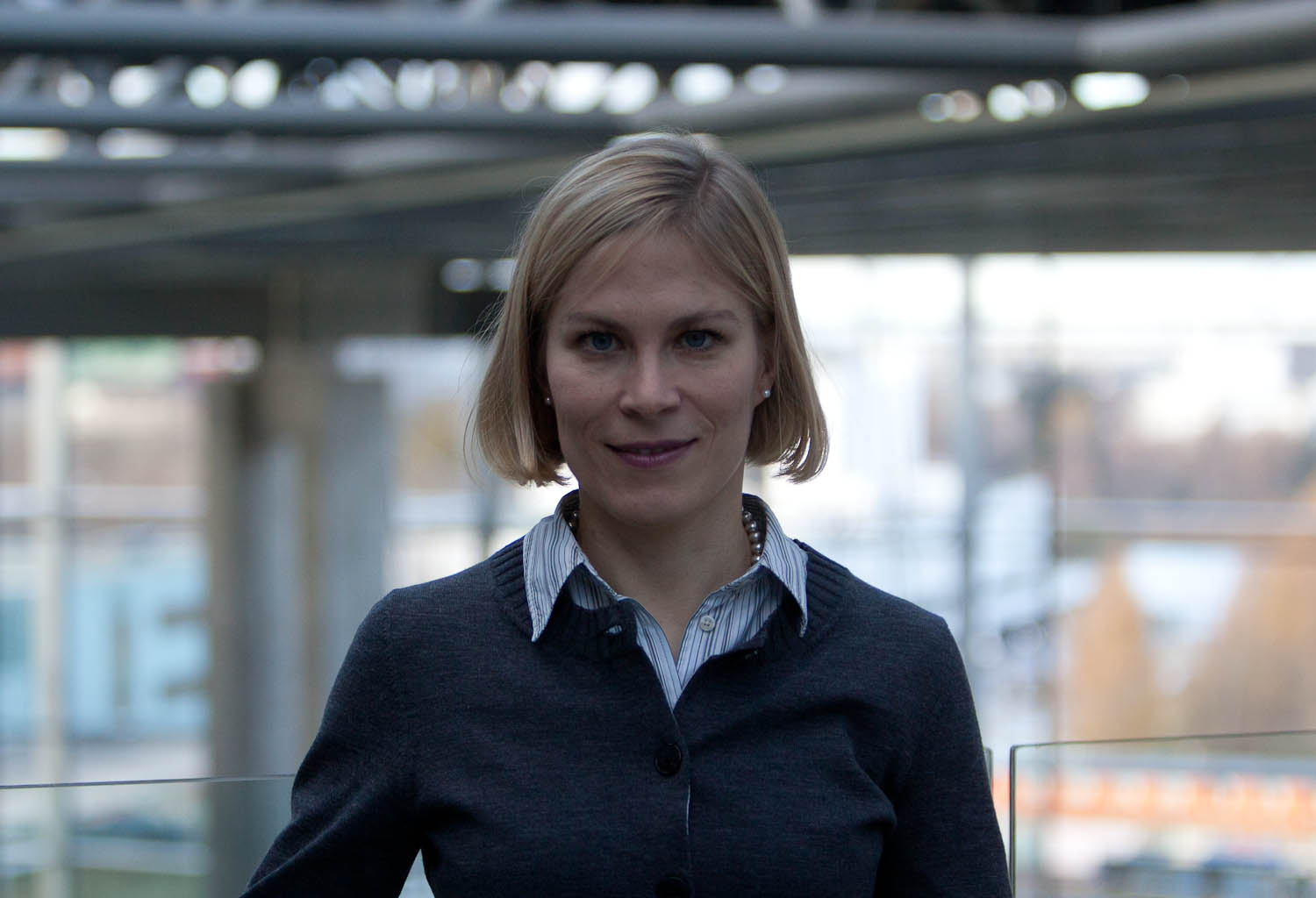
Ulla Kruhse-Lehtonen, VP Customer Insight & Analytics and Queen of the Quants at Sanoma

Ulla Kruhse-Lehtonen, VP Customer Insight & Analytics and Queen of the Quants at Sanoma

Ulla, why did you decide to join Sanoma?

I was immediately intrigued when I heard about the opportunity. Having always been an avid reader and a magazine buff, I was fascinated by the chance to work for a company whose business is storytelling. At Sanoma, I can combine my love for stories with data science, which is my other passion.

I’m excited by Sanoma’s wealth of consumer data and the business opportunities it provides. The media industry is currently undergoing a fundamental transformation from print and broadcasting to digital. Consumer analytics is at the centre of the transformation. Modern data mining, visualization, and machine-learning techniques provide us with strategic and operational insights as well as targeting and personalization capabilities for our current and future products and businesses. Data science helps us create unique, relevant and exciting experiences for our customers.

How is Sanoma rolling out the new data science capabilities?

The new capabilities are used to optimize consumer sales, target digital advertising, personalize services, and create strategic consumer metrics and other data-driven insights. The data science team develops the capabilities in close collaboration with the respective business and IT functions. Roll-out happens in stages. Only after verifying the performance of the new analytics capability through a pilot, will it be rolled out further. This helps us ensure the success of the new capability before making large-scale investments into technology and training people. 

We also aim at creating a culture of sharing and communicating of successes and failures in order to share best practices and learnings across units.

What is the most critical factor for making a Big Data initiative successful?

The most critical factor is to closely align data, insights and analytics activities with the company’s business strategy. It’s easy for an analytics team to keep itself busy with interesting and challenging, yet irrelevant matters. Once Data Scientists thoroughly understand the business goals and logic, they will be able to translate them into data and analytics questions and come up with unexpected, sometimes unintuitive outcomes, which may have tremendous business opportunities.

At Sanoma, the executive-level support for analytics is extremely strong, which is one of the most pivotal matters for a successful analytics transformation of a company.

What are typical challenges in Big Data initiatives?

The technical effort related to the gathering, management and utilization of data should not be underestimated. The more silo’s there are, the longer it takes to gather and utilize data across the organization. It takes successful analytics companies several years to get it right. At Sanoma, our approach is to prioritize consumer and advertiser use cases and build up the technical enablers in a clear order. It is important to constantly deliver short-term business wins while building up the long-term infrastructure to support the company’s vision.

However, in the end, technology is money and hard work, but analytics is about people’s mindset and the willingness to do things differently. Unless analytics capabilities are taken into use and the results are acted upon, there is little point to build them in the first place.

You’re building a team of Data Scientists and other data experts. How’s it going?

First group of new recruits.  In the lift at Sanoma House.

First group of new recruits. In the lift at Sanoma House.

The recruitments are going quite well. We have signed on thirteen people in Helsinki and Amsterdam. Finding the right talent is critical for the successful execution of the analytics strategy. We need skilled people to create value out of data. In addition to Data Scientists, we have established the position of the Consumer Privacy Officer and the Head of Data Asset. We have also hired Big Data Developers and Database Administrators. The openings are no longer visible on our website as we are working through the applications, but if readers of this blog are interested in hearing more, feel free to drop me an email (ulla.kruhse-lehtonen@sanoma.com).

In September you will have been with Sanoma for a year. Still excited about the job?

Absolutely! It’s great to work with talented and skilled people and to develop the data science competency here. Data, analytics, and privacy are at the core of Sanoma’s transformation and reflect the consumers’ changing behavior. Data science is cool!

Looking forward >>

I’m with Ulla on that!  I love the creativity of a media and learning company. Putting insights to work is the next generation. This is what makes these jobs so sexy.

Looking further than Sanoma – the opportunity for societies to use insights derived from big data to improve quality of life (for example through better healthcare and education) and economic performance (for example through better allocation and targeting of resources and higher productivity) is substantial; the McKinsey Global Institute (MGI) estimates a potential for $ 300 bn of value creation per year in US healthcare alone.

USA is educating data scientists for the future

USA is educating data scientists for the future

However, the rate limiting factor in capturing this potential is in my view the availability of skilled Data Scientists. MGI estimates a shortage of 190,000 skilled data scientists and 1.5 m managers with sufficient analytics know-how in the USA by 2018. Probably the European challenge is of a similar magnitude.  In the USA we see Seattle (see e.g. the eScience Institute at the University of Washington and PhD program in Big Data) and New York (see e.g. the Institute for Data Sciences and Engineering at Columbia and Center for Data Science at NYU) contending with Silicon Valley to become the next hotbed for educating the data scientists of the future. 

We need more initiatives like this in Europe too. With a substantial opportunity gap on the one hand and European unemployment now estimated to be more than 26 m (with youth unemployment over 50% in some countries) data science is an area that should be prioritized for education and training. 

My advice to anyone considering education or training in data science as one of their options: go for it!  Not only will it be good for your chances of getting a job, it might even be a sexy one at a cool company like Sanoma!

Sanoma’s #contentaccelerator bootcamp: making it happen!

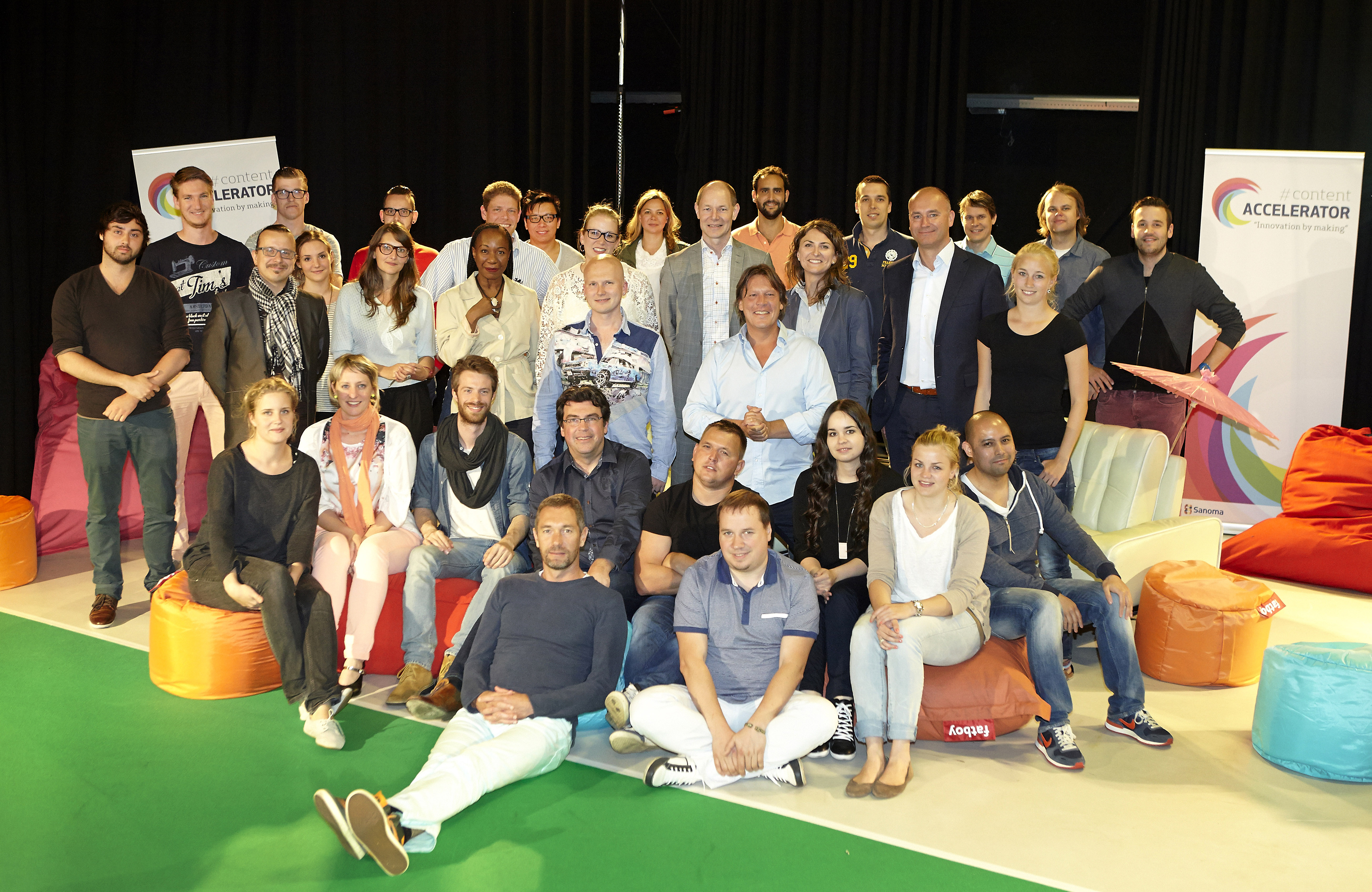
Participants at bootcamp

Participants at bootcamp

Last week we ran the bootcamp for the #contentaccelerator. After seven weeks of ideation and training, of building and testing minimum viable products, we sent the five winners to bootcamp to build prototypes of their concepts – to take the next step in making it happen.

On a personal note – these weeks are amongst the absolute highlights of my year. We take some of the most talented people in the organization and give them the opportunity and tools to turn their idea into a prototype. I believe in innovation by doing. Not only is this the best way to move fast and develop close to the customer. It’s also the best way of learning new skills.

Focus on delivery

The first impression of a visitor to the bootcamp is that we put the participants in a cool space and give them four days of playtime to see what they make of it. However, the fact of the matter is that bootcamp is tough and demanding. Deliverables and discipline are at the core of the way of working. Preparations for the bootcamp have been stringent. We have selected the best ideas and leaders by a competitive and transparent process. Teams with complementary skills are formed including a visual designer and interaction designer best suited to the team and assignment. Each day starts by establishing clear deliverables for that day, and we are very strict in maintaining discipline to ensure that the results can be presented at end of the day. It’s structured, focused and intense.

Five concepts turned into prototypes

The outcome of the week is that we have built five great prototypes that have been tested with customers. They include i) a content marketplace (“if content is King, come and join the other Royals”); ii) a fashionista community (“you spot the look, we spot the shop”); iii) a service to hear the news in a new way (“have you heard the news”?); iv) an educational talent discovery app (“discover the talents of your children”) and v) a learning solution that mashes up the real and virtual worlds with educational quests. It’s amazing how far the teams have been able to bring these concepts in just four days. I’m tempted to link to the promotional videos here, but it’s a bit premature to make external announcements at this stage.

Proud of the teams

I’m really proud of how the teams have performed. Not only what they have delivered as prototypes. But also how they went about it; the spirit, motivation, energy and passion – the “can-do” approach has been truly inspiring. Congratulations to the team leaders and respect for the blood, sweat and tears that you have put into the last few months. Thanks to the support teams from Sanoma and Makerstreet for helping to make it happen. And once again Lassi Kurkijärvi (@lassi, Director at Sanoma) and Joris van Heukelom (@jorisheuk, Partner at Makerstreet) have been brilliant and inspiring in leading this program from beginning to end.

Fostering an innovative culture

As we continue on this journey of discovery to the roles that Sanoma will play in the futures of media and learning, it’s of the essence that we foster our creative and innovative culture. I believe the accelerators contribute to this in several ways. Directly, we are training hundreds of people on lean development methods and building new digital business lines. Indirectly, the accelerators generate discussion about innovation in the company, with supporters and sometimes detractors too. And the discussion often leads to new initiative – to more attention for innovation – what to do, what not to do, and how?

High level support is critical to the success of any program like this. I especially liked the visits of Harri-Pekka Kaukonen (CEO) and Jackie Cuthbert (CHRO) to the bootcamp. Both are strong supporters of the program and it’s great that they are visible and transparent in that. I loved the way the project leaders engaged with them, and the different styles they used in pitching their ideas and themselves – not only using facts, figures and beautiful design, but also appealing to their emotions (“Harri-Pekka, imagine your daughters using this”; “Jackie, this will help you find more great shoes”). Definitely some natural sales talent in the room!

The accelerators have proven the case that women rule at Sanoma. All five of the first round of new ventures are led by women and four of the five teams at this particular bootcamp were led by women too. Probably the sample size is too small to draw any conclusions about this phenomenon of the superior performance of women in the accelerators. Our experience on the whole is that the participants who came with the best ideas, put the most effort into developing them and sold them most effectively, came the furthest. Is there something about the accelerators and intrapreneurship that might give Sanoma a competitive advantage by creating an innovation and venturing space that particularly appeals to women, or at least supports a level playing field for talent?

Next steps

Based on the outcomes of the bootcamp we are now working on the next steps. In some cases, we will create new ventures. In others, we will likely sponsor next steps in the local business. There is one case where we believe we might need to work with an external partner to win in the market. We are currently engaging with the various stakeholders and expect to have made agreements within two weeks.

The clock never stops ticking of course. On Monday we will launch the recruitment drive for the #commerceaccelerator that we will run in the Autumn of this year, in cooperation with a number of leading European universities. Looking forward >>.

SanomaVentures helps develop young enterprises in digital information, entertainment and education

sanoma_ventures_header

Digital technology is driving fundamental change in media and learning markets.  Sanoma is responding to this by a) transforming core brands to play multichannel and b) building new digital brands.  I’ve recently posted about the accelerators at Sanoma and the role they play in the (early-stage) innovation portfolio.  In addition, the company has established SanomaVentures (www.sanomaventures.com) to support early-stage (external) businesses looking for growth funding following initial market success.

Herman Kienhuis, Investment Director at SanomaVentures

Herman Kienhuis, Investment Director

I’m enthusiastic about SanomaVentures.  I think it brings Sanoma a lot on this journey of discovery to the digital future. Clearly it will not be an answer to all of the opportunities and challenges we face, but it is an important piece in the overall puzzle.

This week I caught up with Herman Kienhuis (@kienhuis), Investment Director of SanomaVentures about their approach.  I believe in Herman and his team.  I think he’s smart and professional.  He’s proactive and takes initiative – he’s out there in the network.  He’s commercial and has sharp analytical skills, and thinks creatively about negotiating attractive deals for both parties.  And I like him – he’s a decent chap.  I respect his support for microfinancing organization Kiva.org and he’s very sporting with his annual Movember action.  Here’s what he had to tell.

Why was SanomaVentures launched?

We had five main reasons to go for this.  It gives us access to new sources of innovation and entrepreneurial talent.  It creates new avenues for growth.  It’s a vehicle that allows us to spread our investments across multiple new ventures, also making use of media as part of the investment currency.  And we felt the time is right, partly because of the fundamental shift in consumer, advertiser and learning behaviour and partly because of the rise of the start-up and venturing communities in our markets.

What’s your investment scope?

We focus on areas where the strategic fit with Sanoma is the strong – specifically, digital consumer services; online video and connected TV; advertising, marketing services and e-commerce; mobile & tablet apps; e-learning & personal development.

What are your investment criteria?

We invest in enterprises that are entering their first growth phase, where cooperation with Sanoma can add value through our media, network and expertise.  Within that scope we make our assessment based on five criteria namely a high quality team, revenue & profit potential, sustainable competitive advantage, international scalability and strategic fit with Sanoma.

What does Sanoma have to offer?

Typically, we invest € 100 k – € 500 k as a combination of working capital and media, with the mix depending on the needs of the enterprise.  Sometimes cash is king.  In other situations the reach and exposure of media offers a significant value to boosting the brand, engagement and conversion.  We have found both cash and media to be useful and valuable currencies.  We also bring online expertise; Sanoma has highly successful digital operations, including NU.nl and Kieskeurig.nl in The Netherlands for example.  And access to our networks – not only advertisers and consumers, but also to other expertise.

How does the process work?

We spend a lot of time networking and orienting ourselves in the start-up community. When we identify opportunities where the fit is good we make an assessment of the venture against the investment criteria mentioned earlier.  If the opportunity is attractive we negotiate terms in preparation for decision-making by both parties.  If the investment case gets the green light, we then proceed to due diligence, contracting and closing.  The entire process typically takes about 3-4 months from first contact to closing.  We then move forward with the funding and access to media, and supporting with any agreed expertise.

How is SanomaVentures organized?

We launched in The Netherlands, with two Investment Directors (Antoine Hendrikx and me), an Investment Associate (Sjoerd Huitema) and access to two Legal Directors (Marije van Akkerveeken and John Vogel).  In the meantime we have also extended the concept to Finland with Investment Director Ville Varis.

Have you closed many deals?

To date we’ve made investments in nine ventures: Vault79, a designer fashion auction; Fashionchick*, a fashion storefront; VirtuaGym, an online fitness platform; Peerby, a local P2P sharing platform; Scoupy, a mobile couponing app; Truly Yours, a beauty products discovery subscription; brandkids, a kids fashion e-commerce platform; Nosto*, e-commerce personalization and recommendation tools; and Fosbury, a passbook campaign management tool.   We see a lot of potential and promise in these investments and are proud to be working with these entrepreneurs.

Good start.  See any challenges ahead?

Sure, opportunities and challenges always go hand-in-hand. A couple of areas come to mind.  In the first year we have been focusing on making the initial investments.  Moving forward we have to combine scouting and deal-making with supporting the growth of the ventures – that’s a more complex task.  Also, we expect that about half of our investments will fail – we will have to make tough calls on which ventures should get additional funding and where to take a loss.  Given the relatively early stage of these ventures those calls might not always be clear-cut.  Maybe the first year was the easiest; now the hard work starts.

How do you look back on the first year?

From a professional perspective, I think we have been successful in establishing the SanomaVentures brand in the market.  We’ve made some very promising investments.  We’ve built a good investment team and established strong links to some great entrepreneurs.  And there’s been a positive buzz about SanomaVentures, both inside and outside the company.  From a personal perspective, it’s been an exciting and demanding period in setting this up, well worth it.

Thanks for the good update Herman.

*The investment in Fashionchick was made prior to the establishment of SanomaVentures and the investment in Nosto was made by the Finnish team

What’s next in the accelerator pipeline at Sanoma?

I have recently shared my views on why Sanoma is sponsoring intrapreneurship and how we deploy innovation accelerators. In this post I would like to explain the next steps we are taking with the accelerator program.

#commerceaccelerator goes to college

One of the three core customer groups served by Sanoma is the advertiser: we provide effective solutions to advertisers based on our reach and consumer insight. We plan to further boost our innovation in this domain by running a #commerceaccelerator in the Autumn this year – an accelerator with a difference.  The core process and principles of earlier accelerators remain in place.  But this time we intend to work with a group of leading European universities; about half of the participants will be students. We believe this will further enrich our idea and talent pools and give opportunities to potential new employees.

#contentaccelerator goes to bootcamp

Feedback at the end of a day at bootcamp.  Thanks for the photo Lassi.

Feedback at the end of a day at bootcamp. Thanks for the photo Lassi.

Earlier this week we selected the five concepts that will go to the #contentaccelerator bootcamp to be built as protoypes. They include i) a service to hear the news in a new way ii) a content marketplace iii) a fashionista community iv) a service to help parents to discover the talents of their children and v) a learning solution that mashes up the real and virtual worlds.  Project leaders will join us for four days in Amsterdam, coming from Poland, Belgium, Finland and The Netherlands to build their prototypes and to make their pitch to establish a new venture.  Congratulations to them on having won a place and good luck to them in Amsterdam!  We are all super-excited about the bootcamp and I expect that we will create one or more new ventures as a result.  I feel energized and upbeat just writing about it.

#mobileaccelerator goes to work

Four “mobile first” concepts have received funding as new ventures following the #mobileaccelerator and we are prototyping a fifth concept too. The teams for these ventures were formed at the beginning of April and given funding and coaching for an initial period of 12 months.  At the end of that period we will decide whether to boost, continue or terminate the venture.  Alongside the intensive coaching, we track the progress against Key Performance Indicators at the end of each quarter.  The first round of these formal reviews takes place at the end of June.  The teams are enthusiastic and are moving forward fast.  I am very curious what we have learned and what the results are – where we stand in our goal of bringing these new ventures to market.

Thanks for joining us

So that’s where we stand today with the innovation accelerators at Sanoma.  I would really like to thank everyone who has joined us on this journey so far and helped to bring it to life, either as a participant or facilitator.  Respect to you for standing up and showing your ambition.

This is the final posting in the series.  Thanks for reading.

How does an innovation accelerator work at Sanoma?

In my previous post I elaborated on why Sanoma is sponsoring intrapreneurship and the role of innovation accelerators in that. This time I write about how an accelerator works at Sanoma. The approach is quite simple. It’s driven by our goals of i) developing new business lines and ii) training new skills that can be used in supporting the transformation of the core.

Talent first

Pitch training at the Amsterdam kickoff. How to explain your idea in a simple and elegant way in just one minute?  Thanks for the photo Lassi.

Pitch training. How to explain your idea in a simple way in just one minute? Thanks for the photo Lassi.

We start by recruiting about 150 talents from across our businesses in Europe, both media and learning. In the first program, nominations were made by management. This was good but left a lot of pent-up demand. In the second program we allowed (self)-nomination, which brought an additional richness of talent.

Participants are invited to a kick-off at one of our main digital hubs: Amsterdam, Helsinki or Budapest. The main purpose of this is to inspire and excite the teams – our program leaders Lassi Kurkijärvi (Director at Sanoma) and Joris van Heukelom (Partner at Makerstreet) are truly excellent at this. People like these events a lot. We even had one aerophobic guest take the bus from Gdansk to Amsterdam to join us this Spring!

Active Learning

Next we run an intensive seven-week ideation and training program. Participants are asked to generate about ten ideas on a certain area. These ideas are further developed through an active learning experience, punctuated by a weekly webinar. They learn new skills on digital in general and “lean” development methods in particular. (I learned a lot too!) Each week there are practical assignments about building, testing and improving the ideas.  The business model canvas and creating and testing minimum viable products are really useful tools on this journey. We don’t ask them to create a powerpoint deck. We ask them to test their ideas with customers. It’s liberating (not only to me).

At the end of this part of the program we select five leaders and ideas that will go to bootcamp to be built as prototypes. Selection is by a combination of the wisdom of the crowd and a Dragon’s Den. Tickets to the bootcamp are highly coveted. People get excited about it. The competitive element brings an extra edge.  If you want to win, you have to compete. Your idea has to be great and you have to sell it and yourself convincingly.

Off to bootcamp

At the four day bootcamp we build working prototypes with the selected teams, together with external designers and developers. The pace is fast. It’s demanding. Customer testing continues.  Energy and enthusiasm fill the room. By the end of the bootcamp we have created five prototypes. The Future Media Team of Sanoma then proposes to CEO Harri-Pekka Kaukonen, which of the concepts to turn into new ventures.

What focus?   #mobileaccelerator?  #contentaccelerator?

The first program, launched in Autumn last year, was the #mobileaccelerator. We see a significant shift of media consumption to mobile devices. In many cases we have been very successful in creating mobile versions of core brands.  For example, about 2/3 of the usage of NU.nl, the strongest media brand in The Netherlands, is now mobile. Mobile revenues at Sanoma are growing fast. We wanted to give an additional boost to “mobilizing Sanoma”.

The second program, launched in March this year and currently running, is the #contentaccelerator. Here we are focusing on new ways of consuming content, on cross-media concepts, and on new learning content.  Next week we will select the five winning concepts that will be sent to the #contentaccelerator bootcamp.

How have the accelerators performed?

Both programs have gone further and better than my best hopes. Regarding the #mobileaccelerator – we measured engagement (critical to learning) and observed that it was both broad and deep –  there was at least one person from Finland, The Netherlands, Learning, Belgium, Russia and Hungary (our biggest operations) on the leaderboard top-20 for both ideas and reputation. The content and facilitation of the program have been excellent.  And we came a long way in a short time – from a blank page to 5 prototypes in 10 weeks and that’s basically unheard of at Sanoma.  I’m really proud of how the teams performed.

Four “mobile first” concepts have received funding as new ventures following the #mobileaccelerator. We seconded on average four people from their regular jobs to each venture for one year to take the concept to market launch.  In this year they get funding and coaching. The #contentaccelerator is still underway, is going very well, but at this stage I can’t share too much about it.  I daresay there will be some tweets about the bootcamp selection on Tuesday evening.

What have we learned from the accelerators so far?

On the positive side: there’s no shortage of ideas or talent or enthusiasm for innovation at Sanoma and we can move fast on innovation when we want to. From a development perspective: we sometimes have a skills gap and tools such as business model canvassing, lean development and testing MVPs, are very effective in helping to bridge the gap – we could make more use of them in the core business too. Also, we need to move faster, be more agile and to innovate closer to the customer. And we could sometimes value learning, experimentation and growth more highly and be more tolerant of risk and uncertainty.  Actually, we see a lot of potential in areas where we should be able to make a positive change.

Following posting: I will share our ideas for next steps with the program.

Why Sanoma is sponsoring intrapreneurship

In the Autumn of 2012 Sanoma launched the first in a series of innovation accelerators – the #mobileaccelerator – to foster intrapreneurship at the company. In the next three posts I would like to share with you why we took this initiative, what we have done so far and what we intend to do next with the accelerator program.

About Sanoma

Sanoma is a front-runner in consumer media and learning in Europe, employing more than 10,000 professionals in some 20 countries, with the purpose of helping people to access, enjoy and understand the world. In 2012, the Group’s net sales totalled € 2.4 bn and the company is listed on the NASDAQ OMX in Helsinki.

Background to the initiative

Media and learning markets are undergoing fundamental transformation, enabled by digital.  Consumers are driving change; always connected, consumers increasingly expect content to play at the time and on the device and with the interactivity of their choice.  Advertisers are shifting their spending from inputs into buying measurable outcomes.  And in learning – teachers, pupils, headmasters and parents are looking for new solutions that raise educational standards and support learning and teaching.  These are the three domains of opportunity (consumers of media, advertisers and learning) which are shaping the transformation of Sanoma.  But to be successful in capturing new opportunities, the company needs to find ways to innovate faster and be more agile than in the past.

Enter the Innovation Accelerator

With this purpose we developed the Innovation Accelerator program, under the leadership of the inspiring Lassi Kurkijärvi (@lassi, Director of Innovation & Development at Sanoma) in cooperation with the excellent Joris van Heukelom (@jorisheuk, Partner at Makerstreet).

We have two main goals for the overall program – i) to build new business lines in the three domains mentioned above (usually “mobile first”) and ii) to develop new skills in the organisation that will support the core business in the transformation journey to the digital future.  An accelerator typically comprises several phases including ideation, training, developing minimum viable products and prototyping of the winning concepts at bootcamp. The ultimate winners are then given the opportunity to establish new ventures as intrapreneurs, but I will share more on that next time.

How will new ventures prosper at Sanoma – do they have a competitive advantage over independent start-ups?

We’re still too early into the series to call on this, but we’re optimistic. The Sanoma brand is reputable and helps to open doors to consumers, advertisers and schools.  Easy access to media gives an operational and cost benefit.  We have high levels of expertise in many areas, not only digital development, but also legal, financial and HR, not to forget significant expertise in content, advertising and learning markets.  We have access to an international network, which can help to open up the world of opportunity (scale is critical to success in digital).  And we can provide secure funding to the new ventures in their formative period.  All-in-all a potentially powerful springboard that we believe can boost the prospects of a new venture.  We will have to strike the right balance between entrepreneurial freedom and access to the resources of the corporation for this to work, but with care and attention this should be achievable.

Do the innovation accelerators offer benefits to the core business too?

Maybe the bigger benefits will actually be to the core business in the short-medium term. We expect that some of the ideas generated might help to inspire new developments at our core brands.  We are training hundreds of people on “lean” development methods, teaching them new skills that can be used in the core business.  In addition, the program and the ventures arising from it are a great way for Sanoma to source, motivate and retain entrepreneurial talent.  And through this process we are building a bigger network in the start-up community, which helps to further boost innovation, including an innovative culture.  I reckon this helps to affirm Sanoma as a cool and innovative media and learning company.

Next posting: how does an accelerator at Sanoma actually work and what have we done so far?

I would be interested to hear about other companies that have been sponsoring intrapreneurship.