Monthly Archives: June 2026

Time to Think

There is a rhythm that takes over when you spend days in the saddle. The world narrows to the width of the road, the steady turning of the pedals, and the sound of the English countryside—rain included.

The purpose of my cycling journey across England was simple: to visit my newborn grand-niece, Florence (born on the same day as Florence Nightingale). I also wanted the journey to carry a second thread—reflection on thinking, learning, and attention. I took Nancy Kline’s Time to Think with me.

Newborn Florence. What a beautiful, pure and curious soul she is!

A mobile laboratory

Kline’s premise is simple: the quality of everything we do depends on the quality of the thinking we do first—and good thinking requires space and attention.

A bicycle tour turns out to be an unusually effective laboratory for this. No meetings. No notifications. No agenda beyond the next village. Just repetition, motion, and a mind disconnecting from noise.

Well, mostly. There was rain, there were more punctures than expected, and the traffic was occasionally overconfident in its interpretation of physics. But even that becomes part of the rhythm, eventually.
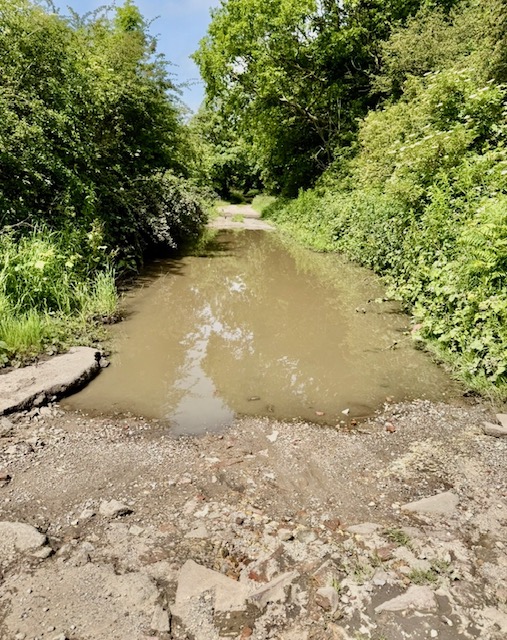
An unpaved section of National Cycle Route #1!

Places that hold thought

As I moved through England, I began to notice how often thought seems to gather in certain places.

Oxford and Stratford-upon-Avon are saturated with it. You feel it in the density of books, weight of stone, and arguments made over the centuries.
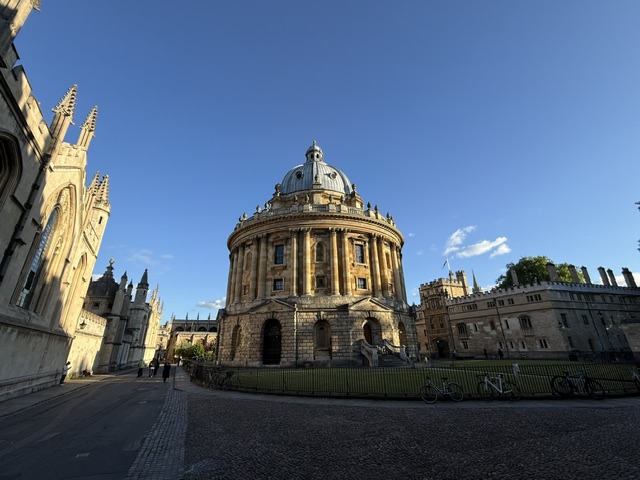
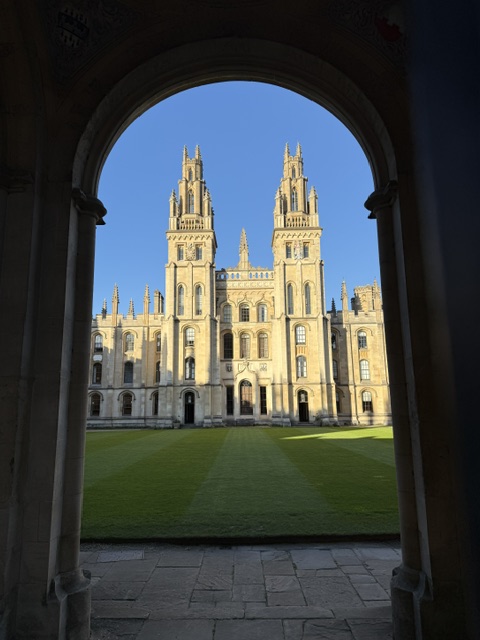
Oxford

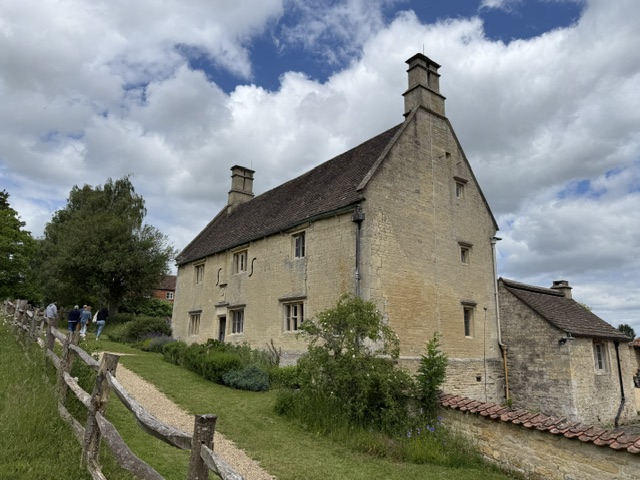
But deep thought doesn’t only happen in institutions. Further north, at Woolsthorpe Manor, Newton’s birthplace, the story goes that much of his transformative thinking on gravity and calculus took shape not in Cambridge, but in his family’s orchard during the plague years. Whether exact or embellished, the image stays with you: revolutionary ideas generated not in a frantic hub of activity but in stillness.

That contrast stayed with me as I rode on.
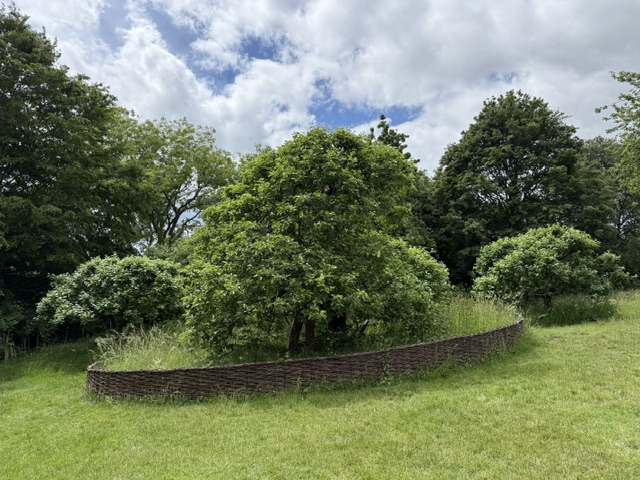
Newton’s Orchard and Home

Lincoln

Standing beneath the vaulted ceilings of Lincoln Cathedral, I was struck by the scale of what people can build across generations. Stone laid upon stone, intention upon intention, each generation adding something lasting to something far larger than itself.

It made me wonder: building things that outlast us requires ultra-long-form attention that seems incompatible with today’s ‘notification economy’.
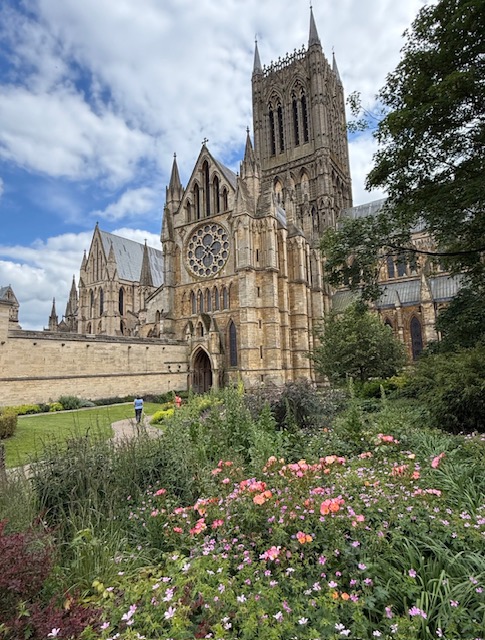
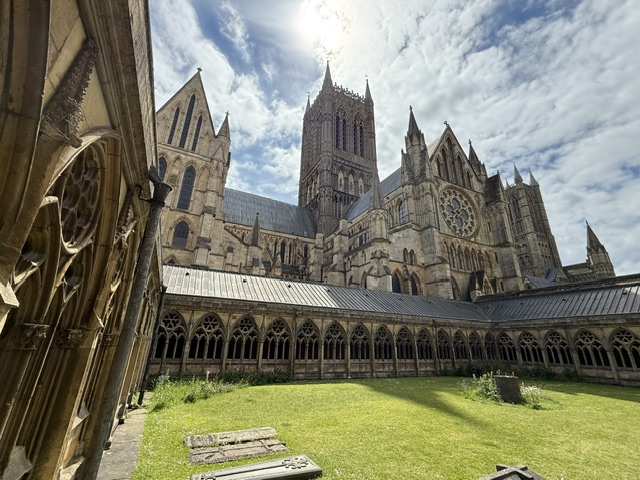
Lincoln Cathedral

The real distance

The kilometres on the bike were only the visible measure of the journey. They were scaffolding.

The real distance was mental: the slow clearing that comes from sustained movement and an open uncluttered mind.

Whether in Newton’s orchard, beneath the dreaming spires of Oxford, inside the stone vastness of Lincoln Cathedral, or in the quiet presence of Florence, the same idea kept returning in different forms:

We think best—and perhaps live best—when we step out of the noise and give ourselves time and space.

Human Literacy

Foundational literacies

For much of my professional life, I have been committed to enabling teaching and learning, particularly the foundational literacies that help people thrive: reading and writing, numeracy, scientific and cultural literacies. These are the building blocks upon which so much else depends.

Human Literacy

As AI becomes increasingly capable—and may soon outperform us in many of these traditional literacies—another literacy is moving to the foreground: human literacy.

Human literacy: the ability to understand and regulate ourselves, relate effectively with others, and continue to learn, grow, and flourish.

If traditional literacies help us engage with knowledge, human literacy helps us engage with ourselves and one another.

Environment of Trust

Cultivating this literacy isn’t just an academic exercise, it requires intentional practice. This realisation was one of the reasons I enrolled in a nine-month coaching programme at Henley.

I expected to spend my time learning coaching theories, frameworks, tools, and techniques. What I did not fully anticipate was the importance of the environment in which that learning would take place.

One of the most striking aspects of the programme has been the sense of trust, safety, and support created among participants and faculty. Coaching requires openness, curiosity, self-awareness, and, at times, vulnerability. These qualities cannot be forced; they emerge when people feel respected and free to experiment without fear of judgement. They become more rather than less important as AI takes on a growing share of analytical and knowledge-based work.

It was remarkable how quickly accomplished professionals became willing to share uncertainties, experiment with unfamiliar approaches, and offer candid feedback. This has established a community that feels deeply collaborative rather than competitive. Credit to the faculty and team for creating this!

Personal Struggle

One of the most challenging aspects of the programme for me has been learning to step out of the driving seat. My instinct is often to steer people reach a conclusion, but effective coaching requires creating the conditions for the coachee to find their own way forward. Before joining the programme, I assumed I would be most drawn to structured, solution-focused approaches. I was surprised to find myself appreciating more humanistic and systemic perspectives. They often created a greater sense of calm and presence in the conversation, which in turn seemed to help the coachee open up and explore more freely.

It has been a useful reminder to me that some of the most valuable learning comes from the approaches we initially resist. It’s a lesson I hope to carry beyond coaching.

Learning Partnership

The connection between coaching and learning has been the most valuable insight for me so far. Good coaching is not about providing answers. It is about creating the environment in which learning can happen—cultivating trust and psychological safety, encouraging curiosity and reflection, offering challenge alongside support, and enabling continuous growth.

At its best, coaching is a learning partnership. It helps people think more clearly, discover new possibilities, and move forward with greater confidence and purpose.

I expected the course to be the project. Instead, I have found that I am the project.