Category Archives: Learning

Flipping 2.0

flipping 2.0I’m curious about how we can ‘personalize’ learning: how can we help each individual learner to best develop their talents?

‘Flipped learning’ has caught my attention as one potential route, characterized by a more student-centric classroom, higher-level thinking as a goal, and good use of face-to-face interaction between students and teachers.

For this reason I recently read Flipping 2.0: Practical Strategies for Flipping Your Class, compiled by Jason Bretzmann, with authors contributing to sections on 1) Flipping in the core content areas, 2) Can anybody flip? and 3) Just for teachers.

I would like to recommend this book to teachers interested in flipping their classrooms and to other creators of educational resources looking to support personalized learning. I thought it was surprisingly accessible and there were three things I particularly appreciated about it:

1. Expert

All of the contributors have in-depth and first-hand experience of transitioning to a flipped classroom and describe that transformation clearly.  I thought the cases were helpful and real-world descriptions of the benefits and pitfalls. This is not a book of idealized concepts written by hands-off consultants but a very credible “how-to” handbook.

2. Practical

I especially liked the practical nature of the book. Amongst others, it’s a great resource for working out which technical resources might work best for teachers and students. There’s a lot of useful practical advice on creating learning materials, engaging students and dealing with challenges connected with flipped learning such as access to technology.  Where there’s a will, there’s a way.

3. Passion for teaching and learning

I love it when people are passionate about what they do. The contributors to this work share a passion for teaching and learning and that oozes through the pages. You feel throughout the book that they are striving to be great teachers and are constantly looking for ways to excel and improve in that role. Respect!

By the end of the book I personally wanted to create my own lessons and I’m not even a teacher! Apart from thinking how we could support the flipped classroom at Sanoma Learning, it also made me wonder if I could use some of these learnings in my own job. Somehow a ‘flipped board meeting’ doesn’t sound quite right :-), yet we do say that we want to spend less time going through powerpoint slides and more time on discussing and improving the strategies. Worth an experiment …

Sanoma Startup Challenge: the Future of Learning

20140105-230333.jpg

We recently announced the launch of a startup challenge, focusing on the future of learning. The goal of the challenge is to identify Europe’s most promising startups in K-12 education and to work with them in finding ways to help them to grow.

We’re encouraging applications from European startups that have a live product and growing customer base, but are still smaller than € 2 M in annual revenues and have been established within the last five years.

The application round is now open and will close on 1 March. Five finalists will be invited (expenses paid) to Amsterdam on 23-25 April to work with executives and experts from Sanoma Learning and SanomaVentures and to pitch their startup to The Next Web Conference audience and jury. The final winner will be announced immediately after the pitches and will receive a cash prize of € 25.000. We will also explore the options with the finalists for closer collaboration with Sanoma in supporting their growth ambitions.

Education is at the dawn of a new era, partly enabled by technology. As interim CEO of Sanoma Digital and CEO Designate of Sanoma Learning I am excited about working together with high potential startups in the edtech space and hope that we can build some successful and long-lasting relationships through this initiative!

For more information on the learning startup challenge, including the application procedure, click here.

Good luck to all applicants and I hope to see you in Amsterdam in April!

Sanoma Digital to boost transformation on three fronts: growth, innovation and capabilities

nu-labSanoma recently announced the planned launch of Sanoma Digital as part of an overall accelerated transformation program.

We see many opportunities in digital and have in the meantime built a substantial and growing digital business.  We intend to boost digital by creating this new business unit which will focus on pure-play digital assets in consumer media in Finland and The Netherlands, and will include brands such as oikotie.fi, NU.nl and kieskeurig.nl.  Digital brand extensions such as hs.fi and libelle.nl will be run directly by Sanoma Media Finland and The Netherlands. Sanoma Learning will drive all Learning activities.

Focus

A core element of the overall transformation program is to bring more focus to the business and to ensure that each part has a clear mandate and objectives.  This also holds true for Sanoma Digital.  Growing and innovating pure-play digital businesses in consumer media is a different assignment than transforming a portfolio of magazines, winning viewers for television, taking newspapers to their next level or building digital workflow solutions for learning.  Each of these assignments needs dedicated management attention to focus on making it happen.

Digital enjoys a unique role within the portfolio and will for that reason also work very closely with the other platforms to enable cross-media solutions for consumers and advertisers – shared sales, insights & analytics and ICT teams will help us to achieve that.

Goals

Sanoma Digital will have three main goals:

  1. The first goal is to growgrowthWe intend to significantly grow the digital consumer media business in the next 5 years. Part of that growth will come from working closely with the local business in Finland and the Netherlands, including adding new verticals, new media (mobile and video) and new services to our performance-based (lead-generation, e-commerce, online classifieds) and pure-play digital content businesses. Another part of the growth will come from scaling successful concepts created in The Netherlands and Finland to new markets.  We have been investing in the early part the product pipeline recently with quite some new launches in the final quarter this year.  We expect this to bear fruits during the course of the coming years.
  2. The second goal is to boost innovation and to strengthen skills across the organisation on lean development methods. Commerce-Accelerator-logo To achieve this we will establish a new innovation lab which will nurture the winning concepts borne out of our ongoing series of innovation accelerators.  Furthermore, we will continue to invest in external digital enterprises via Sanoma Ventures. We want to fill the pipeline with new business lines – to plant the seeds of the next generation Sanoma.
  3. The third goal is to strengthen our capabilities on data insights & analytics. We will bundle our resources on insights and analytics, boost them, and deploy them across Sanoma, to help the whole company to succeed in the digital transformation.

Positive outcomes

From the perspective of digital, we hope this will position us to better serve our customers. If we are successful, we will grow digital and this should help us to provide attractive new opportunities for employees and improved returns for shareholders.

Two passions

From a personal perspective, my next assignment is to establish Sanoma Digital. I’m excited about this and believe setting up Sanoma digital is a good step to boost the digital transformation. We’re now in the process of setting up a new team to drive this agenda.  I’m really proud of the talented people who are joining this team and who will work at Sanoma Digital!  During Q1 next year I will succeed Jacques Eijkens as CEO of Sanoma Learning.  My two passions are digital and learning.  Sanoma has a strong and successful international Learning business that is also going through a digital transformation.  I hope and believe that I will be able to contribute to the further success of Sanoma Learning by boosting the leadership of digital and innovation there.

Making innovation happen: how to organize for disruptive growth?

video-screenshot

One of our new intrapreneurs is building a marketplace for fashionista’s.

Following excellent performances at the bootcamp of the #contentaccelerator in June, two of our top talents have taken new roles as intrapreneurs at Sanoma this week. Making it happen!  This innovative burst immediately caused temperatures to sky-rocket to a sweltering 33°C at the office. Respect to them for showing the courage of their convictions and going for it. And thanks especially to the local organisation for supporting a speedy transition.

Creativity and customer-focus sit deep in Sanoma’s character.  However, we have deliberately organized these and other new ventures separately from the core business, yet cooperative with it.  We wanted to establish a model which gave the accelerators and new ventures the liberty to exploit their disruptive opportunity unrestricted by the core, yet in a way which supported both the new venture and the core. In my view, the process of the accelerator (ideation and competence development for hundreds of people from the core) and the sharing of various capabilities in the operation (mainly marketing, technology and expertise) achieve that.

Dual Transformation

I recently came across an excellent article by Gilbert, Eyring & Foster, in the Harvard Business Review called Two Routes to Resilience which clearly articulates the case for developing disruptive and core businesses separately yet under one umbrella. How to organize for new growth?

The authors make the case that when your industry is undergoing disruptive change, companies should respond by making two distinct transformations in parallel. Transformation A focuses on repositioning the core business to its altered circumstances. Transformation B should create disruptive innovations that will eventually bring new growth. And the structure should work for both through a “capabilities exchange” that allow the sharing of select resources for the benefit of both parties, without changing the mission of either. Each transformation needs a leader fully convinced of the future success of their mission. Both pillars of the transformation have to act in the market as if the future of the company depended on it alone.

“Capabilities Exchange”

The “capabilities exchange” should in principle bring competitive advantage to each pillar in the transformation. In the case of our accelerators and new ventures, some important shared resources come to mind. The Sanoma brand helps us to build connections to consumers, advertisers and schools.  Easy access to media and traffic help support existing brands and build new brands. Expertise in content, advertising, learning and other capabilities required in managing a company, such as finance and HR can support each transformation. The re-use of content and technology can reduce unit costs and bring speed to innovation. An international network can bring scale. Access to a skilled talent pool and methods of developing new skills on innovation are required in both tracks. And a dual transformation can support the financing of the respective pillars. That’s quite an exchange when you come to think of it!

Boosting Transformation B

For the sake of good order, Sanoma has many growing, successful and disruptive business lines and I would not for one moment say that the ventures born from the accelerators are the only seeds of the next generation of our products and services and everything else is legacy. That’s clearly not the case. The new ventures are just one of the pockets of innovation and digital disruption in the company. And we have many other business lines which would not count as digital disruptions but are far from legacy status.

Yet the argumentation in the HBR article is good and sharp. I believe it’s a credible approach and our actions and investments in new ventures are for their part consistent with it. Bringing additional relative scale to what the HBR article refers to as transformation B (the new growth businesses) would help to support the dual transformation. Increasing the pipeline of new ventures would be one way to achieve that.

I’m interested to know your opinion about this.  Feel free to leave a comment or send me an email.

Sexiest Job at Sanoma: Data Scientist

During a recent webinar I gave about our strategy, Lassi Kurkijärvi (Director of Innovation & Development) was voted to have the sexiest job at Sanoma. This victory was by a comfortable margin, getting about twice as many votes as the second placed “my own job”. I agree that our Mobile Superhero has got a hot job. However, in my view, the sexiest jobs at Sanoma in the next few years will be those of the Data Scientists.

I realize not everybody will share my view and I am arguably biased due to my background (a lot of Bioinformatics in my PhD). Yet I believe there’s a big opportunity for us to be even more relevant to our customers (and make more money) by providing them more accurately with the right content and functionality at the right time, on the right medium and device and for the right price. (By customers, I mean consumers of media, advertisers, learners and teachers).

To do this, we have to make a quantum leap forward in our insights and analytics capabilities. This week I caught up with our Queen of the Quants – Ulla Kruhse-Lehtonen (VP, Customer Insight and Analytics) about insights and big data at Sanoma. She’s a brilliant addition to my team, fun to work with, fast, determined and has the brain the size of a planet. She’s building our new team and co-developing the cases with the business owners.
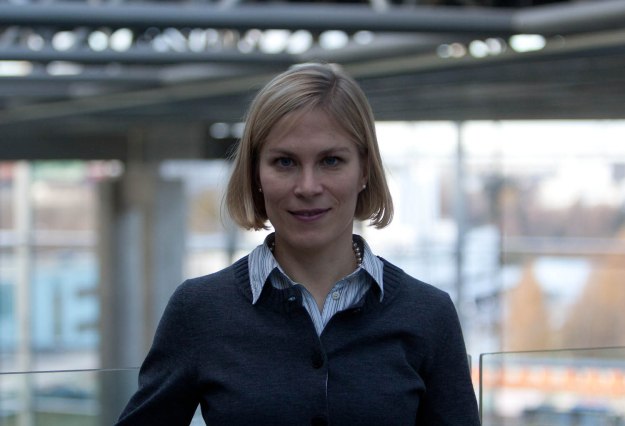
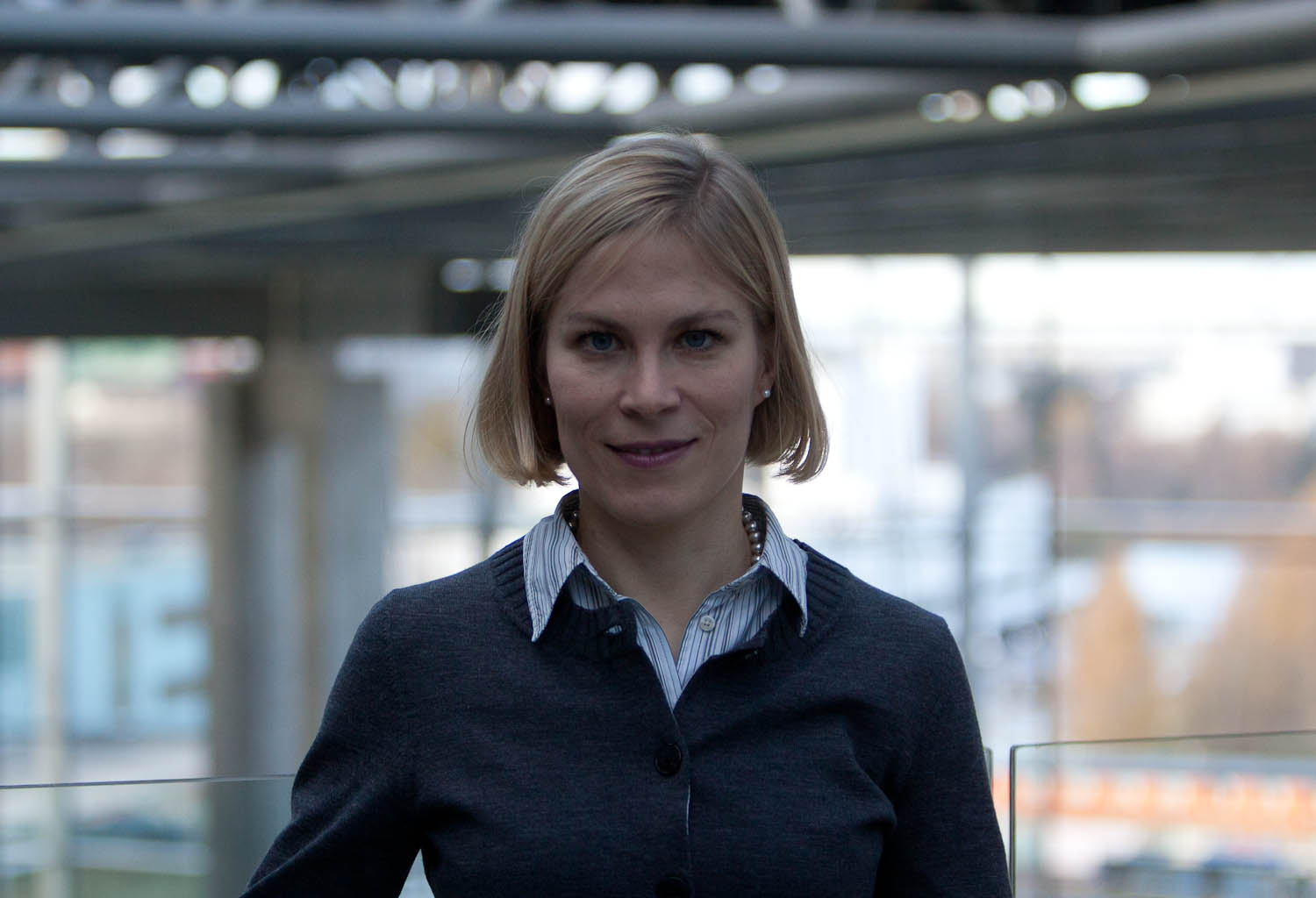
Ulla Kruhse-Lehtonen, VP Customer Insight & Analytics and Queen of the Quants at Sanoma

Ulla Kruhse-Lehtonen, VP Customer Insight & Analytics and Queen of the Quants at Sanoma

Ulla, why did you decide to join Sanoma?

I was immediately intrigued when I heard about the opportunity. Having always been an avid reader and a magazine buff, I was fascinated by the chance to work for a company whose business is storytelling. At Sanoma, I can combine my love for stories with data science, which is my other passion.

I’m excited by Sanoma’s wealth of consumer data and the business opportunities it provides. The media industry is currently undergoing a fundamental transformation from print and broadcasting to digital. Consumer analytics is at the centre of the transformation. Modern data mining, visualization, and machine-learning techniques provide us with strategic and operational insights as well as targeting and personalization capabilities for our current and future products and businesses. Data science helps us create unique, relevant and exciting experiences for our customers.

How is Sanoma rolling out the new data science capabilities?

The new capabilities are used to optimize consumer sales, target digital advertising, personalize services, and create strategic consumer metrics and other data-driven insights. The data science team develops the capabilities in close collaboration with the respective business and IT functions. Roll-out happens in stages. Only after verifying the performance of the new analytics capability through a pilot, will it be rolled out further. This helps us ensure the success of the new capability before making large-scale investments into technology and training people. 

We also aim at creating a culture of sharing and communicating of successes and failures in order to share best practices and learnings across units.

What is the most critical factor for making a Big Data initiative successful?

The most critical factor is to closely align data, insights and analytics activities with the company’s business strategy. It’s easy for an analytics team to keep itself busy with interesting and challenging, yet irrelevant matters. Once Data Scientists thoroughly understand the business goals and logic, they will be able to translate them into data and analytics questions and come up with unexpected, sometimes unintuitive outcomes, which may have tremendous business opportunities.

At Sanoma, the executive-level support for analytics is extremely strong, which is one of the most pivotal matters for a successful analytics transformation of a company.

What are typical challenges in Big Data initiatives?

The technical effort related to the gathering, management and utilization of data should not be underestimated. The more silo’s there are, the longer it takes to gather and utilize data across the organization. It takes successful analytics companies several years to get it right. At Sanoma, our approach is to prioritize consumer and advertiser use cases and build up the technical enablers in a clear order. It is important to constantly deliver short-term business wins while building up the long-term infrastructure to support the company’s vision.

However, in the end, technology is money and hard work, but analytics is about people’s mindset and the willingness to do things differently. Unless analytics capabilities are taken into use and the results are acted upon, there is little point to build them in the first place.

You’re building a team of Data Scientists and other data experts. How’s it going?
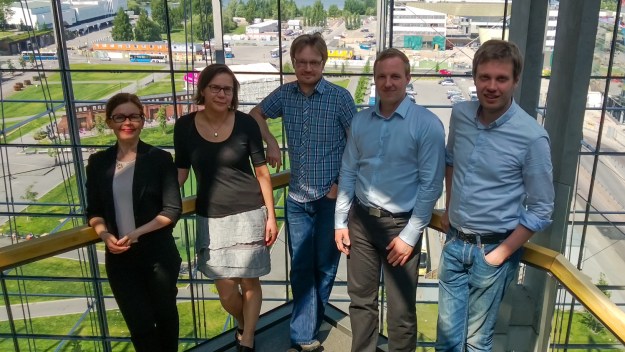
First group of new recruits.  In the lift at Sanoma House.

First group of new recruits. In the lift at Sanoma House.

The recruitments are going quite well. We have signed on thirteen people in Helsinki and Amsterdam. Finding the right talent is critical for the successful execution of the analytics strategy. We need skilled people to create value out of data. In addition to Data Scientists, we have established the position of the Consumer Privacy Officer and the Head of Data Asset. We have also hired Big Data Developers and Database Administrators. The openings are no longer visible on our website as we are working through the applications, but if readers of this blog are interested in hearing more, feel free to drop me an email (ulla.kruhse-lehtonen@sanoma.com).

In September you will have been with Sanoma for a year. Still excited about the job?

Absolutely! It’s great to work with talented and skilled people and to develop the data science competency here. Data, analytics, and privacy are at the core of Sanoma’s transformation and reflect the consumers’ changing behavior. Data science is cool!

Looking forward >>

I’m with Ulla on that!  I love the creativity of a media and learning company. Putting insights to work is the next generation. This is what makes these jobs so sexy.

Looking further than Sanoma – the opportunity for societies to use insights derived from big data to improve quality of life (for example through better healthcare and education) and economic performance (for example through better allocation and targeting of resources and higher productivity) is substantial; the McKinsey Global Institute (MGI) estimates a potential for $ 300 bn of value creation per year in US healthcare alone.

USA is educating data scientists for the future

USA is educating data scientists for the future

However, the rate limiting factor in capturing this potential is in my view the availability of skilled Data Scientists. MGI estimates a shortage of 190,000 skilled data scientists and 1.5 m managers with sufficient analytics know-how in the USA by 2018. Probably the European challenge is of a similar magnitude.  In the USA we see Seattle (see e.g. the eScience Institute at the University of Washington and PhD program in Big Data) and New York (see e.g. the Institute for Data Sciences and Engineering at Columbia and Center for Data Science at NYU) contending with Silicon Valley to become the next hotbed for educating the data scientists of the future. 

We need more initiatives like this in Europe too. With a substantial opportunity gap on the one hand and European unemployment now estimated to be more than 26 m (with youth unemployment over 50% in some countries) data science is an area that should be prioritized for education and training. 

My advice to anyone considering education or training in data science as one of their options: go for it!  Not only will it be good for your chances of getting a job, it might even be a sexy one at a cool company like Sanoma!