
The Brighteye Ventures Edtech Funding Report released last week evidenced a positive and increasingly broad-based development of the European edtech sector:
Venture capital funding tripled over the previous year, reaching some $2.5B.
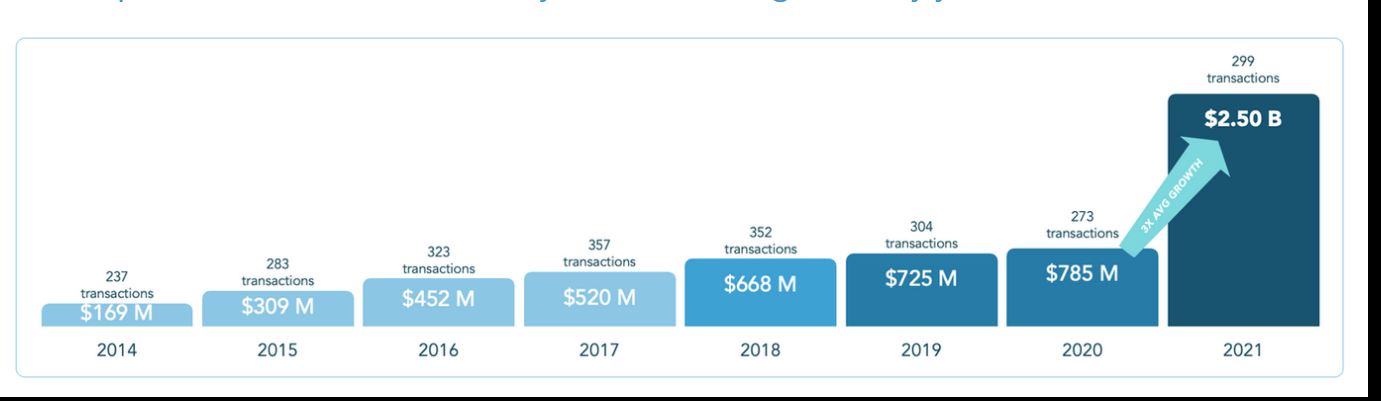
Average deal size also tripled to $8.4M, indicating increasing maturity of the sector.

Corporate Learning attracted the most funding ($926M), followed by K-12 ($659M) and Life-long/Consumer Learning ($652M), with Higher Education ($289M) and Pre-K ($136M) trailing. One possible reason being that B2C and B2B segments are sometimes seen as easier to sell into than B2G.

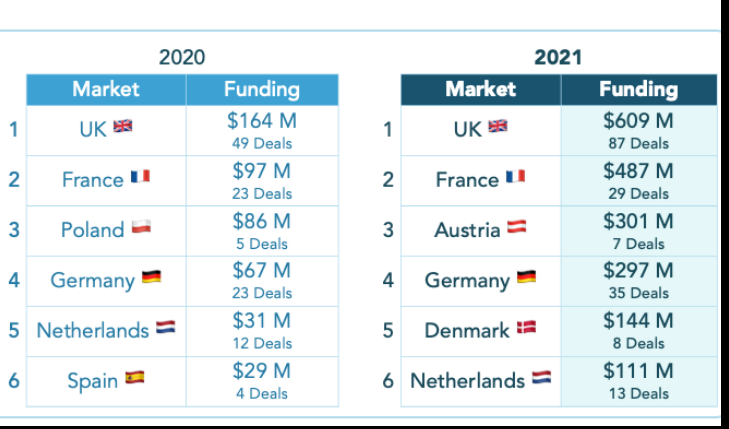
Six European markets raised more than $100M, up from just one market previous year.
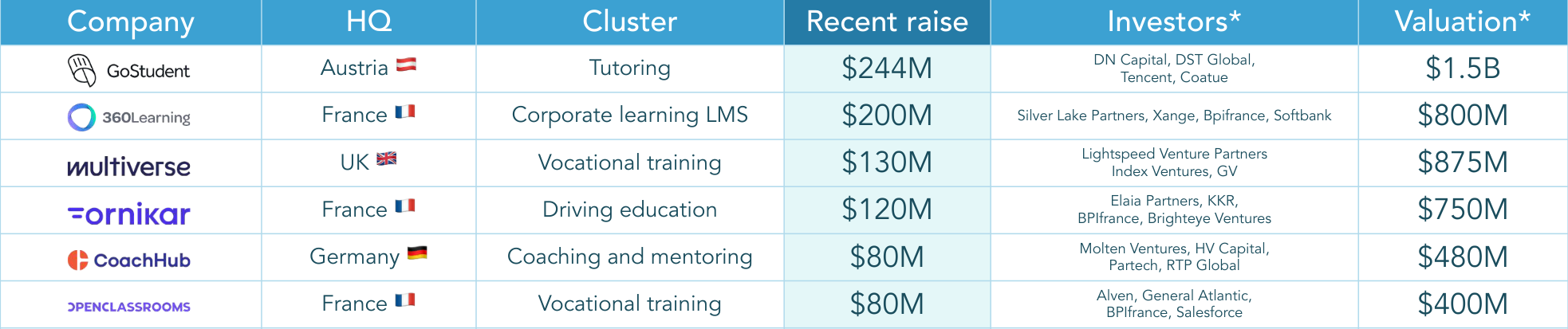
There were six deals in excess of $80M in 2021, up from one in the previous year
Go GoStudent!
The biggest round in Europe last year was in K-12 at Vienna-based tutoring company GoStudent which is currently driving a very rapid international expansion.

(Online) tutoring has long been well represented amongst global edtech unicorns, with the heavy Chinese contingent prospering until the local market crash last year due to regulatory reforms. However, until recently online tutoring had not really taken off at scale in Europe, arguably because the European landscape is fragmented and both the quality of state-provided education and the cultural preference for equity, high.
Market for supplementary education likely to grow
I believe it’s likely that the global market for supplementary education (leaving China aside for now) will continue to grow strongly in the coming years, because:
a) It works
+ Positive impact on learner outcomes*
+ Potential to support teacher retention by reducing after-hours work for existing teachers hence making the profession more attractive
+ Potential to enable recruitment as teachers of university students, former teachers and other professionals, by first (re)-igniting their interest as a tutor,
and
b) There is growing demand for it:
+ More children attend schools than ever before, expanding the addressable market
+ There is increasing competition for top universities and jobs
+ Lower fertility rates boost spending per child
+ Growth in the number of families where both parents work, reducing the time available to help children with homework.
Beware pernicious effects
However, there are some potential pernicious effects should be mitigated:
– Rising inequality, since the rich can better afford it than the poor
– Unreasonable pressure on students
– Competition with schools for teachers, potentially undermining public education systems.
Public-private-partnerships?
In some European countries including the UK and The Netherlands, additional public funding was made available for supplementary education during the pandemic. I am interested to learn what impact these interventions have made and whether the combination of core and supplementary educational provision in the future might be a path to raising average learner outcomes and supporting disadvantaged students?
I’m interested to learn any insights you might have on this subject. Feel free to drop me a line.
*The outcomes of the research are startling: an average student under tutoring performs about two standard deviations above the average performance of a conventional class. Or put another way, an average student following a tutoring program outperforms 98% of students in a conventional classroom!
https://lnkd.in/gDYHazw

