Tag Archives: Learning

Learning outcomes accelerator: co-creating new solutions with schools

The future of learning is personal

personalAs we move from the industrial age to the knowledge age, our ways of working in education will change too. Amongst others, technology will enable us to tailor pedagogy, curriculum and learning support to the needs and aspirations of each individual learner. Developing the talents and potential of individuals and helping them to make progress in their lives will be key.

Our thinking needs to shift. From inputs …

Governments have traditionally put a lot of emphasis on the inputs into education. How much do we spend? How many pupils per classroom? How many hours of class time? How much do we spend on learning materials? How many devices in the school? These things are all important.

… to outcomes

input-to-outcomesHowever, the value is in the outcome not the input. Are we helping individuals to make progress in their learning career? Are we preparing them for effectively for work? Are we enabling them to become good and fulfilled citizens? These are the big outcomes questions.

Maybe these questions are so big that we only know the answers when it’s too late. Therefore, on a more practical level, we should break it down into something more manageable. For example, for each activity (“course” or “lesson”):

– does this contribute to a good learning result for all of the individual pupils?
– in a way that is engaging and motivating for pupils and teachers?
– and in a way that is effective in terms of time, cost and energy?

By bringing these outcomes into focus, we can reshape education for the next generation.

Enter the Learning Outcomes Accelerator

At the OPPI Learning Festival in Helsinki last week (great initiative!), we announced the launch of an open Learning Outcomes Accelerator:

“how can we improve and evidence the impact of education in the new era?”

In each of the countries in which Sanoma Learning operates (Finland, The Netherlands, Belgium, Poland and Sweden) – pretty much an all-star cast for PISA 🙂 – we would like to work with one school where at least one teacher/class would participate.

Also, we would like to ask academics (with expertise in outcomes, learning analytics, pedagogy and so on) to join us to bring an extra richness to our thinking and approach. And 75 professionals from Sanoma, with expertise about course and curriculum development, design and user experience, and lean startup methodologies will join us in creating new prototypes.

How does the accelerator work?
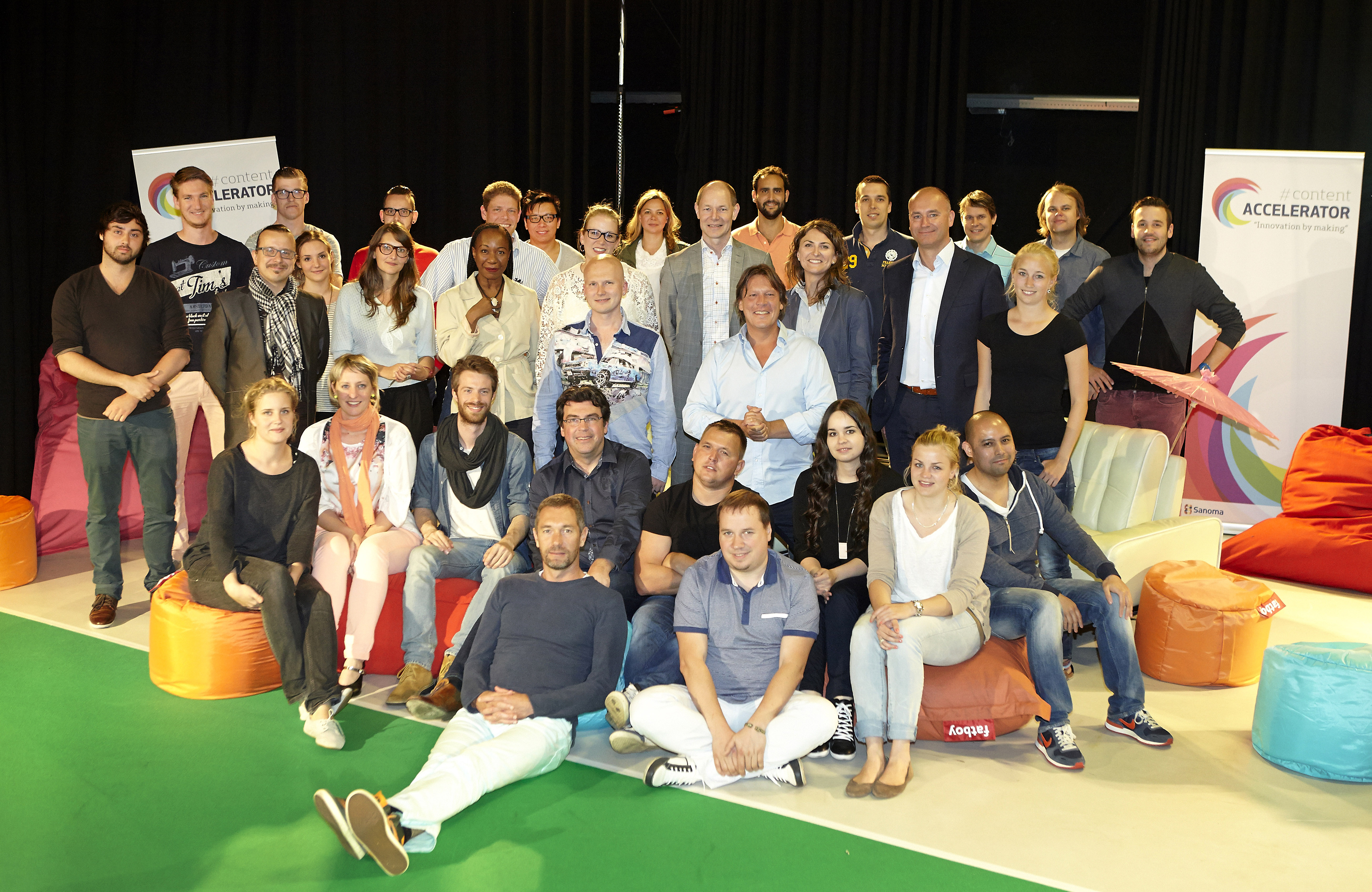
Participants at bootcamp

Participants at bootcamp

We will launch (in September, dates to be finalized) with five “live” kick-offs, one in each of the main schools participating. This will be followed by a seven week program of ideation and training, during which hundreds of ideas will be created, tested and improved. Towards the end of the process the best five ideas will be selected by public voting and the winners will be invited (expenses paid) for a four-day bootcamp in Amsterdam to build their prototype. I’ve previously blogged about how an accelerator works and what happens at bootcamp. It’s really exciting and inspiring to be part of it!

What is it, what isn’t it?

The accelerator will be above all about learning by doing! It will be fast-paced, highly practical and we will go from idea to functional prototype in less than 10 weeks. It will be structured in terms of the goals, process and support. And open in terms of ideas. It will be a journey of discovery and experimentation and this is what makes an open accelerator so exciting.

It’s not a big academic exercise. We won’t write a book about it. (Even if books are good too.)

Register and help us co-create new solutions for outcomes

If you would like to join the accelerator and you’re either a teacher at a school in one of the five countries mentioned earlier, or an academic from there or elsewhere, please let us know at sanomalearningoutcomes.com. We will strive to have decided which five schools to work with on this particular accelerator by the end of June. Participation is free of charge. We will be accepting applications until 1 September.

I was positively surprised by the interest from other groups at OPPI too. For example, some Foundations, Universities, other companies, schools in other countries and educational journalists also wanted to get involved. If you are from one of these groups and have something exciting to bring to the accelerator, then please take contact with me and let’s see if there are possibilities for us to adapt the program so you can join us.

Looking forward >>

I believe that by bringing outcomes into focus, we can reshape education for the next generation. I hope you will join us on this exciting journey!

Flipping 2.0

flipping 2.0I’m curious about how we can ‘personalize’ learning: how can we help each individual learner to best develop their talents?

‘Flipped learning’ has caught my attention as one potential route, characterized by a more student-centric classroom, higher-level thinking as a goal, and good use of face-to-face interaction between students and teachers.

For this reason I recently read Flipping 2.0: Practical Strategies for Flipping Your Class, compiled by Jason Bretzmann, with authors contributing to sections on 1) Flipping in the core content areas, 2) Can anybody flip? and 3) Just for teachers.

I would like to recommend this book to teachers interested in flipping their classrooms and to other creators of educational resources looking to support personalized learning. I thought it was surprisingly accessible and there were three things I particularly appreciated about it:

1. Expert

All of the contributors have in-depth and first-hand experience of transitioning to a flipped classroom and describe that transformation clearly.  I thought the cases were helpful and real-world descriptions of the benefits and pitfalls. This is not a book of idealized concepts written by hands-off consultants but a very credible “how-to” handbook.

2. Practical

I especially liked the practical nature of the book. Amongst others, it’s a great resource for working out which technical resources might work best for teachers and students. There’s a lot of useful practical advice on creating learning materials, engaging students and dealing with challenges connected with flipped learning such as access to technology.  Where there’s a will, there’s a way.

3. Passion for teaching and learning

I love it when people are passionate about what they do. The contributors to this work share a passion for teaching and learning and that oozes through the pages. You feel throughout the book that they are striving to be great teachers and are constantly looking for ways to excel and improve in that role. Respect!

By the end of the book I personally wanted to create my own lessons and I’m not even a teacher! Apart from thinking how we could support the flipped classroom at Sanoma Learning, it also made me wonder if I could use some of these learnings in my own job. Somehow a ‘flipped board meeting’ doesn’t sound quite right :-), yet we do say that we want to spend less time going through powerpoint slides and more time on discussing and improving the strategies. Worth an experiment …

Sanoma Startup Challenge: the Future of Learning

20140105-230333.jpg

We recently announced the launch of a startup challenge, focusing on the future of learning. The goal of the challenge is to identify Europe’s most promising startups in K-12 education and to work with them in finding ways to help them to grow.

We’re encouraging applications from European startups that have a live product and growing customer base, but are still smaller than € 2 M in annual revenues and have been established within the last five years.

The application round is now open and will close on 1 March. Five finalists will be invited (expenses paid) to Amsterdam on 23-25 April to work with executives and experts from Sanoma Learning and SanomaVentures and to pitch their startup to The Next Web Conference audience and jury. The final winner will be announced immediately after the pitches and will receive a cash prize of € 25.000. We will also explore the options with the finalists for closer collaboration with Sanoma in supporting their growth ambitions.

Education is at the dawn of a new era, partly enabled by technology. As interim CEO of Sanoma Digital and CEO Designate of Sanoma Learning I am excited about working together with high potential startups in the edtech space and hope that we can build some successful and long-lasting relationships through this initiative!

For more information on the learning startup challenge, including the application procedure, click here.

Good luck to all applicants and I hope to see you in Amsterdam in April!

Sanoma’s #contentaccelerator bootcamp: making it happen!

Participants at bootcamp

Participants at bootcamp

Last week we ran the bootcamp for the #contentaccelerator. After seven weeks of ideation and training, of building and testing minimum viable products, we sent the five winners to bootcamp to build prototypes of their concepts – to take the next step in making it happen.

On a personal note – these weeks are amongst the absolute highlights of my year. We take some of the most talented people in the organization and give them the opportunity and tools to turn their idea into a prototype. I believe in innovation by doing. Not only is this the best way to move fast and develop close to the customer. It’s also the best way of learning new skills.

Focus on delivery

The first impression of a visitor to the bootcamp is that we put the participants in a cool space and give them four days of playtime to see what they make of it. However, the fact of the matter is that bootcamp is tough and demanding. Deliverables and discipline are at the core of the way of working. Preparations for the bootcamp have been stringent. We have selected the best ideas and leaders by a competitive and transparent process. Teams with complementary skills are formed including a visual designer and interaction designer best suited to the team and assignment. Each day starts by establishing clear deliverables for that day, and we are very strict in maintaining discipline to ensure that the results can be presented at end of the day. It’s structured, focused and intense.

Five concepts turned into prototypes

The outcome of the week is that we have built five great prototypes that have been tested with customers. They include i) a content marketplace (“if content is King, come and join the other Royals”); ii) a fashionista community (“you spot the look, we spot the shop”); iii) a service to hear the news in a new way (“have you heard the news”?); iv) an educational talent discovery app (“discover the talents of your children”) and v) a learning solution that mashes up the real and virtual worlds with educational quests. It’s amazing how far the teams have been able to bring these concepts in just four days. I’m tempted to link to the promotional videos here, but it’s a bit premature to make external announcements at this stage.

Proud of the teams

I’m really proud of how the teams have performed. Not only what they have delivered as prototypes. But also how they went about it; the spirit, motivation, energy and passion – the “can-do” approach has been truly inspiring. Congratulations to the team leaders and respect for the blood, sweat and tears that you have put into the last few months. Thanks to the support teams from Sanoma and Makerstreet for helping to make it happen. And once again Lassi Kurkijärvi (@lassi, Director at Sanoma) and Joris van Heukelom (@jorisheuk, Partner at Makerstreet) have been brilliant and inspiring in leading this program from beginning to end.

Fostering an innovative culture

As we continue on this journey of discovery to the roles that Sanoma will play in the futures of media and learning, it’s of the essence that we foster our creative and innovative culture. I believe the accelerators contribute to this in several ways. Directly, we are training hundreds of people on lean development methods and building new digital business lines. Indirectly, the accelerators generate discussion about innovation in the company, with supporters and sometimes detractors too. And the discussion often leads to new initiative – to more attention for innovation – what to do, what not to do, and how?

High level support is critical to the success of any program like this. I especially liked the visits of Harri-Pekka Kaukonen (CEO) and Jackie Cuthbert (CHRO) to the bootcamp. Both are strong supporters of the program and it’s great that they are visible and transparent in that. I loved the way the project leaders engaged with them, and the different styles they used in pitching their ideas and themselves – not only using facts, figures and beautiful design, but also appealing to their emotions (“Harri-Pekka, imagine your daughters using this”; “Jackie, this will help you find more great shoes”). Definitely some natural sales talent in the room!

The accelerators have proven the case that women rule at Sanoma. All five of the first round of new ventures are led by women and four of the five teams at this particular bootcamp were led by women too. Probably the sample size is too small to draw any conclusions about this phenomenon of the superior performance of women in the accelerators. Our experience on the whole is that the participants who came with the best ideas, put the most effort into developing them and sold them most effectively, came the furthest. Is there something about the accelerators and intrapreneurship that might give Sanoma a competitive advantage by creating an innovation and venturing space that particularly appeals to women, or at least supports a level playing field for talent?

Next steps

Based on the outcomes of the bootcamp we are now working on the next steps. In some cases, we will create new ventures. In others, we will likely sponsor next steps in the local business. There is one case where we believe we might need to work with an external partner to win in the market. We are currently engaging with the various stakeholders and expect to have made agreements within two weeks.

The clock never stops ticking of course. On Monday we will launch the recruitment drive for the #commerceaccelerator that we will run in the Autumn of this year, in cooperation with a number of leading European universities. Looking forward >>.

SanomaVentures helps develop young enterprises in digital information, entertainment and education

sanoma_ventures_header

Digital technology is driving fundamental change in media and learning markets.  Sanoma is responding to this by a) transforming core brands to play multichannel and b) building new digital brands.  I’ve recently posted about the accelerators at Sanoma and the role they play in the (early-stage) innovation portfolio.  In addition, the company has established SanomaVentures (www.sanomaventures.com) to support early-stage (external) businesses looking for growth funding following initial market success.

Herman Kienhuis, Investment Director at SanomaVentures

Herman Kienhuis, Investment Director

I’m enthusiastic about SanomaVentures.  I think it brings Sanoma a lot on this journey of discovery to the digital future. Clearly it will not be an answer to all of the opportunities and challenges we face, but it is an important piece in the overall puzzle.

This week I caught up with Herman Kienhuis (@kienhuis), Investment Director of SanomaVentures about their approach.  I believe in Herman and his team.  I think he’s smart and professional.  He’s proactive and takes initiative – he’s out there in the network.  He’s commercial and has sharp analytical skills, and thinks creatively about negotiating attractive deals for both parties.  And I like him – he’s a decent chap.  I respect his support for microfinancing organization Kiva.org and he’s very sporting with his annual Movember action.  Here’s what he had to tell.

Why was SanomaVentures launched?

We had five main reasons to go for this.  It gives us access to new sources of innovation and entrepreneurial talent.  It creates new avenues for growth.  It’s a vehicle that allows us to spread our investments across multiple new ventures, also making use of media as part of the investment currency.  And we felt the time is right, partly because of the fundamental shift in consumer, advertiser and learning behaviour and partly because of the rise of the start-up and venturing communities in our markets.

What’s your investment scope?

We focus on areas where the strategic fit with Sanoma is the strong – specifically, digital consumer services; online video and connected TV; advertising, marketing services and e-commerce; mobile & tablet apps; e-learning & personal development.

What are your investment criteria?

We invest in enterprises that are entering their first growth phase, where cooperation with Sanoma can add value through our media, network and expertise.  Within that scope we make our assessment based on five criteria namely a high quality team, revenue & profit potential, sustainable competitive advantage, international scalability and strategic fit with Sanoma.

What does Sanoma have to offer?

Typically, we invest € 100 k – € 500 k as a combination of working capital and media, with the mix depending on the needs of the enterprise.  Sometimes cash is king.  In other situations the reach and exposure of media offers a significant value to boosting the brand, engagement and conversion.  We have found both cash and media to be useful and valuable currencies.  We also bring online expertise; Sanoma has highly successful digital operations, including NU.nl and Kieskeurig.nl in The Netherlands for example.  And access to our networks – not only advertisers and consumers, but also to other expertise.

How does the process work?

We spend a lot of time networking and orienting ourselves in the start-up community. When we identify opportunities where the fit is good we make an assessment of the venture against the investment criteria mentioned earlier.  If the opportunity is attractive we negotiate terms in preparation for decision-making by both parties.  If the investment case gets the green light, we then proceed to due diligence, contracting and closing.  The entire process typically takes about 3-4 months from first contact to closing.  We then move forward with the funding and access to media, and supporting with any agreed expertise.

How is SanomaVentures organized?

We launched in The Netherlands, with two Investment Directors (Antoine Hendrikx and me), an Investment Associate (Sjoerd Huitema) and access to two Legal Directors (Marije van Akkerveeken and John Vogel).  In the meantime we have also extended the concept to Finland with Investment Director Ville Varis.

Have you closed many deals?

To date we’ve made investments in nine ventures: Vault79, a designer fashion auction; Fashionchick*, a fashion storefront; VirtuaGym, an online fitness platform; Peerby, a local P2P sharing platform; Scoupy, a mobile couponing app; Truly Yours, a beauty products discovery subscription; brandkids, a kids fashion e-commerce platform; Nosto*, e-commerce personalization and recommendation tools; and Fosbury, a passbook campaign management tool.   We see a lot of potential and promise in these investments and are proud to be working with these entrepreneurs.

Good start.  See any challenges ahead?

Sure, opportunities and challenges always go hand-in-hand. A couple of areas come to mind.  In the first year we have been focusing on making the initial investments.  Moving forward we have to combine scouting and deal-making with supporting the growth of the ventures – that’s a more complex task.  Also, we expect that about half of our investments will fail – we will have to make tough calls on which ventures should get additional funding and where to take a loss.  Given the relatively early stage of these ventures those calls might not always be clear-cut.  Maybe the first year was the easiest; now the hard work starts.

How do you look back on the first year?

From a professional perspective, I think we have been successful in establishing the SanomaVentures brand in the market.  We’ve made some very promising investments.  We’ve built a good investment team and established strong links to some great entrepreneurs.  And there’s been a positive buzz about SanomaVentures, both inside and outside the company.  From a personal perspective, it’s been an exciting and demanding period in setting this up, well worth it.

Thanks for the good update Herman.

*The investment in Fashionchick was made prior to the establishment of SanomaVentures and the investment in Nosto was made by the Finnish team