Last week we concluded the start-up challenge on the future of learning with five inspiring pitches at TNW Europe. Many congratulations to Labster on winning and thanks to all five finalists would did themselves proud in their pitches! Check out my post on it here.
I was also one of the keynote speakers on the EduTrack at TNW. I received quite a few requests for a copy of the presentation – here it is TNW-keynote.blog and here is a drawing taken during the session.
These days I try to use images more than words in storytelling (except in my blog 🙂 ), so the slides benefit from further explanation. In this post, I would like to share my views on a number of trends that are shaping the future of learning, as seen from the perspective of a provider of learning solutions. Obviously this is in the style of a 15 minute presentation at a tech conference and not a white paper :-).
I would like to introduce myself
I was born in the Heart of England in the early 1970’s. Already at primary school I developed a passion for learning. I wanted to become a doctor and find a cure for cancer. So I studied hard, I really loved to learn, and went on to complete a PhD in molecular biology. Now of course my dream was unrealistic, I didn’t find a cure. But the dream did bring me something else. It brought me an education. And this gave me a passport to the world. So I moved to The Netherlands as a research scientist and university teacher. I then became a science publisher and now lead Sanoma Learning one of Europe’s leading education companies, with headquarters in Helsinki.
About Sanoma Learning
What I like the most about Sanoma Learning is working together with 1500 professionals who share my passion for learning.
We serve about 10 M pupils and 1 M teachers every day in Northern Europe. And we’re an integral player to the educational systems of 5 countries including Finland, The Netherlands, Belgium, Poland and Sweden – a sort of all-star cast for PISA. We acquired our position in Sweden a couple of years ago and are going to help them to improve their learning outcomes and rise in the PISA rankings, as we have been doing in Poland. We have a reputation for quality and export solutions to more than 40 other countries.
We make annual sales of about € 300 M, including € 40 M of pure-play digital and € 100 M of multichannel, arguably making us Europe’s biggest EdTech company today.
Three cornerstones to excellent education
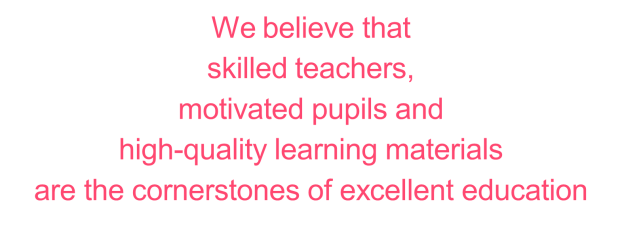 We believe that an effective interplay between teachers, pupils and learning resources is the primary factor in achieving great learning outcomes. From the perspective of being a leading provider of learning solutions, we see seven trends that are shaping the next generation of learning.
Trend #1 From input to outcomes

 There has traditionally been a lot of emphasis on the inputs into education. How much do we spend? How many pupils per classroom? How many hours of class time? How many devices in the school? And so on. These things are all inputs. The good thing about inputs is that they’re fairly easy to measure. But the value is in the outcome not the input.
Ultimately on the system level, the main outcome we are trying to achieve is to help people to make progress in their lives: to help them in their learning career, to help prepare them for work and to help to develop them to become good citizens.
These are really big goals for education systems, and by the time we know how we are doing, it’s too late to make positive interventions for a better outcome. So in my view we need to guide outcomes in learning on a more local level, maybe on the level of each lesson or each course:
– does this activity contribute to a good learning result for all of the pupils involved?
– in a way that is time and cost effective?
– and in a way that is engaging and motivating for pupils and teachers?
I believe we should re-shape education by bringing these outcomes into focus.
Trend #2 From mass to personal

 As we move from the industrial age to the knowledge age, our ways of working in education will change too.
Technology will support us in tailoring pedagogy, curriculum and learning support to the needs and aspirations of the individual learner.
If we can get that right, we will be much more successful in helping individuals to reach their potential. This is a huge opportunity for us to unleash the potential of our children.
Trend #3 From workload to workflow

 We did some ethnographic research with teachers in Finland, a world-class education system. We were surprised to see that about 15 hours per week were being lost on bottlenecks in the workflow. For example, keeping track of administration, manual checking, inefficient communication streams and disruption in the classroom. Imagine the effect that these bottlenecks have on learning outcomes and motivation, and think about the impact that could be achieved if those hours were spent on teaching instead. Also, for a primary school with say 350 pupils and 35 teachers, the financial cost of these bottlenecks is about € 500 k per year.
We expect that technology will address some of the problem. For our part, we are digitalising our courses. Other elements of the workflow will get automated and personalised too. Teachers should spend their time and energy on teaching. This is their skill and passion and this is where they bring excellence to education.
Trend #4 From analogue to digital

 Schools are slowly but surely becoming more digital. However, today in northern Europe, there is a big gap in access to technology between the school and the home. And we are arguably the most digital part of the world! There might typically be 5 devices per household. At the same time, there are typically about 5 pupils for every workstation in schools. So we have to design solutions that can play to that dynamic. Currently most of our methods play multichannel. We expect to continue to play multichannel for 5 or 10 more years and that by 2020 digital will be leading in the usage of most courses.
Trend #5 From data to insight

 In the coming years a wealth of data will come on stream about the learning of our children. Clearly, we have to treat privacy with the utmost respect. And also to look to the opportunity. We’re going to get rich data-sets and insights into how individual pupils, teachers, classes, pieces of content, courses and entire systems perform. We can use these insights to guide intervention: to raise learning outcomes, to focus resources, to enhance engagement. We should embrace these insights to improve learning, and to stop doing the things do not bring value.
Trend #6 From classroom to borderless

 Digital is fundamentally changing the way we live. In the analogue world, the classroom was the centre of learning, whereas the individual stands central in the digital world. Digital has opened up the border between school and home and we see growing demand for services related to curriculum, tutoring and communication that bring a holistic approach to learning for the pupil.
Trend # 7 From scarcity to abundance

 Looking at it from the global perspective, good quality education has been the preserve of the happy few. It’s been a scarce resource. However, that’s about to change for the better. Extreme poverty has halved over the last 20 years and some reckon that extreme poverty will be eliminated within 20 years. Going hand-in-hand with rising prosperity has been increased access to mobile technology for the world’s poorest people.
Education is one of the most powerful instruments known for reducing poverty and inequality and for laying the basis for sustained economic growth, sound governance, and effective institutions.
“Imagine the profound impact on our people and planet if we can bring mobile learning to the four billion people rising out of poverty. Imagine that.”
Time to embrace change and invest in renewing education
So these are seven trends that we believe are shaping the next generation of learning. I am sure there are more, and they are obviously impacted by the perspective you have.
“We believe it’s time for governments, companies, schools and individuals to embrace these changes and invest in renewing education for the next generation.”
What can Sanoma do?
So we ask ourselves what we can do to contribute to the renewal of education. The answer is in our mission already – in supporting pupils and teachers on three fronts:
– Achieving excellent learning outcomes
– Enhancing workflow efficiency
– And supporting engaging learning
By creating courses that play multichannel that address those three goals, we can contribute to building the future of learning.
Learning outcomes accelerator
We see that the most challenging of these tasks for everyone in the educational ecosystem is how we can take a step forward on learning outcomes.
We like a challenge at Sanoma Learning. So we want to run an innovation accelerator focusing on learning outcomes.
“How can we improve and evidence the impact of education in the new era?”.
Together with schools, teachers, pupils and academics, plus about 75 learning and start-up professionals from Sanoma, we want to run a 10 week program to develop ideas and build prototypes of solutions that can improve and evidence the impact of education.
We’re going to start recruiting the teams and participants now, ready for a kick-off in September. If you’re interested to join us or to learn more, please visit sanomalearningoutcomes.com
We’ve run 5 accelerators at Sanoma in the last couple of years and I can promise you they are inspiring and energising and you learn new ways of co-developing your ideas with your customers.
Any questions?
Thanks for listening. Feel free to contact me @johnrichmartin. And please let me know if you want to join us in renewing education for the next generation.
 We’re going to run a Learning Lab this Autumn and I would like to invite you to join us. We’re going to develop new concepts with you, to improve and evidence the impact of education on learning.










 John Martin