Author Archives: johnrichardmartin

Unknown's avatar

About johnrichardmartin

Former CEO at Sanoma Learning.

Designing the Future of Digital Education

johnrichardmartin's avatarJohn Martin

Jose Ferreira of Knewton interviewing Hillary Rodham Clinton Jose Ferreira, CEO of Knewton interviewing Hillary Rodham Clinton, former US Secretary of State

This week I joined the Knewton Symposium in San Francisco and was a panel speaker on the subject of “Digital Readiness”. We have recently started partnering with Knewton, which I am enthusiastic about since I believe adaptive learning is the next generation. I joined the meeting to make sure I’m up-to-date on the latest thinking and for the networking opportunity.

Great program

The program was a mix of speakers and panel sessions. I especially liked the interesting and provocative speakers:
– Jose Ferreira, CEO of Knewton (“transparency on what drives outcomes”);
– Andy Rosen, CEO of Kaplan (“why Knewton will fail” – which emphasized the open dialogue of the symposium);
– Michael Crow, President of Arizona State University (I was intrigued by his words about the “rise of the super-faculty

View original post 396 more words

Sanoma’s Partnership with Knewton – the Next Generation in Empowering Teachers & Motivating Students

sanoma-logoknewton Sanoma Learning serves about 10 m pupils and one million teachers in Northern Europe. Our experience in education dates back to 1833 and these days we are known internationally for two reasons. Firstly, for quality: we’re a leading and integral partner in some of the World’s best performing education systems including Finland, The Netherlands, Belgium, and Poland, as well as Sweden. Secondly, we’re innovative and are frontrunners in the digital transformation: of our sales of about € 300 m, about € 50 m are generated from pure-play digital and a further € 100 m from multichannel solutions, making us arguably continental Europe’s biggest ed tech company today.

I believe there are three cornerstones of excellence in education: skilled teachers, motivated pupils, and high-quality learning materials. And I believe that the next generation of learning is personal: by tailoring pedagogy, curriculum, and learning support to the needs of the individual learner we can improve learning outcomes, enhance workflow efficiency, and support engaging learning.

That’s why I’m thrilled about the work we’re doing with Knewton, the global leader in adaptive learning technology with over 7 million students expected on the platform by the end of 2014. Knewton technology uses data to understand how individual students learn. Sanoma Learning products integrated with Knewton will include personalized content recommendations for students and in-depth reporting for teachers.

Knewton technology will allow us to scale personalization across our wide portfolio of course solutions, improving learning experiences for every student. Malmberg in the Netherlands is the first Sanoma company (and the first publisher in Continental Europe!) to integrate with Knewton technology.

Malmberg’s first Knewton-powered course will be a new grammar-specific English Language Teaching module. This module will provide targeted practice for any ELT student looking to focus on critical grammar concepts. Like all Knewton-powered courses, the course will feature interactive reporting dashboards to help teachers to pinpoint struggling learners in need of intervention and engage advanced students with more challenging material.

Malmberg’s instructional experts and Knewton’s adaptive course designers are making great progress in the development and building phases. Students and teachers will pilot the module early next year. Meanwhile, the teams are also in early planning phases for product builds in other subjects. I can’t wait to see these Knewton-powered products come to life. I truly believe they will contribute to better learning!

The collaboration in the Netherlands is just the beginning. We’re looking forward to rolling out Knewton-powered products across Europe, continuing to empower teachers and motivate students with high-quality, cutting-edge learning products.

Designing the Future of Digital Education

Jose Ferreira of Knewton interviewing Hillary Rodham Clinton

Jose Ferreira, CEO of Knewton interviewing Hillary Rodham Clinton, former US Secretary of State

This week I joined the Knewton Symposium in San Francisco and was a panel speaker on the subject of “Digital Readiness”. We have recently started partnering with Knewton, which I am enthusiastic about since I believe adaptive learning is the next generation. I joined the meeting to make sure I’m up-to-date on the latest thinking and for the networking opportunity.

Great program

The program was a mix of speakers and panel sessions. I especially liked the interesting and provocative speakers:
– Jose Ferreira, CEO of Knewton (“transparency on what drives outcomes”);
– Andy Rosen, CEO of Kaplan (“why Knewton will fail” – which emphasized the open dialogue of the symposium);
– Michael Crow, President of Arizona State University (I was intrigued by his words about the “rise of the super-faculty” – it sparked my interest in the potential “rise of the super-teacher” enabled by technology in schools).

Also, some of the panel sessions gave food for thought, especially:
– Investing in Edtech (I liked the quote by Michael Moe, partner at GSV “the best IRR will be produced by education companies that deliver the best ROE”)
– The OER Impact (“80% of materials for university foundation years can be found Open Source”)

It was great to hear the “Big Ideas” of entrepreneur Tyler Bosmeny, CEO of Clever about solving Single-Sign-On and intrapreneur Ben Schrom from Google Classroom about simplifying digital workflows. (It was nice that he cited me and my “killer app of education is the teacher” quote too, a boost for Finnish thinking there :)).

Go Hillary!

From my perspective, the highlight of the meeting was the interview with Former US Secretary of State Hillary Rodham Clinton. She talked intelligently and engagingly about international affairs in a no-nonsense and straightforward way. Firm but fair. I liked her passion and commitment to education, for example with the “Too small to fail” program, helping to improve the health and well-being of children aged 0-5 years. Her words about making sure that schools are fit for children to attend and treating teachers as professionals appealed to me too. We had a short photo session afterwards, and even though we exchanged only a few words, she was funny and nice and I really liked her. Go for President Hillary!

Main takeaways

The three main takeaways for me from the meeting were:
1. The move to adaptive learning is the next generation. I believe we are right to be investing.
2. It will be of great importance to evidence and improve outcomes and to take a more proactive stance in positioning outcomes in our value proposition. We need to raise our game here. Our Learning Lab starting in September can help us in that regard.
3. It’s good to look and be outside, to be up-to-date with the latest developments and to be connected with talented people in the industry alongside the talent we have at Sanoma Learning.

Thank you Knewton!

It’s always great to be in the USA. I love the optimism and the way they go for it! Thanks to the Knewton team for having arranged a great meeting!

Welsh Rarebits

Caernarfon

Emboldened by last year’s Scottish heatwave we ventured back to Blighty for our Summer holiday. Again sunshine galore! Having emigrated to Holland for the better weather, I wonder if this is an omen that it’s time to return? Two weeks of sunshine in Northern Ireland next year would complete the miracle and confirm the omen.

I will spare you all the details, but wanted to share with you Eight Things That Made Me Happy on Holiday (must kick that twitter addiction …).

1. Family Fun in London

View of well-lit Tower Bridge on returning to hotel

At the beginning of the holiday we met up with my family in London (we are from the Heart of England, so this feels a bit like a visit to New York). Amongst others, we visited The Shard, The Tower of London, the London Dungeons and a musical. What fun and great to see my family again! Thank you!

london

View of London from atop the Shard

2. Peace in Chester

The water of life – an inner spring always welling. Cloister Gardens at Chester Cathedral

After the Big Smoke we moved on to the more tranquil Chester. The Cathedral was beautiful and I loved the peaceful Cloister Gardens. It felt really good there.

3. Hiking in Snowdonia

The ascent at Snowdon

View from the summit at Snowdon

I love hiking, especially in the National Parks of North America. We’ve previously hiked two of the Three Peaks in Great Britain, but not yet Snowdon. We stayed in pretty Caernarfon and perfectly timed the hike up the mountain before the storm. It was by far the easiest of the Three Peaks yet a most enjoyable hike with great views of the area. Glad we did it.

Caernarfon – a lovely place to stay to explore Snowdonia

4. Biking at St David’s

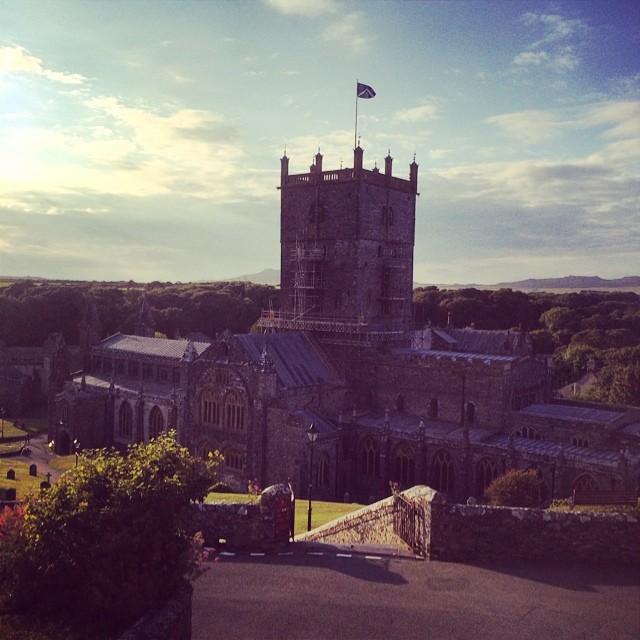
By the time we arrived in St David’s the weather was radiant and we found a beautiful ‘Welsh Rarebits‘ Hotel (Warpool Court Hotel). We took a relaxing walk along the Pembrokeshire coast in the evening and a much more strenuous (hilly) 70 km bike ride along the coast the next day ending with a couple of pints and fish & chips in the sun at The Bishop in sight of St David’s Cathedral. Heaven on Earth.

St David’s Cathedral

A couple of pints and fish & chips at The Bishops after a strenuous day biking

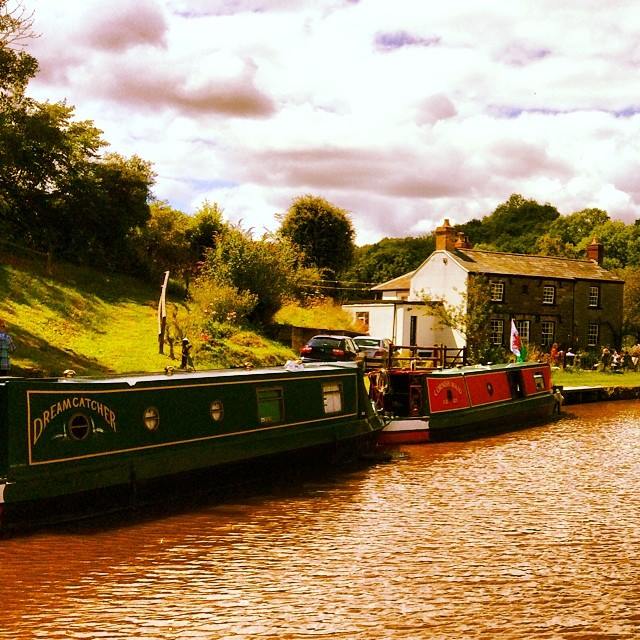
5. Waterside Walks in the Brecon Beacons

Between the hustle of Cardiff and bookish Hay-on-Wye we stopped off at another lovely Welsh Rarebits hotel (The Bear) in Crickhowell and did a pretty and relaxing walk along the canal and riverside. It was fairly flat hiking terrain too, which made it an extra relaxed experience; this was remedied by a quick run up Table Mountain the following day …

Lovely waterside walk in the Brecon Beacons

6. Learning about Oxford

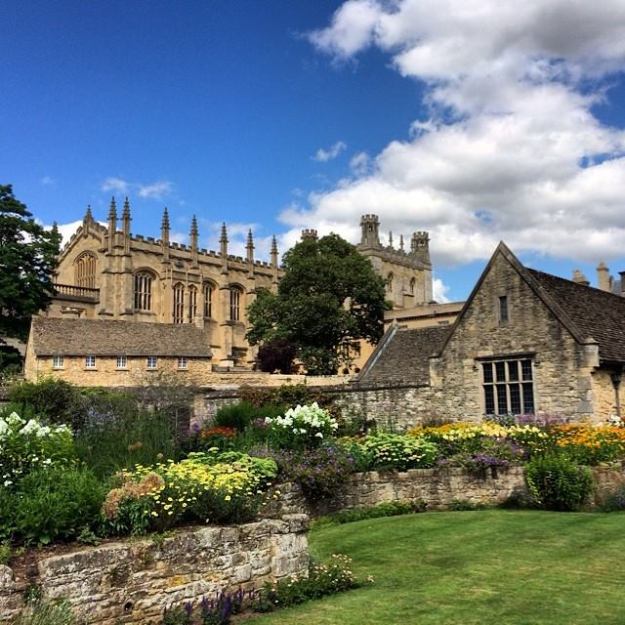
It wasn’t in our original plan but we decided to visit Oxford on the way back to Dover-Dunkirk. With my passion for learning I always get excited when I go to one of the great University cities. We visited some of the colleges in the glorious sun and then spent a couple of hours in the gigantic Blackwell’s bookshop. I bought as many books as I could carry and felt no shame that they were paper and would not be read on my Kindle. I need to do this more often!

Christ Church, Oxford

All Souls, Oxford

Bodleian Library, Oxford

Trinity, Oxford

7. Books on the Beach

When I was a child, our family typically went to the Devon, Cornwall or the Welsh coasts on holiday and spent most days on the beach. I’ve got happy memories of playing tennis with Dad in the sun and of playing in the sea surf with Grandad. These days I can’t take too much sun, but like to spend a few hours on the beach every now and then. On a beach in Pembrokeshire I read the laugh-out-loud funny ‘The Rosie Project‘ by Graeme Simsion about a scientist looking for a wife, and on Brighton beach I read ‘The Glass Closet‘ by former BP CEO John Browne about improving LGBT rights being good for business. I rarely have the time to read a book cover-to-cover these days and it was liberating to immerse myself into their stories. I can recommend them both.

8. English delicacies

A typical day nowadays might start with a muesli breakfast with soya milk. Lunch: a low fat cheese sandwich on multigrain bread without butter. Dinner: fish with no desert. Well, I was born in England in the 1970’s. For the last two weeks I have indulged heavily in the fine English delicacies of my youth. Full English breakfasts. Fish & Chips. Chicken Tikka Curry. Sunday Roast. Walker’s Crisps. Cadbury’s Dairy Milk chocolate (I still have a Pavlovian response  to purple wrappers to this day …). Every bite savoured.

Full English Breakfast: protein and fibre galore!

Fish, chips and mushy peas: well-rounded nutrition!

Cadbury’s Dairy Milk: rich in calcium and iron!


So those were a few of the things I especially enjoyed. Feeling good and energized and ready to go again!

Inspiring leadership in education

This week I attended the Global Education Conference in Boston sponsored by Harvard and Goldman Sachs. This was one of the most inspiring conferences I’ve attended in recent years. Sessions were spread over two days and included hot topics such as “financing disruption”, “creating value in a world of content abundance”, “bridging the skills gap” and “the promise of accessible education”.

I could happily write a post about each of them. But I will write about just one. The absolute highlight of the meeting for me was the opening keynote by Geoffrey Canada, CEO of the Harlem Children’s Zone, a charter school network of 12,300 students in New York. He has been instrumental in improving the performance of his students over a period of two decades such that 95% of high school seniors these days are accepted into college. He gave the best live keynote speech I have ever seen.

GeoffreyCanadaMuch of the focus of the conference was on technology, and I certainly believe that technology can be a great enabler in improving education.

However, Geoffrey’s impact comes from excellent leadership. In particular in taking actions to re-set the normative behaviour amongst the stakeholders including the local community. In a nutshell, in changing expectations in the community from “you have to be a genius to go to college” to “if he can do it, I can do it”. And amongst teachers from “don’t blame me, this is a mission impossible” to “my job is to get these kids into college”.

I personally believe that excellent education can be delivered when skilled teachers, motivated pupils and high quality learning materials play together effectively for the benefit of the learning of the pupil. The role of the school leader has not been strong on my radar. But of course, these three cornerstones rely on selecting and leading the right teachers and ensuring that a healthy culture and practices are in place in schools and their communities! The role of the school leader is pivotal. I should re-examine my beliefs!

Canada is a brilliant and inspiring speaker. You know that he wants the best for his pupils. You know that he will do whatever it takes to make it happen. He is highly engaging and has tremendous energy. He’s firm but fair. It’s not about him, it’s about the future of the kids at his school. I liked the clarity of his message. “Your job is to get these kids into college. The military is good. Vocational training is good too. But your job is to get these kids into college. That is what I expect from you”. I liked that he saw it as a journey. Year-on-year he saw impact. But transformation is a journey and the impact 20 years later was massive.

What would the equivalent message be for my own team? The essence of it is “help teachers to excel at developing the talents of every child in their class”. I believe this is the right direction and will be the journey of learning in the coming decade. How to achieve and measure that? If you have inspiring ideas then you are welcome to join our Learning Lab this coming Autumn!

Most of Canada’s keynote was energetic and funny. He is also a poet and took a more serious tone at the end by reading one of his own poems “Don’t blame me”. Inspiring and touching. Thanks Mr Canada, a brilliant leader, for making a positive impact on thousands of lives, and for inspiring me too.

DON’T BLAME ME
February 2007

The girl’s mother said, “Don’t blame me.
Her father left when she was three.
I know she don’t know her ABCs, her 1,2,3s,
But I am poor and work hard you see.”
You know the story, it’s don’t blame me.

The teacher shook her head and said,
“Don’t blame me, I know it’s sad.
He’s ten, but if the truth be told,
He reads like he was six years old.
And math, don’t ask.
It’s sad you see.
Wish I could do more, but it’s after three.
Blame the mom, blame society, blame the system.
Just don’t blame me.”

The judge was angry, his expression cold.
He scowled and said, “Son you’ve been told.
Break the law again and you’ll do time.
You’ve robbed with a gun.
Have you lost your mind?”
The young man opened his mouth to beg.
“Save your breath,” he heard instead.
“Your daddy left when you were two.
Your momma didn’t take care of you.
Your school prepared you for this fall.
Can’t read, can’t write, can’t spell at all.
But you did the crime for all to see.
You’re going to jail, son.
Don’t blame me.”

If there is a God or a person supreme,
A final reckoning, for the kind and the mean,
And judgment is rendered on who passed the buck,
Who blamed the victim or proudly stood up,
You’ll say to the world, “While I couldn’t save all,
I did not let these children fall.
By the thousands I helped all I could see.
No excuses, I took full responsibility.
No matter if they were black or white,
Were cursed, ignored, were wrong or right,
Were shunned, pre-judged, were short or tall,
I did my best to save them all.”
And I will bear witness for eternity
That you can state proudly,
“Don’t blame me.”

Sanoma Learning Lab: Co-create for Impact

sloa-header-1We’re going to run a Learning Lab this Autumn and I would like to invite you to join us. We’re going to develop new concepts with you, to improve and evidence the impact of education on learning.

There are 3 reasons why I would love you (teachers, academics, university students and Sanoma employees) to apply for a place at our learning lab:

1. Fantastic learning experience

You’ll get trained in start-up methods and work with experts on developing your idea. You might even win a place at bootcamp to build a prototype of it with a dedicated team of designers and developers. I’ve previously blogged about how such a program works and what happens at bootcamp. It’s really exciting to be part of it!

2. Great networking

The Lab will be a great way to build relationships with other professionals passionate about the future of learning, both locally and internationally. People from diverse backgrounds, from instructional design to user experience to learning analytics. People who want to make a difference in education.

3. Make an impact on the future of learning

We’ll co-develop new concepts with you, to improve and evidence the impact of education and to contribute to the future of learning. Concepts that will improve learning results, support the ways of working and help to better engage pupils. It’s about the future of learning.

Join us!

We’ll be accepting applications until 24th August. Please go to www.sanomalearninglab.com and apply. I really hope you’ll join us! Looking forward >>.

The killer app in education is the teacher

edtech-logoLast week the second EdTech Europe meeting was held in London. It was an inspiring day and attracted high quality participants including quite a large audience of start-ups, established operating companies and investors. Thanks to Charles McIntyre, CEO of IBIS Capital and Benjamin Vedrenne-Cloquet, Founding CEO of Edxus Group, for having arranged this excellent meeting!

I was a speaker on one of the panels and also a member of the Advisory Board, so I was happy it was a success. I loved engaging with the entrepreneurs running the edtech ventures. It’s inspiring to hear their stories and feel their energy. And it was also a great networking event for meeting peers from across Europe.

Technology, platform, content, data?

This was a meeting about educational technology, so there was rightly a lot of discussion about the transformation of education and the roles that technology, platforms, content and data will play. What will be the “killer app” of education in the future?

The killer app in education today is the teacher

Today I believe that the “killer app” of K-12 education is the teacher. Great teachers engage individuals and classes, ensuring that they are motivated to learn. They stretch and support individual pupils so that they reach the best learning outcome they can. And they guide the ways of working such that learning time is spent usefully.

Technology will both enable and disrupt teachers in the future

Effective use of technology, platforms, content and data can help to raise learning outcomes (e.g. data-driven personalised learning), bring efficiency to the ways of working (e.g. automation and performance dashboards), and support engagement and motivation (e.g. gamification and storyfication). The teacher is therefore likely to get both enabled and disrupted by technology in the future.

Yet although the role of the teacher will change, I believe they will remain the “killer app” of education in the future too. They are likely to remain the leader of the classroom. They will probably more-or-less remain as the primary guide and gatekeeper to the learning activities that are carried out. And their relationship with classes and individual pupils will remain pivotal to engagement and motivation.

Enable teachers to develop each child

Our ambition is to use edtech to enable teachers to excel at developing the talents of every child, resulting in higher outcomes, better engagement and new ways of working. That’s something I believe in and would be keen to invest in.

Lifelong learning

Last week was the anniversary of the week that my father died – a long time ago in the meantime. He was a good and decent man and our family grew up in a loving home. These days I think about him when there is something happening in the family and during that last week of May that has just passed.

I got my passion for learning from my father. He was not educated, but he believed in the power of education.

  • He made me want to contribute to creating a better world
  • He encouraged my curious mind
  • He expected me to have high expectations of myself
  • He taught me to work hard and to be persistent.

I remember the happy times we had together in the past. I am thankful that our family is in good health and good spirit today. And I am grateful that you gave me a life-long love of learning.

Rest in peace Dad x.

Revitalizing Primary and Secondary Education in Russia

Last weekend I was a speaker/panelist at the St Petersburg International Economic Forum on the subject of Revitalizing Primary and Secondary Education in Russia. Learning outcomes in Russia are rather uncompetitive when seen from an international perspective. I was also surprised to hear that schools in many urban areas run two shifts a day due to a lack of capacity.

Although Sanoma Learning is not currently directly active on the Russian market, we were interested to contribute to the discussion. Firstly, because we believe that education is one of the most powerful instruments known for developing individual talent, reducing poverty and inequality and for laying the basis for sustained economic growth, sound governance and effective institutions across the globe. And secondly since we might be able to contribute to improving Russian learning outcomes in the future.

What can Russia learn from our experience?

I was asked what Russia could learn from our experience. I cannot claim to be an expert on Russian education. However, we are an integral player in a number of education systems that consistently perform very well – including Finland, The Netherlands and Belgium. In addition we are the market leader in Poland which has been one of the rising stars on outcomes in recent years. And we have recently acquired a position in Sweden and are keen to support teachers in raising learning outcomes there too.

On the basis of our experience in these successful systems, we believe there are three cornerstones of excellence in primary and secondary education.

1. Skilled and motivated teachers

The first cornerstone is to make sure the level of skills and motivation of teachers is high. A skilled teacher is like a great leader – the impact is huge. They are the heroes and heroines of education. For example, this means:
a. Getting the best people to apply to teacher training
b. Paying them adequately
c. Making sure they are treated with respect, both in school and in society
d. Not over-managing them – they are professionals. Give them space to run their classes without too many rules
e. Making sure they have access to good learning and teaching materials and are free to choose them based on their professional insights. State-prescribed and created materials tend to lead to lower standards and reduced motivation for teachers
f. Keeping their skills up-to-date.

2. Motivated pupils

The second cornerstone is to ensure that pupils are motivated. The correlation between motivation and outcomes is high. This includes:
a. As described above, recruiting and retaining good teachers who can motivate pupils and classes
b. Promoting equity. It’s important to support poorly-performing students and students in economically less advantaged areas. Furthermore, to include marginalized pupils such as those with special needs or from diverse backgrounds and minorities in the mainstream. Their education should be well resourced. It will significantly improve their life chances and lead to better overall outcomes
c. Ensuring that education is valued in society. Amongst others, this will encourage parents to support learning, and this will raise expectations which typically raises outcomes too
d. Finding ways to personalise the process of learning, for example by using technology, or ensuring the teacher has time for individual intervention, or by providing access to tutors. Personalisation improves engagement and better engagement tends to lead to improved outcomes
e. Using high quality learning materials, that both pupils and teachers appreciate.

3. High quality learning solutions

We believe that the third cornerstone to excellence in education is to provide teachers and pupils with high quality learning solutions. They can make a significant contribution to achieving excellent learning outcomes, in a time- and cost-effective manner, whilst keeping pupils and teachers engaged on the journey of learning. Such solutions could include the following elements (for some parts depending on the ICT status of the school):

a. Close “fit” with the local curriculum, language, culture and ways
b. Excellent instructional design
c. Good user experience
d. Play multichannel
e. Capture data and can give insights, and on that basis can be personalisable and adaptive
f. Deploy a coherent learning path and design – easy to use for both pupil and teacher
g. The teacher should have a high level of freedom to choose from a competitive offering – to find the solution that fits them and their class best.

Our beliefs

So those are our beliefs about the cornerstones of creating excellent education systems. There is probably not a single approach that can be copied and pasted across the globe. But the chances are good that most education systems (including Russia) would benefit by focusing on skilled teachers, motivating pupils and providing high quality learning solutions.

Thank you Jacques!

Last week our leadership team at Sanoma Learning and the local team in Den Bosch thanked Jacques Eijkens for having been a great CEO and founding father of the company. It was truly touching to hear the personal stories and feel the respect and trust that Jacques had built up with the team.

It was about five years ago that I met Jacques for the first time. He was looking to recruit someone for the Learning team to help them to develop the business further. I remember coming back from the discussions with him, Barend de Graaff (CFO) and Mark Marseille (CHRO) thinking that it would be great to work in that team with that boss on that assignment. And also wondering what they feed the people in the South of Holland that makes them so tall :-) (answer: lots of cheese sandwiches and milk).

So I joined the company soon after and experienced Jacques as an excellent boss! There are three things that I’ve especially appreciated about working with him and think these things have contributed to the success of our Learning business today:

1. Great coach. Jacques has been a great coach to both the team and the individuals in the team. His feedback to me has been consistently true and insightful and always comes from the perspective of helping me to do my best for Learning. He respects your strengths and challenges you to develop yourself further in a very natural and motivating way.  You know he wants you to be your best.

2. Customer first. Probably borne out of his marketing background, putting the customer at the centre of our thinking has always been front-of-mind and tip-of-tongue for Jacques. We win or lose in the market depending on how well we serve our customers. Especially in a corporate setting it’s of critical importance that we never lose sight of that.

3. Feeling for essence. I have always respected Jacques’ feeling for essence. Our business is getting increasingly complex and Jacques has been a good guide in finding the way on our journey. Focus on the things that really matter.

It’s about 9 months ago now since I heard Jacques was intending to step aside. My first thought was that this would be a big shock to the people at Sanoma Learning: he has done an excellent job and is loved by the people in the organization. My second thought was that I share his passion for learning and can bring new skills that can help us on the next step of our journey to the digital future.  I was keen to lead Sanoma Learning – although it will not be easy to succeed such a big man!

I’d like to thank Jacques for his trust and support. And for having been a great leader, a true professional, and for all the fun we have had on the journey so far!