Author Archives: johnrichardmartin

Unknown's avatar

About johnrichardmartin

Former CEO at Sanoma Learning.

Learning outcomes accelerator: co-creating new solutions with schools

The future of learning is personal

personalAs we move from the industrial age to the knowledge age, our ways of working in education will change too. Amongst others, technology will enable us to tailor pedagogy, curriculum and learning support to the needs and aspirations of each individual learner. Developing the talents and potential of individuals and helping them to make progress in their lives will be key.

Our thinking needs to shift. From inputs …

Governments have traditionally put a lot of emphasis on the inputs into education. How much do we spend? How many pupils per classroom? How many hours of class time? How much do we spend on learning materials? How many devices in the school? These things are all important.

… to outcomes

input-to-outcomesHowever, the value is in the outcome not the input. Are we helping individuals to make progress in their learning career? Are we preparing them for effectively for work? Are we enabling them to become good and fulfilled citizens? These are the big outcomes questions.

Maybe these questions are so big that we only know the answers when it’s too late. Therefore, on a more practical level, we should break it down into something more manageable. For example, for each activity (“course” or “lesson”):

– does this contribute to a good learning result for all of the individual pupils?
– in a way that is engaging and motivating for pupils and teachers?
– and in a way that is effective in terms of time, cost and energy?

By bringing these outcomes into focus, we can reshape education for the next generation.

Enter the Learning Outcomes Accelerator

At the OPPI Learning Festival in Helsinki last week (great initiative!), we announced the launch of an open Learning Outcomes Accelerator:

“how can we improve and evidence the impact of education in the new era?”

In each of the countries in which Sanoma Learning operates (Finland, The Netherlands, Belgium, Poland and Sweden) – pretty much an all-star cast for PISA :) – we would like to work with one school where at least one teacher/class would participate.

Also, we would like to ask academics (with expertise in outcomes, learning analytics, pedagogy and so on) to join us to bring an extra richness to our thinking and approach. And 75 professionals from Sanoma, with expertise about course and curriculum development, design and user experience, and lean startup methodologies will join us in creating new prototypes.

How does the accelerator work?

Participants at bootcamp

Participants at bootcamp

We will launch (in September, dates to be finalized) with five “live” kick-offs, one in each of the main schools participating. This will be followed by a seven week program of ideation and training, during which hundreds of ideas will be created, tested and improved. Towards the end of the process the best five ideas will be selected by public voting and the winners will be invited (expenses paid) for a four-day bootcamp in Amsterdam to build their prototype. I’ve previously blogged about how an accelerator works and what happens at bootcamp. It’s really exciting and inspiring to be part of it!

What is it, what isn’t it?

The accelerator will be above all about learning by doing! It will be fast-paced, highly practical and we will go from idea to functional prototype in less than 10 weeks. It will be structured in terms of the goals, process and support. And open in terms of ideas. It will be a journey of discovery and experimentation and this is what makes an open accelerator so exciting.

It’s not a big academic exercise. We won’t write a book about it. (Even if books are good too.)

Register and help us co-create new solutions for outcomes

If you would like to join the accelerator and you’re either a teacher at a school in one of the five countries mentioned earlier, or an academic from there or elsewhere, please let us know at sanomalearningoutcomes.com. We will strive to have decided which five schools to work with on this particular accelerator by the end of June. Participation is free of charge. We will be accepting applications until 1 September.

I was positively surprised by the interest from other groups at OPPI too. For example, some Foundations, Universities, other companies, schools in other countries and educational journalists also wanted to get involved. If you are from one of these groups and have something exciting to bring to the accelerator, then please take contact with me and let’s see if there are possibilities for us to adapt the program so you can join us.

Looking forward >>

I believe that by bringing outcomes into focus, we can reshape education for the next generation. I hope you will join us on this exciting journey!

Back to the Future of Learning

future of learningThis week I have returned to Sanoma Learning as CEO, succeeding Jacques Eijkens who established and has led the development of the company during the last eight years. Great job Jacques! It’s an honour to be given this opportunity. I have a big respect for the teams and what they have achieved so far and believe I can bring digital and innovation experience that can help us on the journey to the next era.

Education is at the dawn of a new age

Stakeholders rightly want to renew education: they have new and higher demands on outcomes, personalisation and ways of working in particular.  We’re at the dawn of a new age for education – and technology will be a key enabler of the transformation. Today, Sanoma Learning is a successful provider of educational resources and has excellent customer focus, skilled people, strong brands and good financial health. Yet today’s strength does not guarantee tomorrow’s success. I believe that by supporting pupils and teachers with digital personalised-learning solutions, Sanoma Learning can have a major positive impact on the transformation of education. We are well-positioned as we continue on the journey to the digital future, but our success will be determined by how markets for learning solutions evolve and how effectively we manage the digital transformation.

Further renewing our offering will be key

Our main priority in the coming years will be to further renew our offering. In our core markets, we will focus on the digital transformation: digitalising courses, adding workflow functionalities and using data to support workflow, guide personalisation and improve learning outcomes. We also have the ambition to build a position in online tutoring, thereby further personalising the learning experience and creating new possibilities for growth. And we intend to build a position in emerging markets, leveraging and increasing the impact of our learning solutions and opening up new revenue streams. At this moment in time, we are making good progress in our core markets and are at the early stage of developing new home-grown ventures in online tutoring and emerging markets.

Learning about Learning

Today is my first day in the new role and I will start by visiting the units to engage with the teams – I’m enthusiastic about getting to know the people and to understand the opportunities and plans for the future. I will be keen to support and accelerate the development agenda and for Sanoma Learning to play a pivotal role in the transformation of education. I’m really looking forward to working with the teams on this great opportunity!

Sanoma’s digital transformation gains momentum

Sanoma House in Helsinki

Sanoma House in Helsinki

Last week Sanoma announced the FY2013 results. To be frank they were mixed, with online and mobile sales growing but print media in decline. The vocabulary turned classical: annus horribilis, Utopia, and per angusta ad augusta, could be heard in English, Finnish and Dutch conversations during the week. As is often the case with mixed signals, the good news has been somewhat drowned out by the more negative headlines throughout the year.  Yet Learning had a good 2013. And after a slow start to the year the overall digital platform has gained momentum and performed particularly strongly in the final quarter.

I always find it tricky blogging about financial results given that Sanoma is a listed company. But now that we have announced the results, I’d like to call out a handful of highlights on digital in Finland, The Netherlands, Learning and early stage innovation at Sanoma in 2013, drawing on the published materials.

As a reminder, the core strategy of Sanoma rests on three pillars: i) connecting consumers with content and brands, anywhere, anytime; ii) delivering powerful marketing opportunities to advertisers through our reach and consumer insight; and iii) providing personalized digital learning solutions to pupils and teachers.  Digital is clearly an integral part of that strategy.

Finland

Our share of the online media market grew by 5%-points to almost 40%.  Our online advertising revenues grew by 18% over the previous year and digital consumer sales grew by almost 30%. Digital subscriptions at Sanoma’s single biggest brand, the newspaper Helsingin Sanomat, grew by almost 40% to 160,000 (on a total of about 355,000). Furthermore, digital sales at our second biggest brand Ilta-Sanomat grew by about 40%, whereby digital revenue gains now appear to be exceeding print losses; this terrific performance also secured a lead for Ilta-Sanomat over Iltalehti in terms of visitors. We also saw early success at magazines with the Donald Duck library reaching 12,000 subscribers.

Our market-leading position in recruitment got even stronger and we regained leadership in terms of visitors in real estate.  Finally, we made a great start with e-commerce service MSO.fi with more than 120 retailers already on board.

We have seen strong growth in usage via mobile devices and of online video and this is where we have registered our fastest growth.  By the end of 2013, over 50% of all pageviews on our Finnish network came from mobile devices, with mobile visitors growing by over 100% and pageviews by close to 150%.  Correspondingly, mobile advertising sales grew by around 180%Online video advertising sales grew by over 30% and the weekly reach of video platform ruutu.fi by 25%.

The Netherlands

comScore ranks Sanoma #4 of the big 5 in The Netherlands with 8.1 M unique visitors (MUV) in December 2013  – behind Google, Microsoft and Facebook (12.7, 10.7 and 9.9 MUV, respectively), but ahead of eBay (6.6 MUV). Other Dutch media groups are also represented in the top 20, but lack the reach of Sanoma. The state-subsidised NPO, and privately run TMG, De Persgroep and RTL Groep, registered a reach of 6.2, 5.3, 4.7 and 4.4 MUV respectively in December.

NU.nl, the leading news site by visitors and strongest media brand in The Netherlands and a cornerstone of Sanoma’s digital network, further strengthened this position in 2013 delighting readers with more than 10.000.000.000 pageviews, almost exactly 50 per inhabitant per month! Pageviews have more than doubled in the last three years and in the meantime more than 75% of views are made from mobile devices.  NU-apps have been downloaded more than 5 M times so far.

In common with Finland, video also grew strongly (about 40%) totalling 152 M at video platform zie.nl.

Lindanieuws.nl – an extension of the highly successful magazine brand Linda. – came with a new version that resulted in a tripling of the number of visitors to 1.2 M and a doubling of advertising sales.

Digital sales via automated trading increased by almost 25% – a serious money-maker for our digital network.  Our performance-based business had a solid year. In particular, sales at the recently acquired FashionChick doubled, partly driven by international expansion. The introduction of curated search at directory Startpagina.nl has been a runaway success and one of the most rapidly growing digital product innovations we have made in recent years. Net sales of e-commerce service SBC grew by 25%, with sales of home deco performing particularly well with a growth of nearly 50%, And soft launches of new brands leef.nl (health) and yixx.nl (jewellery) and of the international launch of price comparison site kieskeurig.nl in France and Poland have helped to ensure a healthy pipeline of new business lines that we expect will support the growth of the performance-based assets in the coming years.

Learning

At Learning, there are also good data to evidence our progress to a more digital future. Much of this relates to bringing content to life by making it more functional through digital. For example, in The Netherlands, more than 1,000,000 pupils in primary education work with Malmberg’s software, reaching 60% of all schools.  In a single week in November, more than 1,000,000 exercises were made on homework platform Bingel.be in Belgium. And in Finland, teachers and pupils logged into Sanoma Pro’s new learning environment 1,900,000 times, with 768,000 hours of active use. In the meantime 800 e-books have been published in Sanoma’s five Learning countries on the BookShelf platform provided by Young Digital Planet.

In addition to transforming its core business, Sanoma Learning is working on providing learning services to the home market with a new online tutoring proposition for mathematics: StudySteps. This has been soft launched in Belgium and The Netherlands, tested in Poland and Russia, and the first results are promising, with 110,000 exercises made in the test period.

Furthermore, Sanoma Learning is exploring the possibilities to build a position in emerging markets and has amongst others made an agreement with the People’s Education Press to provide digital services to support the provision of e-learning in China. It’s early days, but there is clear demand for Sanoma’s high quality Learning capabilities abroad.

Innovation

SanomaVentures had an exciting year, receiving over 400 requests from external startups, which ultimately resulted in 9 investments, bringing the total to 15 to date.  In aggregate the business/financial performance of this portfolio has been promising and these ventures currently employ over 161 people. We expect to make a similar number of new investments this year.

Building on the success of the series of in-house innovation accelerators, we have now launched an Innovation Lab to foster the ventures that are borne out of the accelerators and as a test ground for new ideas from the core business.  We currently have a full pipeline of concepts, prototypes and early stage ventures and have set ourselves the goal to have established five ventures in the next 3-5 years that have an annual revenue potential of € 10 M+. In 2013 we ran four accelerators (Content, Commerce, Talent and NU-lab), two of which were open to external participation. Through these accelerators we trained about 500 Sanoma employees on the lean development methodology and created 15 functional prototypes, about half of which have been given seed funding for further customer validation.

Finally, we have significantly increased our investments and human resourcing on data science including hiring a team of 20 data scientists last year to boost our analytics and insights capabilities across Sanoma. We are currently working on developing the common “big data” enablers, as well as specific cases on consumer sales, online advertising and new business models. We expect to make a quantum leap in our insights capabilities in the coming years.

Good progress on the journey

Overall, reflecting on the three pillars of Sanoma’s strategy i) connecting consumers with content and brands, anywhere, anytime, and ii) delivering powerful marketing opportunities to advertisers through our reach and consumer insight and iii) providing personalized digital learning solutions to pupils and teachers, I believe the highlights above show that digital has made a big contribution in 2013 to progressing this strategy. Respect to the teams who have made this happen and thanks for your hard work!

Flipping 2.0

flipping 2.0I’m curious about how we can ‘personalize’ learning: how can we help each individual learner to best develop their talents?

‘Flipped learning’ has caught my attention as one potential route, characterized by a more student-centric classroom, higher-level thinking as a goal, and good use of face-to-face interaction between students and teachers.

For this reason I recently read Flipping 2.0: Practical Strategies for Flipping Your Class, compiled by Jason Bretzmann, with authors contributing to sections on 1) Flipping in the core content areas, 2) Can anybody flip? and 3) Just for teachers.

I would like to recommend this book to teachers interested in flipping their classrooms and to other creators of educational resources looking to support personalized learning. I thought it was surprisingly accessible and there were three things I particularly appreciated about it:

1. Expert

All of the contributors have in-depth and first-hand experience of transitioning to a flipped classroom and describe that transformation clearly.  I thought the cases were helpful and real-world descriptions of the benefits and pitfalls. This is not a book of idealized concepts written by hands-off consultants but a very credible “how-to” handbook.

2. Practical

I especially liked the practical nature of the book. Amongst others, it’s a great resource for working out which technical resources might work best for teachers and students. There’s a lot of useful practical advice on creating learning materials, engaging students and dealing with challenges connected with flipped learning such as access to technology.  Where there’s a will, there’s a way.

3. Passion for teaching and learning

I love it when people are passionate about what they do. The contributors to this work share a passion for teaching and learning and that oozes through the pages. You feel throughout the book that they are striving to be great teachers and are constantly looking for ways to excel and improve in that role. Respect!

By the end of the book I personally wanted to create my own lessons and I’m not even a teacher! Apart from thinking how we could support the flipped classroom at Sanoma Learning, it also made me wonder if I could use some of these learnings in my own job. Somehow a ‘flipped board meeting’ doesn’t sound quite right :-), yet we do say that we want to spend less time going through powerpoint slides and more time on discussing and improving the strategies. Worth an experiment …

Amazing Australia

Working mainly from Finland and Holland during the year, I was keen to find a way to see some daylight this Winter. Destination: Australia. We wouldn’t be joining the Barmy Army at the Ashes Cricket Tournament. I’m a biologist by training and love to visit places of outstanding natural beauty – there is so much fantastic and unique nature to experience in this country. I was slightly apprehensive about one aspect of the trip: venomous snakes, crocodiles, killer sharks, deadly jellyfish, stingrays, poisonous spiders and typhoons. It’s not all Kangaroo and Koala. In England it rarely gets more dangerous than the neighbour’s cat and a bit of drizzle. However, my apprehension was unfounded: not a single bite or sting.

I’ll spare you the details but wanted to share my top five highlights from the visit (in no particular order):

Whitsunday Islands

Whitehaven Beach

Whitehaven Beach

We spent a few days here including Christmas Day on Whitehaven Beach. This is the most stunning unspoiled white sand and clear sea I have ever seen. What a paradise!

We enjoyed a twilight sail on Christmas Eve and canoeing and swimming in the balmy sea that day. A super-relaxed and summery Christmas-time.

Great Barrier Reef

I had always wanted to see the Reef. We took a reef2professionally arranged trip 70 km off the Cairns shoreline and made three stops. I’ve never snorkeled or dived before and am not a strong swimmer, but it was easy and I soon got the hang of it.

reefIt’s funny to be so far from the coast yet to see the ocean bed just a few metres below. I can’t begin to describe how beautiful it is to look down into the clear blue waters and see the coral reef and multitude of colourful fish for the first time. Breathing under water was such a weird sensation. Out of this world!


Sydney

SOH1

Sydney Opera House and Harbour Bridge

We visited a few cities during the trip, including Sydney, Melbourne, Brisbane, Cairns, Alice Springs and Darwin. Australia is a predominantly urban society with nearly 90% of the population living in urban areas. The quality of city life in Australia is also very high – the Economist Intelligence Unit placed four Australian cities in the top 10 worldwide in their City Liveability Index 2013 (Helsinki also scored highly at position 8).

All of the cities we visited seemed intelligently-designed and functional including lots of well-maintained open spaces.

NYE1I could imagine it would be a pleasure to live in such a city. Most places look better and feel happier when the sun is shining too :-).

We were lucky to be in Sydney on New Year’s Eve and got up early to secure a prime viewing spot of the firework display. NYE3(Thankfully Australians queue like the English and not like the Dutch – it was an impressive 17.000 person line).

It was a good spirited day in the park and what a spectacle at midnight!

Twelve Apostles

apostlesapostles2We drove part of the Great Ocean Road from Melbourne in the direction of Adelaide. There were wonderful views of the ocean and surfing along the way. The highlight was the Twelve Apostles: amazing reddish cliffs, with the rough yet clear blue seas and angry cloudy skies. It was a stormy, rugged place, quite a contrast to the rather sophisticated Melbourne we had just left. This is probably the most surprising entry on the list, but well worth the visit if you get the chance.

Uluru

uluruWe flew to Alice Springs and rented a 4WD to make the return trip to Uluru, Kata Tjuta and King’s Canyon. We saw a spectacular sunset at the Rock and got up early(ish) the next morning to make the 10,5 km walk around the base of it. The route was closed in the afternoon due to extreme conditions – it was 41 °C when we returned to the car. It was a spiritual place and the “sensitive areas” of cultural importance to the Aborigines were well-marked, explained and respected. I liked the stories about life skills being passed down through the generations and the role of the extended family in that. This is one of those places like the Taj Mahal that you should experience at different times of the day, to appreciate the changing face of her beauty.

So, those were my highlights. Probably not a very surprising list, but definitely a great experience and a brilliant way to get new energy for the challenges ahead in the New Year.

Sanoma Startup Challenge: the Future of Learning

20140105-230333.jpg

We recently announced the launch of a startup challenge, focusing on the future of learning. The goal of the challenge is to identify Europe’s most promising startups in K-12 education and to work with them in finding ways to help them to grow.

We’re encouraging applications from European startups that have a live product and growing customer base, but are still smaller than € 2 M in annual revenues and have been established within the last five years.

The application round is now open and will close on 1 March. Five finalists will be invited (expenses paid) to Amsterdam on 23-25 April to work with executives and experts from Sanoma Learning and SanomaVentures and to pitch their startup to The Next Web Conference audience and jury. The final winner will be announced immediately after the pitches and will receive a cash prize of € 25.000. We will also explore the options with the finalists for closer collaboration with Sanoma in supporting their growth ambitions.

Education is at the dawn of a new era, partly enabled by technology. As interim CEO of Sanoma Digital and CEO Designate of Sanoma Learning I am excited about working together with high potential startups in the edtech space and hope that we can build some successful and long-lasting relationships through this initiative!

For more information on the learning startup challenge, including the application procedure, click here.

Good luck to all applicants and I hope to see you in Amsterdam in April!

Abundance

20131227-184040.jpg
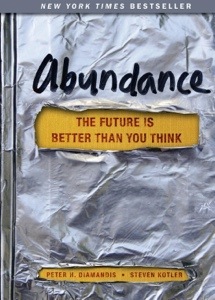
Last month I saw Peter Diamandis speak in Amsterdam and was inspired by his vision and approach to creating a world where we live in abundance rather than scarcity. Together with Steven Kotler he has earlier articulated this case in the excellent book ‘Abundance: The Future is Better Than You Think’.

The Abundance Pyramid
Diamandis and Kotler describe abundance by means of a pyramid, structured with three tiers of ‘goods’ (inspired by Maslow’s ‘hierarchy of needs’). The base of the pyramid concerns the essential needs of water, food and shelter: these resources enable life itself. The middle tier in the pyramid includes energy, education and ICT: they contribute directly to improved living standards and can also catalyze further growth. The top tier of the pyramid is reserved for freedom and health: they support the well-being of the individuals and enable them to reach their full potential and make the maximum impact for a better world. The authors describe the goal of abundance as a sustainable world in which every person on the planet has the opportunity to access the goods in the three tiers.

Progress through technology
The authors make the case that expontential advances in technology will allow us within twenty-five years to create abundance on these three tiers for a world of nine billion people. How about that for a Big Hairy Audacious Goal: global abundance within twenty-five years! They believe that these advances will be supported by three driving forces. Firstly, the rise of DIY innovation, enabling individuals and small organisations to tackle problems previously only addressable by governments, thereby massively opening up the talent pool working on solutions. Secondly, the rise of the technophilanthopist, whereby very wealthy individuals commit a major part of their wealth and talent to helping the world’s less fortunate. Thirdly, what they term ‘the rising billion‘ – the world’s poorest (in fact, closer to four billion today) who have made rapid progress in improving there positions in recent years, largely supported by mobile technology, and will soon be able to pull themselves out of poverty.

Concrete cases
Diamandis describes for each of the goals in the abundance pyramid, the technologies that could contribute to a more abundant world and in which way. He makes a convincing case!

Accelerating the pace of change
They conclude the book by suggesting that the best way for businesses and governments to achieve abundance goals is to use open incentive prizes – they believe that such competitions are the most effective method to motivate the smartest people in the world to develop new solutions. They puts forward some powerful cases to demonstrate the point.

Inspiring work
I was inspired by the optimism of this book and the concreteness of the supporting arguments. The failings of our world are well covered in the media (rightly so) and we are in any case biologically programmed to be on high alert to them. It was good to see the other side of the coin and I experienced this as a well-founded articulation of a positive scenario. I respect that a lot. Arguably there are parts of the book that go too far, and some of the downsides of the journey to abundance could be ugly. Nevertheless, I would like to recommend this book to readers looking for inspiration about a positive future for our planet.

Sanoma can make a difference through education
About a week before seeing Diamandis, I joined a group of innovation leaders for lunch with the former PM of The Netherlands, Jan-Peter Balkenende, to discuss innovation and sustainability. He emphasized the importance of the business of sustainability: how can we create new business opportunities (with a profit incentive) by helping to build a more sustainable world? He referred also to Abundance in this context.

In the case of Sanoma, I believe we can best support sustainable abundance through our Learning business. As described above, education is part of the middle tier of the abundance pyramid, contributing directly to improved living standards and catalyzing new growth. Through our strong positions in developed economies, I believe we can further progress personal and societal development by personalising the process of learning, to help individuals to realise the full potential of their unique talents. Maybe an even more audacious goal would be to bring access to high quality online education to the rising (four) billion people in developing economies. I don’t yet know the extent to which Sanoma is ready, willing and able to play a role in this. Even if we could fulfil but a part of that task, it would surely be a worthwhile (and profitable) contribution to a more abundant future! Wouldn’t that be a terrific mission to work on?!

Imagine
Imagine that you could be part of a movement that could create an abundant world within twenty-five years. What would you do? Sanoma Learning can help to provide access to high quality education and I am personally passionate about that goal. Care to join us on that journey? Or to create a new journey to abundance of your own? I’m interested to hear your thoughts on this.

Making it happen at the CommerceAccelerator bootcamp!

Participants at the closing session. Blinded by the light ...

Participants at the closing session. Blinded by the light …

We’re working hard on transforming Sanoma for a more digital future. Boosting innovation is key and includes developing new digital business lines and learning new skills that we can use across the company. For this purpose we have created the Innovation Accelerators and the CommerceAccelerator is the third in the series so far.

We see three domains of opportunity for the future Sanoma. Firstly, we want to provide information and entertainment to consumers across multiple channels. Secondly we want to help advertisers with powerful marketing solutions based on our reach to consumers and insights into them.  And thirdly, we want to help to help pupils and teachers to achieve great learning outcomes using new learning solutions.

Winners go to bootcamp

Team leaders at the closing session

Team leaders at closing session

In Amsterdam last week we ran the bootcamp for the CommerceAccelerator – focusing on the advertising domain mentioned above. The top 5 ideas and their owners were selected in a live webinar to build prototypes of their concepts. This followed an inspiring program of ideation and training, of building and testing ideas, which started out with about 220 participants from across Sanoma and included about 70 university students.

Rich talent

Student team Weggle from Tampere

Student team Weggle from Tampere

We had an interesting and varied mix of talent amongst the team leaders, including people from business development, sales, product management, television and a student team from Tampere.  I like it a lot when we have such a diversity of experience and skills at the bootcamp: it makes for a rich and exciting experience!

Fast pace, strong delivery

I love the bootcamps. They are practical and fast paced. They’re very demanding but also a lot of fun. It’s great to have teams of talented and driven people working on building prototypes and testing them with real customers.  Making it happen!  I believe in learning by doing and this is a very concrete proof of that!

Leadership

Listening to CEO Harri-Pekka Kaukonen kicking off the pitch session (for the sake of good order, I am tweeting that picture in this photo, I am not checking my mail during the speech :))

Listening to CEO Harri-Pekka Kaukonen kicking off the pitch session. (For the sake of good order, I am tweeting that picture in this photo, I am not checking my mail during the speech!)

We were joined by Sanoma’s CEO Harri-Pekka Kaukonen, CHRO Jackie Cuthbert and the CEO of Sanoma Learning Jacques Eijkens. They are all strong supporters of the accelerators. We appreciated that they joined us; they are all super-busy driving the transformation of Sanoma, but it is brilliant that they make the time to support the accelerators.  A great show of leadership!

Five prototypes

Listening with intent to the pitches. Amongst others, Harri-Pekka Kaukonen on the front row, and Jackie Cuthbert on the back row.

Listening with intent to the pitches. Amongst others, Harri-Pekka Kaukonen on the front row, and Jackie Cuthbert on the back row.

At the end of the day on Thursday each of the teams demonstrated their prototypes. They included i) a contextual and sentimental targeting service; ii) a pre-targeting service; iii) a mobile advertising service iv) a gamified service to engage viewers during TV commercial breaks and v) a shopping service bridging the real and virtual worlds. Some of the testing with customers has been quite brilliant and helped to underpin the commercial promise of the ideas. Great validation!  (I would like to show the promo video’s here, but feel it’s a bit premature at this stage).

Top teams

I really like and respect the passion and enthusiasm of the teams and am proud of how they have performed and behaved! This counts for the idea owners and the talented professionals from MakerLab.  And also for Lassi Kurkijärvi (@lassi, Director at Sanoma) and Joris van Heukelom (@jorisheuk, Partner at Makerstreet) who once again showed inspiring leadership throughout the program.  Great job everyone!

Next steps

We have promised the teams that we will inform them how we would like to proceed by the end of next week. There are three alternatives: i) create a new venture ii) develop within the business or iii) not pursue the opportunity. I am confident we will pursue some of these concepts and will engage with the key stakeholders to ensure that we will be able to bring them to market quickly!

The world turns of course, and we are working on developing the next accelerator which will focus on 4G and video and we aim to start in Q1 next year.  With the launch of our Innovation Lab in January (as part of the new unit Sanoma Digital), which will be led by our mobile superhero Lassi Kurkijärvi, the Innovation Accelerators have become a core element of our transformation program. I see the establishment of the Innovation Lab as a great validation of the success of the accelerators we have run so far.

I’ve been happy about the high level of support that we have won from top management and young talent. What I would like to develop further in upcoming accelerators is to secure more engagement from middle managers. I believe this would help us in transforming the core business.  If anyone has good ideas about how to achieve this, please drop me a line!

CommerceAccelerator goes to bootcamp

commerce-accelerator-bootcamp-selectionLast week in a live broadcast, we selected the five winning concepts and idea owners who will join us this week at the bootcamp of the CommerceAccelerator in Amsterdam. We will build prototypes of these ideas and test them with customers, as a pre-cursor to deciding which concepts to sponsor as new ventures at Sanoma.

Two big goals

We have two main objectives for the accelerator programs.

Firstly, we want to develop new digital business lines – to plant the seeds of the next generation of Sanoma products and services. We have set ourselves the target of establishing five new ventures (the “fabulous five”) within the next five years that have clearly demonstrated the potential to become as successful as NU.nl is today. From the first two accelerators we have created six new ventures and we will soon reach the critical moment when we decide which of them to boost further and which to discontinue.

Secondly, we want to develop lean development skills across Sanoma to support the overall digital transformation. We want 20% of all employees to join an accelerator program in the next five years. By the end of 2014, we expect that more than 1.000 Sanoma employees will have participated in an accelerator and learned the lean development methodology.

So far, so good :-).

Why the CommerceAccelerator?

This is the third accelerator in the series so far and focuses on enabling commerce. We see three domains of opportunity where Sanoma has the ability and ambition to succeed: i) creating, curating and distributing content for consumers ii) providing powerful marketing solutions to advertisers and iii) supporting learning and education. This accelerator clearly supports our ambitions in the second domain.

Positive and optimistic

I’m enthusiastic about how this accelerator has been going so far. I love the positive energy and can-do attitude of the people. This time we have made the accelerator “open” to university students and that’s brought it an extra edge, a new freshness. I like it when we innovate the innovation programs :-). It’s also been great to see such a good mix of people: Sanoma and Students; Finland and The Netherlands; Print, Digital and TV. Lassi and Joris have done a wonderful job again: every time we do it, it grows and gets better.

Voting criteria

The ten concepts and their owners were all strong and had put forward excellent pitches. Prior to the selection I advised the voters to consider five criteria when making their decision: i) does it fit our strategy? ii) are we capable of doing it? iii) can we earn money from it? iv) can this person make it happen and v) is the lean development method being well used? I don’t know if anyone listened to the advice, but I am happy with the results of the voting :-).

High Five

Voting was tense and the public rounds went to the wire a couple of times. The three concepts selected from the public voting included propositions for mobile advertising, engaging tv ads and marrying offline and online commerce. Two additional concepts won “wildcards” from the expert jury based on the expectation that they would be well position to “make it happen”: a reverse retargeting proposition and a relevant and engaging online advertising service.

Excited about bootcamp

I’m truly excited to see what the idea owners will create at bootcamp this week! What can we make of these concepts? Might one of them eventually become one of the fabulous five? I’m sure that most of the participants will experience this as one of the best weeks in their professional lives so far: hard work, fast pace, rapid learning, focus on delivery and a lot of fun too! Tomorrow morning is the kick-off and by the end of Thursday afternoon we will see what the teams are capable of.

So, good luck to the teams and do your best! Looking forward >>

Wise crowds and wildcards: the moment of truth for the CommerceAccelerator

Commerce-Accelerator-logoMid-September we kicked off the #CommerceAccelerator. This is the third in the series of Innovation Accelerators at Sanoma. We have two big goals for the program: i) to build new business lines and ii) to learn new skills.  As a direct result of the first two accelerators we have established six new start-ups and by the end of this accelerator almost 450 of our most talented employees will have learned new skills about Lean Innovation.  We believe this will boost our capability to succeed in the overall digital transformation of the company.

This accelerator has two new angles. Firstly, we are focusing on “enabling commerce” rather than creating and distributing content: how can we use our ability to inspire, engage and reach consumers to enable commerce? And secondly we have opened up the process to include about 70 students from 6 European universities, to bring an extra richness of talent and ideas. This has given a great new twist to the proceedings.

Vote yes to make it happen

Previously we have selected the top ten ideas and their owners to build pro-MVPs. vote-yesTomorrow evening is the moment of truth!  In a live webinar we will select the top five that will be given the opportunity to go to bootcamp. At the bootcamp we will be build working prototypes and evaluate the potential of both the concept and idea owner to take the next step in our intrapreneurship program and establish a new venture at Sanoma.  Places at bootcamp are highly coveted and are a ticket to build your idea and show your talent at our company.

Wisdom of the crowd and expert opinions

Three of the five winners will be chosen by the public vote with the final two positions awarded by a team of experts (the “wildcards”). We took a first view on the ten competitors in the expert team last week and made a preliminary ranking for the wildcards. The experts tend to use the wildcards to strengthen alignment with the overall strategic goals of Sanoma. It was really great to see the pitches and concepts – it’s going to be a hard fight for the places tomorrow! In previous accelerators it’s been remarkable to notice how similar the voting of the wisdom of the crowd and the experts has been.  In some ways that gives a certain level of confidence that we are making the best choices. (In others, I wonder if I could save some money on the experts :-)).

Three criteria

There are three key criteria that will be considered when voting. 1. Strategic fit with Sanoma.  2. Ability to operate.  3. Financial attractiveness.  Most of the ideas tend to score highly on the first two points, partly due to the guidance we give during the process and partly because of the experience of the participants.  My biggest question usually relates to the financial attractiveness of the idea – particularly with regard to scale. What are the ideas that could really succeed at scale?

Intrapreneurs

Last week we reviewed the first quarter performance of the new ventures Hubly and SpotandShop that we created from the #ContentAccelerator.  I was truly impressed by the progress Birgit and Nikky have made, including first sales already!  It’s really brilliant how they have taken the opportunity and brought it to life. Respect!  I hope this is a sign of what is to come from the #CommerceAccelerator.

Good luck

So, I’m excited about the outcome of tomorrow’s voting.  Good luck to the ten teams competing and thanks to everyone who joined the program. It will be great to see the winners at bootcamp in Amsterdam during the week of 9 December! Looking forward >>. 

I’m interested to hear how other corporations boost innovation, or any feedback or comments you have on our program – feel free to drop me a line!