Category Archives: Sanoma

The Global Search for Education: Just Imagine

2015-09-09-1441807802-1604118-cmrubinworldthestoryofsanomalearningimage04500.jpg

“There’s a real chance that more or less all schoolchildren everywhere will have access to mobile devices by 2050 and will be allowed to use those devices for learning. Imagine the profound impact on our people and planet when that generation gets access to mobile learning across the globe.” — John Martin

Check out my interview with leading education blogger and author C.M. Rubin, published in the Huffington Post earlier this week.  I’ve re-posted it below:

Preparing our students for a new world of Innovation is a theme we cover consistently in The Global Search for Education series. We invited John Martin, CEO of Sanoma Learning, to share his vision for learning in the future.

Sanoma Learning has major markets in Belgium, Finland, the Netherlands, Poland and Sweden, where the company is fast replacing the traditional textbook model by developing innovative, captivating media in multiple platforms that can be individualized to meet the demands of specific educational systems. Sanoma has been dedicated to education since 1889, when it established the newspaper Päivälehti in Finland. Today it is carrying this commitment in leaping bounds into the future. Martin believes that while the teacher remains “the killer app,” edtech can personalize learning pathways for pupils and engage them in new ways, helping to develop the talents of each child. In my interview with John that follows, he shares his broad insights into how we can work towards environmental sustainability, global inclusivity, and intelligent technological adaptation in future classrooms.

How will the school of the future be more environmentally conscious?

I imagine myself as a biology teacher in a school where we have introduced “phenomenon-based learning”, inspired by the world renowned Finnish education system. I’m coaching a course on climate change and teams in my class are working out how to reduce the carbon footprint of the school. I’m sure they will find new ideas and expect this way of learning will have a profound effect on their behaviour too. An earlier class encouraged us to embrace the Internet of Things in helping to limit our environmental impact. Through this network of “connected things” at school, we have reduced our use of energy, water and food, and optimized the travelling. By changing our behaviour and embracing technology we are making a difference.

2015-09-09-1441807824-5874204-cmrubinworldslyoungsters500.jpg

“By automating workflows and giving insights, technology will super-charge the teacher as the killer app in education. As the digital infrastructure of schools matures, usability will improve too.” — John Martin

How will the school of the future be more globally inclusive?

I expect that changes in demography, improved access to mobile technology and new norms in the classroom will open up the world of learning. Today, access to mobile learning is limited in three dimensions: to children in richer communities, in rich countries, and in schools where digital learning is encouraged. Consider the world in 2050 where the number of under 15 year olds will be roughly as follows: 70 million in the USA, 90 million in South America, 110 million in Europe, 200 million in China, 300 million in India and 700 million in Sub-Saharan Africa. There’s a real chance that more or less all schoolchildren everywhere will have access to mobile devices by 2050 and will be allowed to use those devices for learning. Imagine the profound impact on our people and planet when that generation gets access to mobile learning across the globe. Is there a more powerful instrument for reducing poverty and inequality, and laying the basis for sustained economic growth and sound governance than this?

How will technology be integrated into the curriculum and how will the school handle the integration of continual advancements in technology?

Technology will be seamlessly integrated into the curriculum and will enable ever improving learning impact. Through personalization, technology will help each individual pupil to achieve their best learning potential. And by automating workflows and giving insights, technology will super-charge the teacher as the killer app in education. As the digital infrastructure of schools matures, usability will improve too. Teachers will be better skilled and more confident than today in deploying technology and will be supported by more advanced ICT departments.

What will be left of traditional craft work and writing?

Partly as a reaction to all things virtual, the “maker” culture will flourish, with pupils and teachers embracing learning-by-doing. Unfortunately, handwriting might eventually become more or less out of fashion, except as an art form. But expression through words will be as essential as ever.
2015-09-09-1441807886-867318-cmrubinworldcarousel_two_boys500.jpg

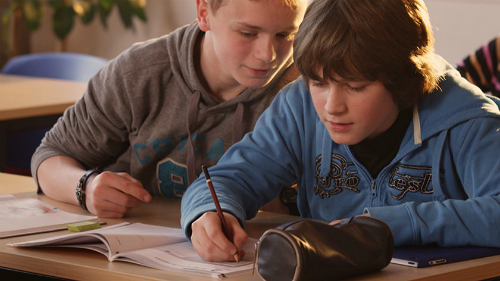
“Handwriting might eventually become more or less out of fashion, except as an art form. But expression through words will be as essential as ever.” — John Martin

Given the new trends of museums and corporate architecture integrating technology and media into their physical space and infrastructure, will schools evolve in a similar way?

I think the integration of technology with the pupil rather than the building is a more interesting development. With mobile devices and wearable technologies, new “Strava’s of learning” will help pupils to unlock their potential. Regarding the physical spaces in schools, I imagine it won’t be very long before screens and 3D printers are ubiquitously available in rich economies.

Given the efficiency of the Internet and home learning, how much time will students be needed in school?

The institution of the school is an important but arguably somewhat weak intervention in the holistic development of our children – after all, in most Western countries, about 80% of their time is spent outside the school. However, schools do offer scale benefits for learning, especially with regard to access to great teachers, learning resources, and to other pupils. Not to forget the added economic benefit of enabling parents to participate in the workforce. In some ways I wonder if a better question might be how we could more effectively look holistically at the learning and welfare of each pupil, rather than how many hours they should go to school?

How important will the presence of physical teachers be?

I believe the teacher is the killer app in education. A great teacher is like a great coach who can help to unlock the potential of each child. Generally, I think it’s best to physically include a teacher in the journey of learning. I don’t think this always has to be in the form of one teacher with 25 pupils; varying the group size and role of the teacher, depending on the situation, is likely to become more common in the future. Some of the tasks of a teacher will probably be made more efficient or even substituted by technology. And there are situations, for example, in case of a shortage of teachers or lack of access to a school, health matters or a wish to learn independently, where a virtual approach would make good sense.

2015-09-09-1441807981-2193308-cmrubinworldslsolutionsmalmberg500.jpg

“With mobile devices and wearable technologies, new ‘Strava’s of learning’ will help pupils to unlock their potential.” — John Martin

Will technology advancement lead to further personalization of education to individual students or will it also increase the techno-bureaucratic need for standardization?

Technology will surely enable the personalization of learning and I would expect that this will result in improved learning outcomes, better engaged pupils and a more efficient school. Whether or not this leads to more bureaucracy and standardization is up to the policymakers. Technology is in itself neither good nor bad but will serve the requirements of the market.

Will we teach students specific “subjects” in traditional classrooms like we have today or will classes be more about integrated/hybrid learning?

I expect the industrial model of education will be re-imagined and re-designed for the post-industrial, knowledge era. It’s a personal view on the future, but I wonder if we will move in the direction of a “T-model” in the next generation. In the vertical of the “T,” each child develops expertise on key “subjects,” but in a much more personalized way than at present – for example, also including adaptive and peer-to-peer learning. And in the horizontal of the “T”, other skills such as collaboration, communication and leadership are learned, maybe in the form of “phenomenon-based learning” programs such as those recently introduced in Finland.

Faced with increasing time spent on digital devices, how can we teach more practical skills, including coping with stress levels and interpersonal conflict?

It was hard to develop “life skills” from a book and the same holds true with devices. The thing about skills is that they generally improve with practice, especially when supported by coaching. So I think it’s a matter of prioritization: don’t over-do the screen time and make sure life skills are on the agenda.

2015-09-09-1441808009-2824022-cmrubinworldslboardmemberheadshots300.jpg

C. M. Rubin and John Martin

(All Photos are courtesy of Sanoma)

Join me and globally renowned thought leaders including Sir Michael Barber (UK), Dr. Michael Block (U.S.), Dr. Leon Botstein (U.S.), Professor Clay Christensen (U.S.), Dr. Linda Darling-Hammond (U.S.), Dr. MadhavChavan (India), Professor Michael Fullan (Canada), Professor Howard Gardner (U.S.), Professor Andy Hargreaves (U.S.), Professor Yvonne Hellman (The Netherlands), Professor Kristin Helstad (Norway), Jean Hendrickson (U.S.), Professor Rose Hipkins (New Zealand), Professor Cornelia Hoogland (Canada), Honourable Jeff Johnson (Canada), Mme. Chantal Kaufmann (Belgium), Dr. EijaKauppinen (Finland), State Secretary TapioKosunen (Finland), Professor Dominique Lafontaine (Belgium), Professor Hugh Lauder (UK), Lord Ken Macdonald (UK), Professor Geoff Masters (Australia), Professor Barry McGaw (Australia), Shiv Nadar (India), Professor R. Natarajan (India), Dr. Pak Tee Ng (Singapore), Dr. Denise Pope (US), Sridhar Rajagopalan (India), Dr. Diane Ravitch (U.S.), Richard Wilson Riley (U.S.), Sir Ken Robinson (UK), Professor Pasi Sahlberg (Finland), Professor Manabu Sato (Japan), Andreas Schleicher (PISA, OECD), Dr. Anthony Seldon (UK), Dr. David Shaffer (U.S.), Dr. Kirsten Sivesind (Norway), Chancellor Stephen Spahn (U.S.), Yves Theze (LyceeFrancais U.S.), Professor Charles Ungerleider (Canada), Professor Tony Wagner (U.S.), Sir David Watson (UK), Professor Dylan Wiliam (UK), Dr. Mark Wormald (UK), Professor Theo Wubbels (The Netherlands), Professor Michael Young (UK), and Professor Minxuan Zhang (China) as they explore the big picture education questions that all nations face today.
The Global Search for Education Community Page

C. M. Rubin is the author of two widely read online series for which she received a 2011 Upton Sinclair award, “The Global Search for Education” and “How Will We Read?” She is also the author of three bestselling books, including The Real Alice in Wonderland, is the publisher of CMRubinWorld, and is a Disruptor Foundation Fellow.

Sexiest Job at Sanoma (re-visited): Edtech Developer

edtechdeveloper

Sexiest Job at Sanoma: Data Scientist’ including an interview with Sanoma’s Queen of the Quants, Ulla Kruhse-Lehtonen, was one of my first blogposts and also the best read posting so far. I guess a lot of people are searching for “Sanoma” or “data scientist” :-).

Data scientists definitely have some of the sexiest jobs at Sanoma. However, and I might be a little biased, I think that the sexiest jobs these days are those of the edtech developers, led by Sanoma Learning’s Minister of Education Technology, Arnoud Klerkx.

Our team believes that edtech has the potential to bring many benefits to education

Supercharging the teacher as the killer app in education

We believe the teacher is the killer app in education and that edtech can supercharge her as a professional. For example by automating processes such as preparing lessons, checking homework, and giving insights into the learning of individual pupils. Edtech can help to channel the time and energy of the teacher to her relationship with her pupils.

Helping to motivate pupils to achieve their potential

With edtech we can personalize learning pathways for pupils, and engage them in new ways such as gamification and social thereby helping to develop the talents of each child.

Giving insights to other stakeholders

We can give better insights to parents into how their children are progressing and help headmasters to better evaluate school performance. Taxpayers will get new insights that will support them in assessing value. This should help us to create a better learning experience in the future.

Edtech is booming

Encouraged by these opportunities, edtech markets are starting to take off. IBIS Capital estimates that today there are more than 3000 e-learning companies in Europe alone. Last year, industry analysts estimate that more than $ 2 bn was invested in edtech venturing. And deals such as LinkedIn’s acquisition of Lynda.com for $ 1.5 bn have hit the headlines. Learn Capital estimates total market capitalization as a percentage of global annual spend at 2% for education companies compared with about 81% for media & entertainment and 80% for healthcare. They believe we are at the beginning of a huge wave of investment in edtech. Now is a good time to be a part of the industry.

The business of progress

Overall this is a truly exciting space to work in. Imagine you are a talented young developer today. Would it rock your boat to create technology that will help schoolkids to develop their talents and fulfil their potential? To play a role in helping to shape the next generation and have the chance of contributing to building a more fulfilled, happier, healthier and more prosperous society?

This is what excites me about the edtech space and why I think the edtech developers at Sanoma Learning have some of the sexiest jobs these days. Looking forward >>.

Scaling up edtech in Europe

edtecheurope

Last week I visited the EdTechEurope conference in London. Congratulations to the team for putting together a rich program and high quality of production!

I love meeting the entrepreneurs and sensing their passion. It’s great to hear their vision and see the innovation. They trigger my curiosity. How could we put this to work for better learning impact for our customers? What could this mean for the educational ecosystem we serve? Could this company disrupt our business?

CEO Talks


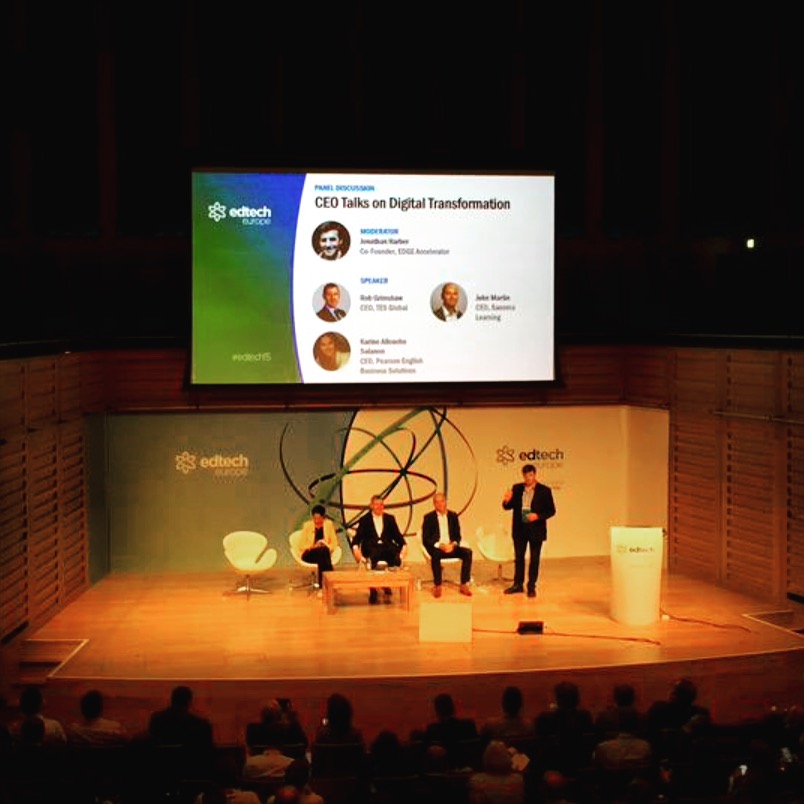
I’m a member of the Advisory Board of EdTechEurope and spoke on the panel “CEO Talks on Digital Transformation” together with Rob Grimshaw (CEO at TES Global) and Karine Allouche Salanon (CEO at Pearson English Business Solutions). There was a lot of talk about the role of the teacher in this session which I liked since I believe the teacher is the killer app in education.

Scaling up?

I wonder if this conference tells us something about a wave of investment (and disruption) in edtech in Europe.

Is there more action?

This is the third time the meeting was held and each time participation has doubled, this time to 650 people. Is this simply because it’s a well-run and well-timed initiative? Or is the series tapping into an underlying trend of growing investment into edtech? At this rate, we’ll need to hire Wembley Stadium for EdTechEurope-2022!

Going global?

This year we had many more visitors from outside Europe. There was a particularly interesting session from SWSWedu – great to see Zaption and Cerego there, re-connecting after our recent trip to Silicon Valley! Also, the session on “Edtech Opportunities in Asia” was very worthwhile, especially for the useful advice from Prof Ping-Cheng Yeh on China. Are these signals of a growing global market for services and technology in education?

Who are the Champions?

It’s thrilling to see so much innovation taking place in edtech; IBIS Capital estimates that there are more than 3000 e-learning start-ups in Europe alone. Is this typical for a wave of disruptive innovation? Or an expression of the (sometimes hyper-) local nature of education? From an investment and partnering perspective however, it’s increasingly difficult to see the wood for the trees. Is there a risk that our industry is spreading talent and resources too thinly?

Looking forward >> Time for a Champions League?

Champions LeagueThese questions around scale trigger my interest in the idea of a “Champions League” of edtech companies, to lead the growth and transformation opportunity for education in Europe. These companies could act as magnets for talent, ideas and capital and help to bring scale to the industry. TES Global probably has such ambitions and is backed by the deep pockets of TPG. Pearson is the World’s biggest learning company and has extensive size and international reach. Sanoma Learning has a great reputation for excellence in education and digital transformation. Who are the other players who could help bring scale to the industry? Learn Capital (London)? Google?

I’m interested to hear your views on this.

Creating a learning company: lessons from the Bay Area

At the d.school Stanford

Earlier this month, our leadership team at Sanoma Learning visited the Bay Area. Our purpose was to learn more about their approach to disruptive innovation in education. The timing was especially good following the recent announcements around Lynda.com (sold to LinkedIn for $1.5 bn), Altschool ($ 100 m investment from Founders Fund, Zuckerberg) and all things Uber.

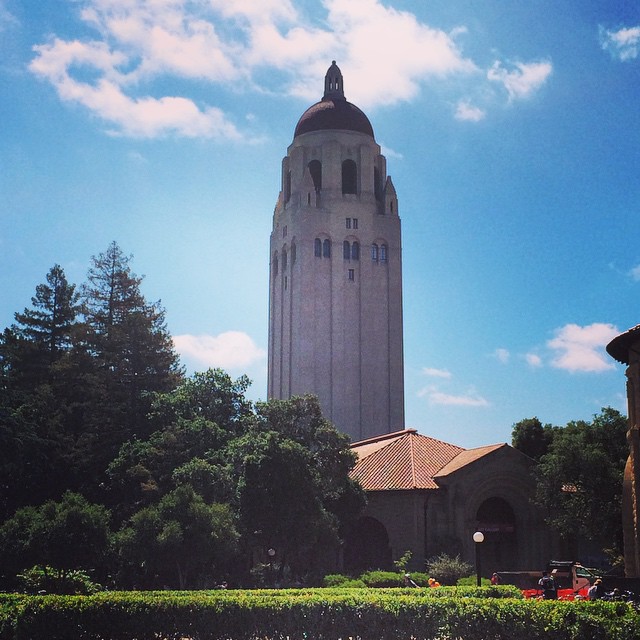
Hoover Tower Stanford

We started at the Graduate School of Education and d.school at Stanford. Then we spent a few days in smaller teams visiting about 20 edtech ventures and a handful of investors in the area. Finally we wrapped it up with a discussion about what we had learned and what it means for us.

A few things particularly stand out from the visit.

Culture: an “open adaptive learning platform”

Rapid adaptive learning seems to be at the core of the success of the Bay Area ecosystem. The architecture of the platform is good: curious scientists, practical engineers, passionate entrepreneurs and risk-friendly investors. The “intelligence” of the platform is the driven by the culture (open, passion for purpose, fast-paced) which results in a rapid exchange of insights. We found it easy to meet outstandingly good, high-level people, even on short notice. They were enthusiastic to share views and to look for opportunities, to move at a pace. The whole ecosystem gets smarter and better when this much talent gets together in that culture.

Opportunity: return on education

Based on our experience in Finland and other great education systems, we hold the view that the teacher is the killer app in education – and technology can help to super-charge the teacher. We believe a skilled and well-equipped teacher is the single biggest factor influencing learning outcomes, pupil engagement and the cost–effectiveness of education (all “returns” or as we call it “learning impact”). Investors seem to particularly like the return on investment theme (from the customer perspective).

Online education marketplace Udemy announced raising $65 m expansion funds, shortly after our visit :).

Online education marketplace Udemy announced raising $65 m expansion funds, shortly after our visit

Their thinking is that RoEs should be good for business: for example when completion of a course can lead to career progress, the company providing that course should be able to capture a slice of the benefits (particularly in vocational education). Although clearly influenced by the ventures we chose to visit, we experienced much more enthusiasm for professional learning than edutainment or B2C markets (monetization problem – poor RoE?), and for higher and further education above K-12 (more direct link to career progress in further education and go-to-market approach is very hard for disruptors in K-12). One way or another, proving and improving “returns” will be important to future success.

Evolution (or revolution?): changing ecosystems

edmodo.png

Edmodo, collaborative learning platform, has 50m users

Some of the most interesting discussions of the week centred on how ecosystems for educational resources are changing. How can we develop a symbiotic relationship with Open Educational Resources and User Generated Content that could delight teachers and pupils? How can we further boost the “platformisation” of our business? How should we most effectively inter-operate with other players? How can we put data to work for better learning impact whilst carefully respecting privacy? Evolving with our ecosystems must be core to our strategy.

Proud of the team

It was a thrilling trip, full of inspiration and energy, with our team in excellent form: one of the best weeks of my life! Sensing the energy, curiosity and intelligence of the team as we de-briefed what we had learned each the day was simply a gift. Great job team!

Looking forward >> How to become a true learning company?

I believe that Sanoma Learning can rightly be seen as one of the world’s best education companies. Ultimately, I think the most important question to come from the visit was: how can we become a true “learning company”? A company that can consistently learn from and with the best and translate those learnings into great “impact” for pupils and teachers. This is the exciting journey we’re on!
PS I was kidnapped by Betsy Corcoran, CEO of Edsurge during our visit. Check out the podcast here

Going for Gold

Inspiring Spires

image

Radcliffe Camera at Oxford University

Last week our Leadership Team at Sanoma Learning visited Oxford. We’re working together on how we will lead the transformation of learning for the next generation. It was inspiring to be in this environment of educational excellence and the sessions on Educational Neuroscience and the Purpose of the Team were especially good.

image

Team GB winning Olympic Gold in Beijing

Most inspiring of all was the session with Double Olympic Gold Medal Winner, Steve Williams at the Leander Club (he won rowing Gold in the coxless four in both Athens and Beijing). The Leander Club was founded in 1818 (15 years earlier than the oldest established part of Sanoma Learning – Van In) and is arguably the World’s most successful rowing club. Steve talked us through his journey to becoming an Olympic Champion and then took us out onto the water to row together.

image

Our teams after the rowing session

Steve is not only an Olympic Champion but also a gifted storyteller. I will try to re-tell the core ingredients of what brought his team success, but nothing can beat the inspiration of hearing it in situ. He strongly credits many other people for the success, especially their coach, team members and everybody who supports the operation.

image

Steve explaining to us how they train

Overall, I believe the distinguishing factor behind their huge success has been their mindset: a culture of excellence where they truly live by their code. This has been nurtured and cultivated and almost certainly dominates the lives of the teams – you truly feel it everywhere at the Club. In my own words, I would summarise the essence of their approach as follows:

1. Set the highest expectations (goals)

Purpose: inspire a nation

Goal: win Olympic gold

Stopwatch: performance target (time)

They have set themselves a noble purpose with a clear and highly ambitious goal and they track progress consistently on the journey – not only to check and improve performance but also to affirm progress and success. The hunger for Gold in particular is deeply embedded in the culture and symbols of the Club. For example, the names on the Honours Board at the entrance to the Club for major international events such as the Olympics, are given in two colours only: Gold (winner) and Black. There is no doubt that this Club expects its members to win Gold. It triggered us to think how we can sharpen our purpose, goals and stopwatch at Sanoma Learning. What’s our ‘Gold medal’ – our impact on learning, our reach, our size?

2. Focus on moving the boat (strategy)

The Olympics are held every four years and a race lasts about six minutes. All of the focus on the journey there and during the race itself has to be on doing the things that move the boat. Make a plan to win, cut out the things that don’t make an impact and focus on moving the boat forward. The things that don’t move the boat forward basically hold it back. What lessons can we learn from this at Sanoma? What are the things we are doing that really move the boat forward? Is everything we are doing ‘moving the boat’?

3. Get the basics right (execution)

The team develops supreme physical fitness and technical competence that helps to bring them the bullet-proof confidence that underpins a winning mindset. Part of this derives from a gruelling training schedule of six hours per day, six or seven days per week. Good nutrition and rest are taken seriously and staying mentally strong is crucial. Essentially, the team is making the kilometers so that they are better prepared than anyone else on race day. The determination and pure discipline in delivering on the basics Steve showed were inspiring and possibly obsessive (no offence intended Steve). It makes me wonder: are we as fit in all places as we need to be to succeed in the future? How can I make myself fitter on the basics?

4. Learn fast (improve)

Part of any high-performance culture is to learn fast. I was especially interested in the ‘hot wash-ups’ they do immediately after each outing on the water. Very quickly, they huddle up and ask eachother a) what went well and b) what can we improve next time? Simple and effective. Part of their code is also that people speak out early and at the right time (before a decision) and that no problem lives longer than two hours. Feedback is so crucial to learning! We did a ‘hot wash-up’ and ‘feed forward’ with our team afterwards. We learned a lot and it was interesting and (sometimes) fun too! We have an open and trusting team so it was easy to do. Imagine how much further we could develop ourselves, our team, our people and our business if we would structurally build this into our culture. Let’s do it.

5. Celebrate success (enjoy!)

Members of the Leander Club want to be winners. And they want to feel like winners. Celebrating success feeds that mindset. Check out the Honours Board. See the photographs of winning teams hanging on the walls. Read the newspaper articles pinned on the wall, telling their stories of success. Listen to how they tell their story. Feel how Steve radiates pride at being part of the Leander Club. See how they measure progress and affirm their success. Who would not want to succeed in this environment? I am sure we could do a better job at celebrating our successes and those of our customers at Sanoma Learning.

Aim higher

I was inspired by Steve and his journey. Listening to him made me want to set (even) higher standards for myself, our team and for Sanoma Learning. We’ll be working this out with the team in the coming period.

Inspire a generation

Even more fundamentally: what about our schools? Imagine Steve Williams as Headmaster of a school. Think about the high aspirations, the culture of excellence and the dedication to purpose. The ‘fitness’ on so many dimensions. Imagine the positive impact such a leader would have on the next generation of children and teachers. What could be a better ‘Gold Medal’ than that?