Category Archives: School

Homeschooling is becoming mainstream

Homeschooling is becoming mainstream in many countries including the USA, Canada, UK, Australia and New Zealand, where demand is increasing and well-established legal frameworks are in place. In the USA about 3 million students (6% of total) were homeschooled in 2021-2022, an increase of 25% from 2019-2022 and a step increase from the trend growth rate of 2-8% per year since the 1990’s.

Why homeschool?

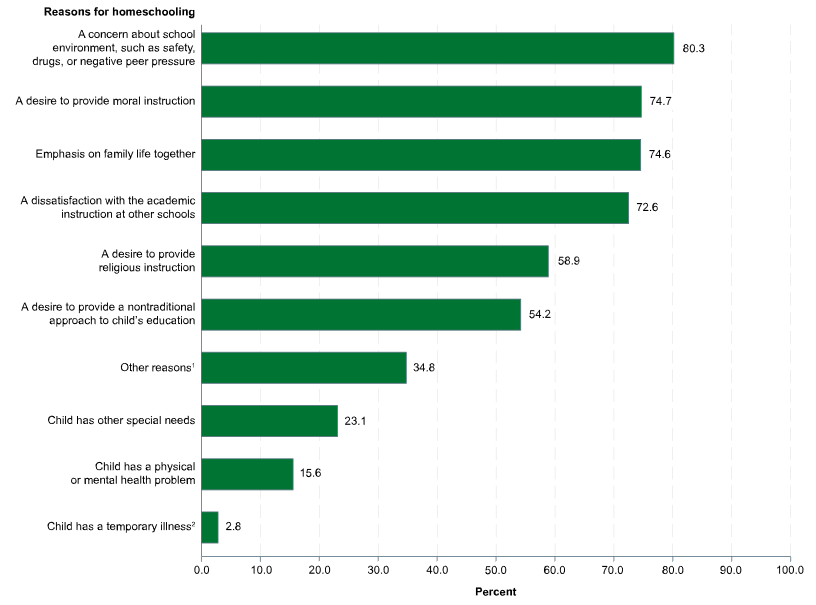
Research from the National Center for Education Statistics from 2022 shows that four of the five most popular reasons why parents decide to homeschool their children are social-cultural rather than academic:

  • concerns about the school environment (safety, drugs, peer pressure)
  • wanting to provide moral instruction
  • emphasis on a family life together
  • wanting to provide religious instruction.

In the meantime, growth in the market for education technology solutions, in part further stimulated by the pandemic, has ensured that good quality learning resources are available at scale in the home environment, thereby lowering this particular former barrier to homeschooling.

“Old school”, “new school”, “not school”?

The trend towards homeschooling reminded me of the scenario planning we had done at Sanoma about the future of education some 15 years ago, especially considering three main scenarios i) “old school” ii) “new school” and iii) “not school”. I had personally not expected the “not school” model to break through due to the high value-add of the professional teacher and the high economic and organisational implications for the family (typically requiring one parent to stay at home).  I had expected technology to underpin the further development of all three scenarios but had not foreseen the pandemic nor the increased polarisation of society at the time, which are surely factors that have made some impact on the growth of homeschooling.

I wonder what the trend to homeschooling might mean for homeschooled children and families? What impact will it have on public education systems and society as a whole?

Should we take the child out of the school, or bring the parent into the pedagogy?

School is in some ways already a limited intervention in the learning and development of a child, after all more than 80% of their time is spent outside of school. To what extent might approaches that encourage greater parental engagement in education help to support the learning of the child and help to remedy some of the social and cultural concerns that some parents have about schools?

It seems likely that more hybrid models might emerge, combining the professional and economic benefits of the school with the social and cultural engagement of the family.  Typically, an encouraging home environment, a high level of personal attention and more personalisation, tend to support learning.  Have we “outsourced” too much to schools? Especially in a world of increasing teacher shortages, might greater involvement of parents be part of the solution?

Going for Gold

Inspiring Spires

image

Radcliffe Camera at Oxford University

Last week our Leadership Team at Sanoma Learning visited Oxford. We’re working together on how we will lead the transformation of learning for the next generation. It was inspiring to be in this environment of educational excellence and the sessions on Educational Neuroscience and the Purpose of the Team were especially good.

image

Team GB winning Olympic Gold in Beijing

Most inspiring of all was the session with Double Olympic Gold Medal Winner, Steve Williams at the Leander Club (he won rowing Gold in the coxless four in both Athens and Beijing). The Leander Club was founded in 1818 (15 years earlier than the oldest established part of Sanoma Learning – Van In) and is arguably the World’s most successful rowing club. Steve talked us through his journey to becoming an Olympic Champion and then took us out onto the water to row together.
image

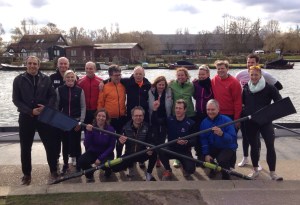
Our teams after the rowing session

Steve is not only an Olympic Champion but also a gifted storyteller. I will try to re-tell the core ingredients of what brought his team success, but nothing can beat the inspiration of hearing it in situ. He strongly credits many other people for the success, especially their coach, team members and everybody who supports the operation.
image

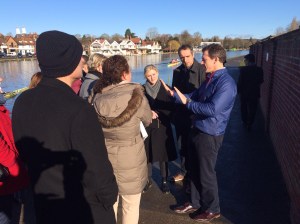
Steve explaining to us how they train

Overall, I believe the distinguishing factor behind their huge success has been their mindset: a culture of excellence where they truly live by their code. This has been nurtured and cultivated and almost certainly dominates the lives of the teams – you truly feel it everywhere at the Club. In my own words, I would summarise the essence of their approach as follows:

1. Set the highest expectations (goals)

Purpose: inspire a nation

Goal: win Olympic gold

Stopwatch: performance target (time)

They have set themselves a noble purpose with a clear and highly ambitious goal and they track progress consistently on the journey – not only to check and improve performance but also to affirm progress and success. The hunger for Gold in particular is deeply embedded in the culture and symbols of the Club. For example, the names on the Honours Board at the entrance to the Club for major international events such as the Olympics, are given in two colours only: Gold (winner) and Black. There is no doubt that this Club expects its members to win Gold. It triggered us to think how we can sharpen our purpose, goals and stopwatch at Sanoma Learning. What’s our ‘Gold medal’ – our impact on learning, our reach, our size?

2. Focus on moving the boat (strategy)

The Olympics are held every four years and a race lasts about six minutes. All of the focus on the journey there and during the race itself has to be on doing the things that move the boat. Make a plan to win, cut out the things that don’t make an impact and focus on moving the boat forward. The things that don’t move the boat forward basically hold it back. What lessons can we learn from this at Sanoma? What are the things we are doing that really move the boat forward? Is everything we are doing ‘moving the boat’?

3. Get the basics right (execution)

The team develops supreme physical fitness and technical competence that helps to bring them the bullet-proof confidence that underpins a winning mindset. Part of this derives from a gruelling training schedule of six hours per day, six or seven days per week. Good nutrition and rest are taken seriously and staying mentally strong is crucial. Essentially, the team is making the kilometers so that they are better prepared than anyone else on race day. The determination and pure discipline in delivering on the basics Steve showed were inspiring and possibly obsessive (no offence intended Steve). It makes me wonder: are we as fit in all places as we need to be to succeed in the future? How can I make myself fitter on the basics?

4. Learn fast (improve)

Part of any high-performance culture is to learn fast. I was especially interested in the ‘hot wash-ups’ they do immediately after each outing on the water. Very quickly, they huddle up and ask eachother a) what went well and b) what can we improve next time? Simple and effective. Part of their code is also that people speak out early and at the right time (before a decision) and that no problem lives longer than two hours. Feedback is so crucial to learning! We did a ‘hot wash-up’ and ‘feed forward’ with our team afterwards. We learned a lot and it was interesting and (sometimes) fun too! We have an open and trusting team so it was easy to do. Imagine how much further we could develop ourselves, our team, our people and our business if we would structurally build this into our culture. Let’s do it.

5. Celebrate success (enjoy!)

Members of the Leander Club want to be winners. And they want to feel like winners. Celebrating success feeds that mindset. Check out the Honours Board. See the photographs of winning teams hanging on the walls. Read the newspaper articles pinned on the wall, telling their stories of success. Listen to how they tell their story. Feel how Steve radiates pride at being part of the Leander Club. See how they measure progress and affirm their success. Who would not want to succeed in this environment? I am sure we could do a better job at celebrating our successes and those of our customers at Sanoma Learning.

Aim higher

I was inspired by Steve and his journey. Listening to him made me want to set (even) higher standards for myself, our team and for Sanoma Learning. We’ll be working this out with the team in the coming period.

Inspire a generation

Even more fundamentally: what about our schools? Imagine Steve Williams as Headmaster of a school. Think about the high aspirations, the culture of excellence and the dedication to purpose. The ‘fitness’ on so many dimensions. Imagine the positive impact such a leader would have on the next generation of children and teachers. What could be a better ‘Gold Medal’ than that?

Inspiring kick-off Sanoma’s Learning Lab in Leiden

Today we kicked-off of the Learning Lab at the Da Vinci College in Leiden, The Netherlands. I was super-excited about this for both professional and personal reasons. I’m passionate about our goal to improve learning as we transform to a more personalized future. I like and respect the forward-looking Da Vinci College in my home-town – the “education city” of Leiden. And this is a great collaboration between Learning and Digital at Sanoma, the teams to which I have committed my professional life in recent years.

Inspiring introductions

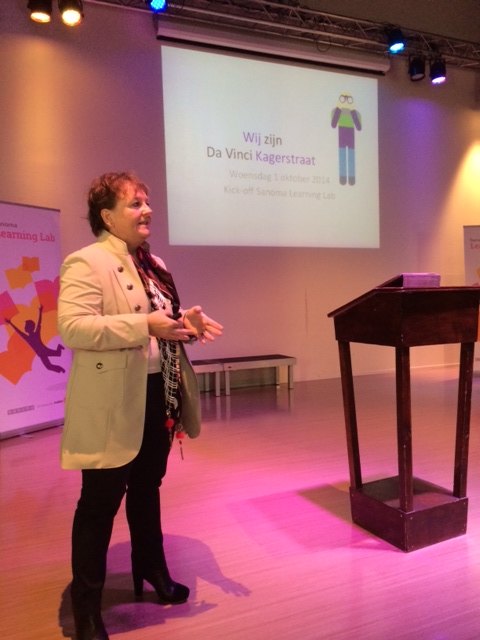
annick2We started with some inspiring introductions from the school, Sanoma and facilitator MakerLab. One of the absolute highlights of the day for me was the introduction and welcome to Da Vinci College Kagerstraat by Rector Annick Dezitter. I’d met her before on a visit to the school when we had discussed the personalization of learning. In her introduction, she talked openly and passionately about the future and had a very engaging personal style. I imagine she is an inspiring Rector! She is originally from Belgium and the two Belgians in our Learning Lab team (Johan Merlevede, Chief Transformation Officer in Sanoma Learning’s Leadership Team – the overall sponsor of the Learning Lab, and Joris van Heukelom, Partner at MakerStreet) both proudly reminded me that they are Belgian too, after her speech :-). I very much appreciated her warm welcome and inspiring words.

Lassi Kurkijarvi, innovation hero, at the kick-offAnother highlight was from my former colleague and founder of Sanoma Lab, Lassi Kurkijarvi. He was my first hire at Sanoma Digital and is a mobile native with a can-do mentality and a big heart. I love working with that guy and have learned a lot from him about engaging people. I really liked to see how the style and content of his session had deepened and progressed from our very first accelerator a couple of years ago (it was already good then). I love to see people grow like that!

Selecting the ideas and team leaders

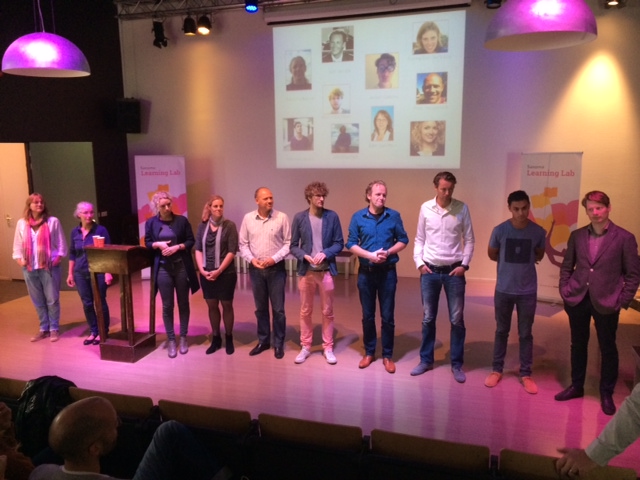
The ten idea owners who will lead the teams from HollandNext, each of the 30 participants pitched their ideas and 10 were chosen to lead teams to develop their concept in the next stage. Seven were selected by the crowd and three through wildcards. It was really fast-paced and exciting! It was great to hear the ideas and to get a sense of the person behind the idea during the pitch. I was very happy with the selection of people and ideas. The 10 team leaders include four teachers, three Sanoma employees and three external “open” applicants. A great mix of talent!

Working out

After lunch the real work began with the first workshop. The teams were formed and the first steps were taken. I’m curious where this will lead us. The spirit and energy were good.

Looking forward >>

We will be continuing with similar kick-offs in Gdansk, Antwerp, Helsinki and Stockholm in the coming days. We will then develop the concepts, five of which will eventually win a place to build a prototype of their idea at bootcamp in Amsterdam in December. I’m truly excited about this! Thanks to everyone who is joining us and respect to you! Looking forward >>

Sanoma’s Learning Lab hits the right note

learning-labI love the start of the new school year: it feels like a time of new beginnings and new opportunities. I’m especially excited about the coming semester because we will be running our Learning Lab in partnership with five great innovative schools!

Improving the impact of education on learning

We’re a key partner to schools and frontrunner in the digital transformation in some of the World’s best performing education systems, including Finland, The Netherlands, Belgium, Poland and also Sweden. We’re deeply committed to supporting excellence and equity in education. And we see that many stakeholders in education are looking for renewal: for improved learning outcomes, for better engagement and for new ways of working. Our goal with this Learning Lab is to co-create new concepts, together with our partners, that help to improve and evidence the impact of education on learning.

In time and in tune with teachers

Our target was to recruit 150 participants. However, the Lab has been heavily over-subscribed: we have received about 350 applications! We will increase capacity to take account of this. Interest has been especially strong from teachers. The subject and timing of this innovation lab seems to be very much in line with the needs of our customers. We really appreciate your trust in working together with us in developing new ways of teaching and learning.

Five innovative partners

Thanks to all the individuals and also to the five partner schools for showing their innovative colours and joining us on this journey of discovery. The partner schools are:

It’s great that you have taken on this challenge together with us.

Looking forward >>

I can’t wait for the kick-offs at the beginning of October. We’re going to learn new skills, broaden our networks and take a positive step to improving learning.  And we’ll have a lot of fun on the way!  I’m excited to be working with you on this initiative in the next few months!