Tag Archives: Venture Capital

It’s time to scale up European edtech

Last week, Brighteye Ventures, a leading European investor in education technology, published the fifth edition of its European Edtech Funding Report. It looks like 2023 might be the trough of the cycle that peaked with the pandemic in 2021, and there are increasingly strong signals of a resurgence in investor appetite in 2024.

Reasons to be Cheerful

  1. After a period of decline, overall new venture funding for European edtech in 2023 surpassed the levels reached in 2020 ($1.2B vs $951M) and the number of deals increased on 2022 (288 vs 256).
  2. About 1/3 of all global edtech deals took place in Europe in 2023 (a record high proportion, up from 21% in 2019), indicating a high level of investor interest in the European market.
  3. International private equity and venture capital investors are currently holding a record amount of dry power, with $2586B ready for deployment at the top 25 PE investors globally.

Resilience?

From a European perspective, “resilience in the volume of deals” was driven by a rising number of deals under $4M, with over half of the completed deals being done at $1M or less. 
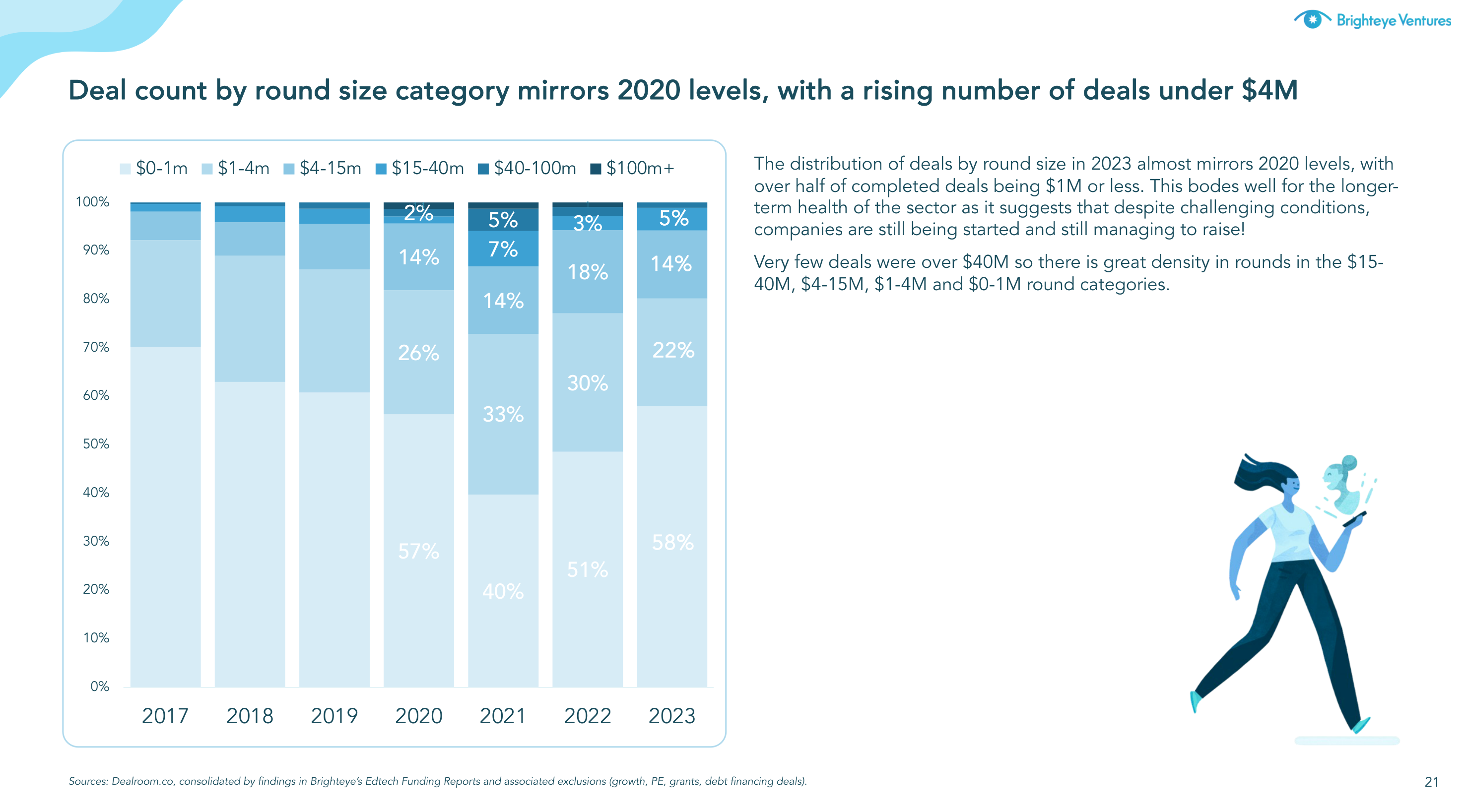
On the micro level of individual businesses, this thinly spread funding might make some sense, yet on the macro level of the industry and the customer, it also highlights part of the European challenge, namely lack of scale. You have to wonder if something substantial and world-class will be built out of some of these tiny deals. Usually “recessions” (possibly a relative term in tech) are a good opportunity for industries to restructure, with strong firms building on their strengths and weaker firms going out of business in what is typically a healthy evolutionary process.

Enable and simplify the work of the teacher

According to some estimates there are currently about 27,500 edtech companies in the K-12 sector, obviously not all deployed in all schools, but it’s not uncommon for schools to use hundreds of digital products. Imagine the life of a teacher. Her first concern is leading a classroom of 25-30 children, which is no mean feat in itself. When she deploys a digital solution it needs to:

a) positively impact learner outcomes

b) be easy to use and

c) ideally save time that she can use for interacting with students.

A teacher is best served by a smaller number of well-performing and frequently-used solutions than a huge toolbox of occasionally-used options.

Build a European Champion

In my view, investors in European edtech should focus on increasing scale and building a handful of segment-specific European/International Champions. At scale, a European Champion has the resources in terms of talent, know-how and money to develop and deploy top-notch learning solutions, yielding excellent learning impact and delivering good financial returns. It’s my hope (and expectation) that a group of investors will take the opportunity at this early stage in the new economic cycle to take our industry and the services we provide to schools to the next level.
BETTer Future

I’ll be visiting London and BETT at the end of March (probably 22nd -24th).  As for so many of us this will be my first trade fair since the pandemic and I’m really looking forward to joining in real life again (never expected to be this enthusiastic about a trade fair, not even BETT 😊). It does feel like we are now emerging from the restrictions of the last couple of years and I’m excited to get out there again.

I’m especially interested to meet people from companies with strong market positions, from scale-ups and from investors in the education, edtech, science and healthtech spaces during my trip to London.

As of March I have some availability for advisory and interim work and have extensive skills and experience in leadership/leading change, digital/transformation and commercial/strategy work.  I have deep knowledge and networks across the European education sector.

I’m also open to become a Non-Executive Director of such an organisation, as long as this doesn’t conflict with existing work. Very flexible in terms of location.

Feel free to send me a message at johnmartin@contentconnected.com or DM me on social media if you would like to meet up in London!

Looking forward >>

#OpenForWork #Leadership #Education #Edtech #Science #Digital #Transformation

European edtech & the emergence of supplementary education

The Brighteye Ventures Edtech Funding Report released last week evidenced a positive and increasingly broad-based development of the European edtech sector:

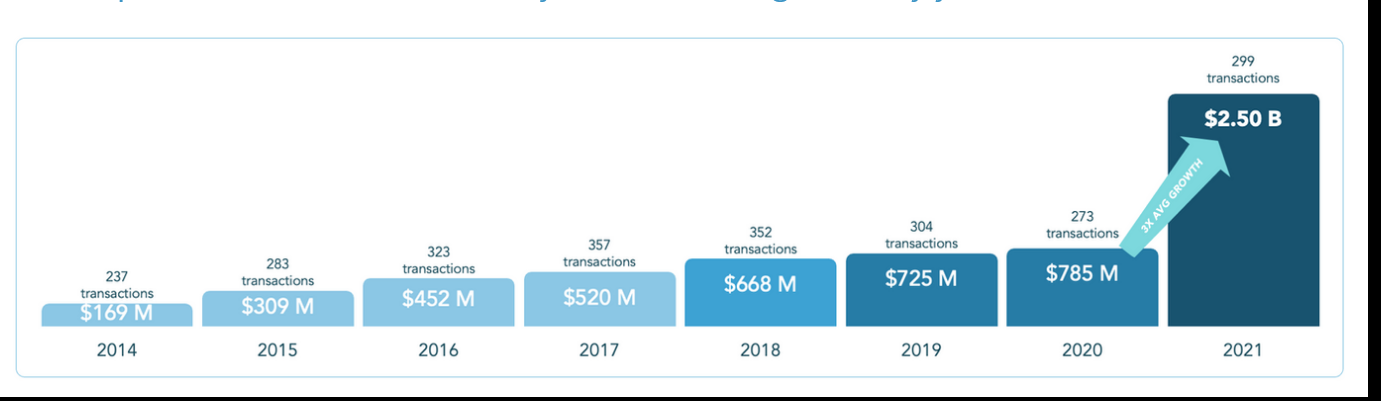
Venture capital funding tripled over the previous year, reaching some $2.5B.

Average deal size also tripled to $8.4M, indicating increasing maturity of the sector.

Corporate Learning attracted the most funding ($926M), followed by K-12 ($659M) and Life-long/Consumer Learning ($652M), with Higher Education ($289M) and Pre-K ($136M) trailing. One possible reason being that B2C and B2B segments are sometimes seen as easier to sell into than B2G.

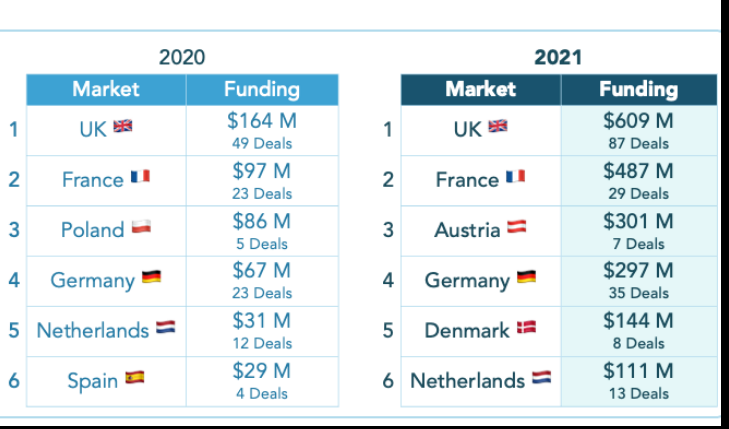
Six European markets raised more than $100M, up from just one market previous year.

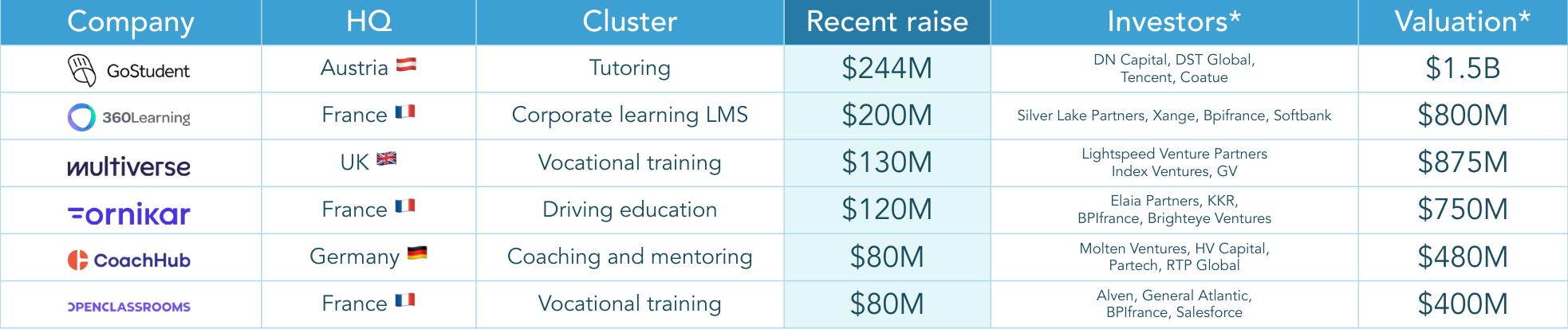
There were six deals in excess of $80M in 2021, up from one in the previous year

Go GoStudent!

The biggest round in Europe last year was in K-12 at Vienna-based tutoring company GoStudent which is currently driving a very rapid international expansion.

(Online) tutoring has long been well represented amongst global edtech unicorns, with the heavy Chinese contingent prospering until the local market crash last year due to regulatory reforms. However, until recently online tutoring had not really taken off at scale in Europe, arguably because the European landscape is fragmented and both the quality of state-provided education and the cultural preference for equity, high.

Market for supplementary education likely to grow

I believe it’s likely that the global market for supplementary education (leaving China aside for now) will continue to grow strongly in the coming years, because:

a) It works

+ Positive impact on learner outcomes*
+ Potential to support teacher retention by reducing after-hours work for existing teachers hence making the profession more attractive
+ Potential to enable recruitment as teachers of university students, former teachers and other professionals, by first (re)-igniting their interest as a tutor,

and

b) There is growing demand for it:


+ More children attend schools than ever before, expanding the addressable market
+ There is increasing competition for top universities and jobs
+ Lower fertility rates boost spending per child
+ Growth in the number of families where both parents work, reducing the time available to help children with homework.

Beware pernicious effects


However, there are some potential pernicious effects should be mitigated:
Rising inequality, since the rich can better afford it than the poor
– Unreasonable pressure on students
Competition with schools for teachers, potentially undermining public education systems.

Public-private-partnerships?

In some European countries including the UK and The Netherlands, additional public funding was made available for supplementary education during the pandemic. I am interested to learn what impact these interventions have made and whether the combination of core and supplementary educational provision in the future might be a path to raising average learner outcomes and supporting disadvantaged students?

I’m interested to learn any insights you might have on this subject. Feel free to drop me a line.

*The outcomes of the research are startling: an average student under tutoring performs about two standard deviations above the average performance of a conventional class. Or put another way, an average student following a tutoring program outperforms 98% of students in a conventional classroom! 
https://lnkd.in/gDYHazw