Tag Archives: Education

Leading the digital transformation in learning at Malmberg

lijn3Excellence and innovation

Sanoma Learning’s reputation internationally is built on two pillars. First of all, we are a leading and integral player in some of the World’s best-performing education systems including Finland, The Netherlands, Belgium, Poland and also in Sweden. Secondly, we are frontrunners in the digital transformation – with about € 50 m of new media and roughly € 100 m of multi-channel solutions sales (on a total sales base of roughly € 300 m) we are arguably Europe’s leading edtech company today.

“Now is education’s internet moment.”

We are passionate about education and are keen to play a leading role in building the next generation of learning solutions. Our purpose is to enable teachers to develop the talents of every child. And as we develop our learning solutions we keep three goals in mind: i) helping pupils and teachers to achieve great results, ii) supporting the ways of working for time and cost efficiency and iii) engaging pupils and teachers on the journey of learning. We believe digital will be a great enabler in realizing these goals.

Malmberg in The Netherlands at the front of the transformation

Of the markets in which we operate, we see that conditions in The Netherlands are the most mature for adopting digital learning solutions. Our daughter company Malmberg has taken a leading position in the digital transformation and this has been well-received by our customers.

I’ve been super-enthusiastic about the relationship that Sanoma Learning has established with Knewton with Malmberg as trailblazer. I’m really excited to see the prototypes of the next generation solutions we will develop! I am sure they will help to take a quantum leap forward in improving results, efficiency and engagement. I’ve also been happy with the trailblazing role that Malmberg has taken in developing the next generation of editorial tools that we will deploy across Sanoma Learning. Together, these initiatives will help us to serve our customers better and make our business more future proof.

High Five!

In the meantime, school year 2014/2015 has now started and we have gone live with five new big digital initiatives at Malmberg! I wanted to write a few words about them here.

1. Forward (VOoruit) in Secondary Education

VOIn August we went live with our new platform, playing five of our main courses on pc’s, laptops, tablets and smartphones. It looks really great! During the next year we will be migrating more courses onto the platform and eventually expect to power it with Knewton technology, bringing market-leading adaptive learning technology to The Netherlands. The platform covers the complete learning/teaching process from instruction to testing and also includes adaptive practice testing and learning analytics. This is going to really help pupils and teachers! Adoption has exceeded expectations an it’s really been a step up in terms of user experience.

We believe this platform takes us a step ahead of the competition and are going to use it to win a position in the market for maths, which is the biggest market in which we don’t yet have an offering. The time is ripe for renewal in that market. We are building the course now and will launch it next school year.

2. Language Blocks (Taalblokken) in Vocational Education

taalblokkenThis year we have renewed our didactic concept, concept and platform for Taalblokken. We have focused on usability and differentiation. Our first usability analysis has just been completed and both students and teachers have rated the solution with 8/10. Great! A few years ago, Taalblokken and Rekenbloken (languages and maths) were our first courses to play digital first/digital only, and they have been a big success for teachers and students and also helped us to grow our business. We have the ambition to sell 25% more student licences this year, and the signs are that we will achieve that.

3. Pluspunt Digitaal in Primary Education

pluspuntWe are market leader in primary education and our platform is now used by more than 1 m pupils in The Netherlands. We have just created a fully digital tablet version of our winning maths course Pluspunt and are testing it with 40 schools. We expect this course will help teachers and pupils to get better learning results, save time and stay motivated. We also notice that they trust the brand and like that they can deploy print and digital as they wish.

4. Final year testing (eindtoets) in Primary Education via ICE

iepThe government has taken the good decision to open the market for the final year test to new entrants. ICE has an excellent reputation for quality, usability, innovation and digital and we are introducing a new solution to be deployed in 2015. This will be great for our customers and the competition will be good for the market. Cito, here we come!

5. Taking the Primary Curriculum into the home with Family Pluym

pluymWe’ve extended our language and maths courses to the home via a fully digital learning environment following the learning lines and pace of the school curriculum. We started with a soft launch last week and will be rolling it out in the next month. I really like the user experience and believe that parents are increasingly looking to support the learning of their children in the home environment. Our market research and user testing have shown that parents and children like the extension of the trusted school brand into the home too – you know that it is high quality and in time and in tune with the school. This is a potentially new market for us and I am very curious how this will develop.

Investing in the future of learning

2014 is a crucial year for us in investing for the digital future. The first signs are that our customers appreciate and have adopted the renewed offerings.

I admire the frontrunner role that Malmberg takes at Sanoma Learning and in the Dutch market. Customer focus and innovation sit deep in the genes of our people. Respect!

Looking forward >>

Sanoma’s Learning Lab hits the right note

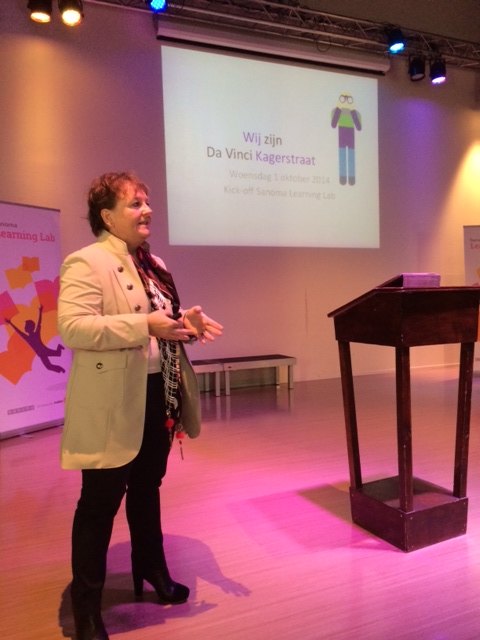
learning-labI love the start of the new school year: it feels like a time of new beginnings and new opportunities. I’m especially excited about the coming semester because we will be running our Learning Lab in partnership with five great innovative schools!

Improving the impact of education on learning

We’re a key partner to schools and frontrunner in the digital transformation in some of the World’s best performing education systems, including Finland, The Netherlands, Belgium, Poland and also Sweden. We’re deeply committed to supporting excellence and equity in education. And we see that many stakeholders in education are looking for renewal: for improved learning outcomes, for better engagement and for new ways of working. Our goal with this Learning Lab is to co-create new concepts, together with our partners, that help to improve and evidence the impact of education on learning.

In time and in tune with teachers

Our target was to recruit 150 participants. However, the Lab has been heavily over-subscribed: we have received about 350 applications! We will increase capacity to take account of this. Interest has been especially strong from teachers. The subject and timing of this innovation lab seems to be very much in line with the needs of our customers. We really appreciate your trust in working together with us in developing new ways of teaching and learning.

Five innovative partners

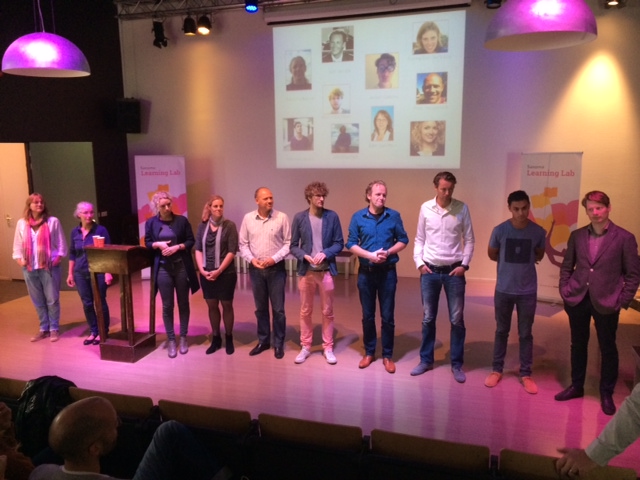
Thanks to all the individuals and also to the five partner schools for showing their innovative colours and joining us on this journey of discovery. The partner schools are:

It’s great that you have taken on this challenge together with us.

Looking forward >>

I can’t wait for the kick-offs at the beginning of October. We’re going to learn new skills, broaden our networks and take a positive step to improving learning.  And we’ll have a lot of fun on the way!  I’m excited to be working with you on this initiative in the next few months!

Sanoma’s Partnership with Knewton – the Next Generation in Empowering Teachers & Motivating Students

sanoma-logoknewton Sanoma Learning serves about 10 m pupils and one million teachers in Northern Europe. Our experience in education dates back to 1833 and these days we are known internationally for two reasons. Firstly, for quality: we’re a leading and integral partner in some of the World’s best performing education systems including Finland, The Netherlands, Belgium, and Poland, as well as Sweden. Secondly, we’re innovative and are frontrunners in the digital transformation: of our sales of about € 300 m, about € 50 m are generated from pure-play digital and a further € 100 m from multichannel solutions, making us arguably continental Europe’s biggest ed tech company today.

I believe there are three cornerstones of excellence in education: skilled teachers, motivated pupils, and high-quality learning materials. And I believe that the next generation of learning is personal: by tailoring pedagogy, curriculum, and learning support to the needs of the individual learner we can improve learning outcomes, enhance workflow efficiency, and support engaging learning.

That’s why I’m thrilled about the work we’re doing with Knewton, the global leader in adaptive learning technology with over 7 million students expected on the platform by the end of 2014. Knewton technology uses data to understand how individual students learn. Sanoma Learning products integrated with Knewton will include personalized content recommendations for students and in-depth reporting for teachers.

Knewton technology will allow us to scale personalization across our wide portfolio of course solutions, improving learning experiences for every student. Malmberg in the Netherlands is the first Sanoma company (and the first publisher in Continental Europe!) to integrate with Knewton technology.

Malmberg’s first Knewton-powered course will be a new grammar-specific English Language Teaching module. This module will provide targeted practice for any ELT student looking to focus on critical grammar concepts. Like all Knewton-powered courses, the course will feature interactive reporting dashboards to help teachers to pinpoint struggling learners in need of intervention and engage advanced students with more challenging material.

Malmberg’s instructional experts and Knewton’s adaptive course designers are making great progress in the development and building phases. Students and teachers will pilot the module early next year. Meanwhile, the teams are also in early planning phases for product builds in other subjects. I can’t wait to see these Knewton-powered products come to life. I truly believe they will contribute to better learning!

The collaboration in the Netherlands is just the beginning. We’re looking forward to rolling out Knewton-powered products across Europe, continuing to empower teachers and motivate students with high-quality, cutting-edge learning products.

Inspiring leadership in education

This week I attended the Global Education Conference in Boston sponsored by Harvard and Goldman Sachs. This was one of the most inspiring conferences I’ve attended in recent years. Sessions were spread over two days and included hot topics such as “financing disruption”, “creating value in a world of content abundance”, “bridging the skills gap” and “the promise of accessible education”.

I could happily write a post about each of them. But I will write about just one. The absolute highlight of the meeting for me was the opening keynote by Geoffrey Canada, CEO of the Harlem Children’s Zone, a charter school network of 12,300 students in New York. He has been instrumental in improving the performance of his students over a period of two decades such that 95% of high school seniors these days are accepted into college. He gave the best live keynote speech I have ever seen.

GeoffreyCanadaMuch of the focus of the conference was on technology, and I certainly believe that technology can be a great enabler in improving education.

However, Geoffrey’s impact comes from excellent leadership. In particular in taking actions to re-set the normative behaviour amongst the stakeholders including the local community. In a nutshell, in changing expectations in the community from “you have to be a genius to go to college” to “if he can do it, I can do it”. And amongst teachers from “don’t blame me, this is a mission impossible” to “my job is to get these kids into college”.

I personally believe that excellent education can be delivered when skilled teachers, motivated pupils and high quality learning materials play together effectively for the benefit of the learning of the pupil. The role of the school leader has not been strong on my radar. But of course, these three cornerstones rely on selecting and leading the right teachers and ensuring that a healthy culture and practices are in place in schools and their communities! The role of the school leader is pivotal. I should re-examine my beliefs!

Canada is a brilliant and inspiring speaker. You know that he wants the best for his pupils. You know that he will do whatever it takes to make it happen. He is highly engaging and has tremendous energy. He’s firm but fair. It’s not about him, it’s about the future of the kids at his school. I liked the clarity of his message. “Your job is to get these kids into college. The military is good. Vocational training is good too. But your job is to get these kids into college. That is what I expect from you”. I liked that he saw it as a journey. Year-on-year he saw impact. But transformation is a journey and the impact 20 years later was massive.

What would the equivalent message be for my own team? The essence of it is “help teachers to excel at developing the talents of every child in their class”. I believe this is the right direction and will be the journey of learning in the coming decade. How to achieve and measure that? If you have inspiring ideas then you are welcome to join our Learning Lab this coming Autumn!

Most of Canada’s keynote was energetic and funny. He is also a poet and took a more serious tone at the end by reading one of his own poems “Don’t blame me”. Inspiring and touching. Thanks Mr Canada, a brilliant leader, for making a positive impact on thousands of lives, and for inspiring me too.

DON’T BLAME ME
February 2007

The girl’s mother said, “Don’t blame me.
Her father left when she was three.
I know she don’t know her ABCs, her 1,2,3s,
But I am poor and work hard you see.”
You know the story, it’s don’t blame me.

The teacher shook her head and said,
“Don’t blame me, I know it’s sad.
He’s ten, but if the truth be told,
He reads like he was six years old.
And math, don’t ask.
It’s sad you see.
Wish I could do more, but it’s after three.
Blame the mom, blame society, blame the system.
Just don’t blame me.”

The judge was angry, his expression cold.
He scowled and said, “Son you’ve been told.
Break the law again and you’ll do time.
You’ve robbed with a gun.
Have you lost your mind?”
The young man opened his mouth to beg.
“Save your breath,” he heard instead.
“Your daddy left when you were two.
Your momma didn’t take care of you.
Your school prepared you for this fall.
Can’t read, can’t write, can’t spell at all.
But you did the crime for all to see.
You’re going to jail, son.
Don’t blame me.”

If there is a God or a person supreme,
A final reckoning, for the kind and the mean,
And judgment is rendered on who passed the buck,
Who blamed the victim or proudly stood up,
You’ll say to the world, “While I couldn’t save all,
I did not let these children fall.
By the thousands I helped all I could see.
No excuses, I took full responsibility.
No matter if they were black or white,
Were cursed, ignored, were wrong or right,
Were shunned, pre-judged, were short or tall,
I did my best to save them all.”
And I will bear witness for eternity
That you can state proudly,
“Don’t blame me.”

Sanoma Learning Lab: Co-create for Impact

sloa-header-1We’re going to run a Learning Lab this Autumn and I would like to invite you to join us. We’re going to develop new concepts with you, to improve and evidence the impact of education on learning.

There are 3 reasons why I would love you (teachers, academics, university students and Sanoma employees) to apply for a place at our learning lab:

1. Fantastic learning experience

You’ll get trained in start-up methods and work with experts on developing your idea. You might even win a place at bootcamp to build a prototype of it with a dedicated team of designers and developers. I’ve previously blogged about how such a program works and what happens at bootcamp. It’s really exciting to be part of it!

2. Great networking

The Lab will be a great way to build relationships with other professionals passionate about the future of learning, both locally and internationally. People from diverse backgrounds, from instructional design to user experience to learning analytics. People who want to make a difference in education.

3. Make an impact on the future of learning

We’ll co-develop new concepts with you, to improve and evidence the impact of education and to contribute to the future of learning. Concepts that will improve learning results, support the ways of working and help to better engage pupils. It’s about the future of learning.

Join us!

We’ll be accepting applications until 24th August. Please go to www.sanomalearninglab.com and apply. I really hope you’ll join us! Looking forward >>.

The killer app in education is the teacher

edtech-logoLast week the second EdTech Europe meeting was held in London. It was an inspiring day and attracted high quality participants including quite a large audience of start-ups, established operating companies and investors. Thanks to Charles McIntyre, CEO of IBIS Capital and Benjamin Vedrenne-Cloquet, Founding CEO of Edxus Group, for having arranged this excellent meeting!

I was a speaker on one of the panels and also a member of the Advisory Board, so I was happy it was a success. I loved engaging with the entrepreneurs running the edtech ventures. It’s inspiring to hear their stories and feel their energy. And it was also a great networking event for meeting peers from across Europe.

Technology, platform, content, data?

This was a meeting about educational technology, so there was rightly a lot of discussion about the transformation of education and the roles that technology, platforms, content and data will play. What will be the “killer app” of education in the future?

The killer app in education today is the teacher

Today I believe that the “killer app” of K-12 education is the teacher. Great teachers engage individuals and classes, ensuring that they are motivated to learn. They stretch and support individual pupils so that they reach the best learning outcome they can. And they guide the ways of working such that learning time is spent usefully.

Technology will both enable and disrupt teachers in the future

Effective use of technology, platforms, content and data can help to raise learning outcomes (e.g. data-driven personalised learning), bring efficiency to the ways of working (e.g. automation and performance dashboards), and support engagement and motivation (e.g. gamification and storyfication). The teacher is therefore likely to get both enabled and disrupted by technology in the future.

Yet although the role of the teacher will change, I believe they will remain the “killer app” of education in the future too. They are likely to remain the leader of the classroom. They will probably more-or-less remain as the primary guide and gatekeeper to the learning activities that are carried out. And their relationship with classes and individual pupils will remain pivotal to engagement and motivation.

Enable teachers to develop each child

Our ambition is to use edtech to enable teachers to excel at developing the talents of every child, resulting in higher outcomes, better engagement and new ways of working. That’s something I believe in and would be keen to invest in.

Lifelong learning

Last week was the anniversary of the week that my father died – a long time ago in the meantime. He was a good and decent man and our family grew up in a loving home. These days I think about him when there is something happening in the family and during that last week of May that has just passed.

I got my passion for learning from my father. He was not educated, but he believed in the power of education.

  • He made me want to contribute to creating a better world
  • He encouraged my curious mind
  • He expected me to have high expectations of myself
  • He taught me to work hard and to be persistent.

I remember the happy times we had together in the past. I am thankful that our family is in good health and good spirit today. And I am grateful that you gave me a life-long love of learning.

Rest in peace Dad x.

Revitalizing Primary and Secondary Education in Russia

Last weekend I was a speaker/panelist at the St Petersburg International Economic Forum on the subject of Revitalizing Primary and Secondary Education in Russia. Learning outcomes in Russia are rather uncompetitive when seen from an international perspective. I was also surprised to hear that schools in many urban areas run two shifts a day due to a lack of capacity.

Although Sanoma Learning is not currently directly active on the Russian market, we were interested to contribute to the discussion. Firstly, because we believe that education is one of the most powerful instruments known for developing individual talent, reducing poverty and inequality and for laying the basis for sustained economic growth, sound governance and effective institutions across the globe. And secondly since we might be able to contribute to improving Russian learning outcomes in the future.

What can Russia learn from our experience?

I was asked what Russia could learn from our experience. I cannot claim to be an expert on Russian education. However, we are an integral player in a number of education systems that consistently perform very well – including Finland, The Netherlands and Belgium. In addition we are the market leader in Poland which has been one of the rising stars on outcomes in recent years. And we have recently acquired a position in Sweden and are keen to support teachers in raising learning outcomes there too.

On the basis of our experience in these successful systems, we believe there are three cornerstones of excellence in primary and secondary education.

1. Skilled and motivated teachers

The first cornerstone is to make sure the level of skills and motivation of teachers is high. A skilled teacher is like a great leader – the impact is huge. They are the heroes and heroines of education. For example, this means:
a. Getting the best people to apply to teacher training
b. Paying them adequately
c. Making sure they are treated with respect, both in school and in society
d. Not over-managing them – they are professionals. Give them space to run their classes without too many rules
e. Making sure they have access to good learning and teaching materials and are free to choose them based on their professional insights. State-prescribed and created materials tend to lead to lower standards and reduced motivation for teachers
f. Keeping their skills up-to-date.

2. Motivated pupils

The second cornerstone is to ensure that pupils are motivated. The correlation between motivation and outcomes is high. This includes:
a. As described above, recruiting and retaining good teachers who can motivate pupils and classes
b. Promoting equity. It’s important to support poorly-performing students and students in economically less advantaged areas. Furthermore, to include marginalized pupils such as those with special needs or from diverse backgrounds and minorities in the mainstream. Their education should be well resourced. It will significantly improve their life chances and lead to better overall outcomes
c. Ensuring that education is valued in society. Amongst others, this will encourage parents to support learning, and this will raise expectations which typically raises outcomes too
d. Finding ways to personalise the process of learning, for example by using technology, or ensuring the teacher has time for individual intervention, or by providing access to tutors. Personalisation improves engagement and better engagement tends to lead to improved outcomes
e. Using high quality learning materials, that both pupils and teachers appreciate.

3. High quality learning solutions

We believe that the third cornerstone to excellence in education is to provide teachers and pupils with high quality learning solutions. They can make a significant contribution to achieving excellent learning outcomes, in a time- and cost-effective manner, whilst keeping pupils and teachers engaged on the journey of learning. Such solutions could include the following elements (for some parts depending on the ICT status of the school):

a. Close “fit” with the local curriculum, language, culture and ways
b. Excellent instructional design
c. Good user experience
d. Play multichannel
e. Capture data and can give insights, and on that basis can be personalisable and adaptive
f. Deploy a coherent learning path and design – easy to use for both pupil and teacher
g. The teacher should have a high level of freedom to choose from a competitive offering – to find the solution that fits them and their class best.

Our beliefs

So those are our beliefs about the cornerstones of creating excellent education systems. There is probably not a single approach that can be copied and pasted across the globe. But the chances are good that most education systems (including Russia) would benefit by focusing on skilled teachers, motivating pupils and providing high quality learning solutions.

Seven trends shaping the future of learning

Last week we concluded the start-up challenge on the future of learning with five inspiring pitches at TNW Europe. Many congratulations to Labster on winning and thanks to all five finalists would did themselves proud in their pitches! Check out my post on it here.

I was also one of the keynote speakers on the EduTrack at TNW. I received quite a few requests for a copy of the presentation – here it is TNW-keynote.blog and here is a drawing taken during the session.

These days I try to use images more than words in storytelling (except in my blog :-) ), so the slides benefit from further explanation. In this post, I would like to share my views on a number of trends that are shaping the future of learning, as seen from the perspective of a provider of learning solutions. Obviously this is in the style of a 15 minute presentation at a tech conference and not a white paper :-).

I would like to introduce myself

I was born in the Heart of England in the early 1970’s. Already at primary school I developed a passion for learning. I wanted to become a doctor and find a cure for cancer. So I studied hard, I really loved to learn, and went on to complete a PhD in molecular biology. Now of course my dream was unrealistic, I didn’t find a cure. But the dream did bring me something else. It brought me an education. And this gave me a passport to the world. So I moved to The Netherlands as a research scientist and university teacher. I then became a science publisher and now lead Sanoma Learning one of Europe’s leading education companies, with headquarters in Helsinki.

About Sanoma Learning

What I like the most about Sanoma Learning is working together with 1500 professionals who share my passion for learning.

We serve about 10 M pupils and 1 M teachers every day in Northern Europe. And we’re an integral player to the educational systems of 5 countries including Finland, The Netherlands, Belgium, Poland and Sweden – a sort of all-star cast for PISA. We acquired our position in Sweden a couple of years ago and are going to help them to improve their learning outcomes and rise in the PISA rankings, as we have been doing in Poland. We have a reputation for quality and export solutions to more than 40 other countries.

We make annual sales of about € 300 M, including € 40 M of pure-play digital and € 100 M of multichannel, arguably making us Europe’s biggest EdTech company today.

Three cornerstones to excellent education

three-cornerstonesWe believe that an effective interplay between teachers, pupils and learning resources is the primary factor in achieving great learning outcomes. From the perspective of being a leading provider of learning solutions, we see seven trends that are shaping the next generation of learning.

Trend #1 From input to outcomes

input-to-outcomesinputThere has traditionally been a lot of emphasis on the inputs into education. How much do we spend? How many pupils per classroom? How many hours of class time? How many devices in the school? And so on. These things are all inputs. The good thing about inputs is that they’re fairly easy to measure. But the value is in the outcome not the input.

Ultimately on the system level, the main outcome we are trying to achieve is to help people to make progress in their lives: to help them in their learning career, to help prepare them for work and to help to develop them to become good citizens.

These are really big goals for education systems, and by the time we know how we are doing, it’s too late to make positive interventions for a better outcome. So in my view we need to guide outcomes in learning on a more local level, maybe on the level of each lesson or each course:

– does this activity contribute to a good learning result for all of the pupils involved?
– in a way that is time and cost effective?
– and in a way that is engaging and motivating for pupils and teachers?

I believe we should re-shape education by bringing these outcomes into focus.

Trend #2 From mass to personal

massmass-personalAs we move from the industrial age to the knowledge age, our ways of working in education will change too.

Technology will support us in tailoring pedagogy, curriculum and learning support to the needs and aspirations of the individual learner.

If we can get that right, we will be much more successful in helping individuals to reach their potential. This is a huge opportunity for us to unleash the potential of our children.

Trend #3 From workload to workflow

workload-workflowworkloadWe did some ethnographic research with teachers in Finland, a world-class education system. We were surprised to see that about 15 hours per week were being lost on bottlenecks in the workflow. For example, keeping track of administration, manual checking, inefficient communication streams and disruption in the classroom. Imagine the effect that these bottlenecks have on learning outcomes and motivation, and think about the impact that could be achieved if those hours were spent on teaching instead. Also, for a primary school with say 350 pupils and 35 teachers, the financial cost of these bottlenecks is about € 500 k per year.

We expect that technology will address some of the problem. For our part, we are digitalising our courses. Other elements of the workflow will get automated and personalised too. Teachers should spend their time and energy on teaching. This is their skill and passion and this is where they bring excellence to education.

Trend #4 From analogue to digital

analog-digitalanalogueSchools are slowly but surely becoming more digital. However, today in northern Europe, there is a big gap in access to technology between the school and the home. And we are arguably the most digital part of the world! There might typically be 5 devices per household. At the same time, there are typically about 5 pupils for every workstation in schools. So we have to design solutions that can play to that dynamic. Currently most of our methods play multichannel. We expect to continue to play multichannel for 5 or 10 more years and that by 2020 digital will be leading in the usage of most courses.

Trend #5 From data to insight

datadata-insightIn the coming years a wealth of data will come on stream about the learning of our children. Clearly, we have to treat privacy with the utmost respect. And also to look to the opportunity. We’re going to get rich data-sets and insights into how individual pupils, teachers, classes, pieces of content, courses and entire systems perform. We can use these insights to guide intervention: to raise learning outcomes, to focus resources, to enhance engagement. We should embrace these insights to improve learning, and to stop doing the things do not bring value.

Trend #6 From classroom to borderless

classroom-borderlessclassroomDigital is fundamentally changing the way we live. In the analogue world, the classroom was the centre of learning, whereas the individual stands central in the digital world. Digital has opened up the border between school and home and we see growing demand for services related to curriculum, tutoring and communication that bring a holistic approach to learning for the pupil.

Trend # 7 From scarcity to abundance

scarcity-abundancescarcityLooking at it from the global perspective, good quality education has been the preserve of the happy few. It’s been a scarce resource. However, that’s about to change for the better. Extreme poverty has halved over the last 20 years and some reckon that extreme poverty will be eliminated within 20 years. Going hand-in-hand with rising prosperity has been increased access to mobile technology for the world’s poorest people.

Education is one of the most powerful instruments known for reducing poverty and inequality and for laying the basis for sustained economic growth, sound governance, and effective institutions.

“Imagine the profound impact on our people and planet if we can bring mobile learning to the four billion people rising out of poverty. Imagine that.”

Time to embrace change and invest in renewing education

So these are seven trends that we believe are shaping the next generation of learning. I am sure there are more, and they are obviously impacted by the perspective you have.

“We believe it’s time for governments, companies, schools and individuals to embrace these changes and invest in renewing education for the next generation.”

What can Sanoma do?

So we ask ourselves what we can do to contribute to the renewal of education. The answer is in our mission already – in supporting pupils and teachers on three fronts:

– Achieving excellent learning outcomes
– Enhancing workflow efficiency
– And supporting engaging learning

By creating courses that play multichannel that address those three goals, we can contribute to building the future of learning.

Learning outcomes accelerator

We see that the most challenging of these tasks for everyone in the educational ecosystem is how we can take a step forward on learning outcomes.

We like a challenge at Sanoma Learning. So we want to run an innovation accelerator focusing on learning outcomes.

“How can we improve and evidence the impact of education in the new era?”.

Together with schools, teachers, pupils and academics, plus about 75 learning and start-up professionals from Sanoma, we want to run a 10 week program to develop ideas and build prototypes of solutions that can improve and evidence the impact of education.

We’re going to start recruiting the teams and participants now, ready for a kick-off in September. If you’re interested to join us or to learn more, please visit sanomalearningoutcomes.com

We’ve run 5 accelerators at Sanoma in the last couple of years and I can promise you they are inspiring and energising and you learn new ways of co-developing your ideas with your customers.

Any questions?

Thanks for listening. Feel free to contact me @johnrichmartin. And please let me know if you want to join us in renewing education for the next generation.

Abundance

20131227-184040.jpg
Last month I saw Peter Diamandis speak in Amsterdam and was inspired by his vision and approach to creating a world where we live in abundance rather than scarcity. Together with Steven Kotler he has earlier articulated this case in the excellent book ‘Abundance: The Future is Better Than You Think’.

The Abundance Pyramid
Diamandis and Kotler describe abundance by means of a pyramid, structured with three tiers of ‘goods’ (inspired by Maslow’s ‘hierarchy of needs’). The base of the pyramid concerns the essential needs of water, food and shelter: these resources enable life itself. The middle tier in the pyramid includes energy, education and ICT: they contribute directly to improved living standards and can also catalyze further growth. The top tier of the pyramid is reserved for freedom and health: they support the well-being of the individuals and enable them to reach their full potential and make the maximum impact for a better world. The authors describe the goal of abundance as a sustainable world in which every person on the planet has the opportunity to access the goods in the three tiers.

Progress through technology
The authors make the case that expontential advances in technology will allow us within twenty-five years to create abundance on these three tiers for a world of nine billion people. How about that for a Big Hairy Audacious Goal: global abundance within twenty-five years! They believe that these advances will be supported by three driving forces. Firstly, the rise of DIY innovation, enabling individuals and small organisations to tackle problems previously only addressable by governments, thereby massively opening up the talent pool working on solutions. Secondly, the rise of the technophilanthopist, whereby very wealthy individuals commit a major part of their wealth and talent to helping the world’s less fortunate. Thirdly, what they term ‘the rising billion‘ – the world’s poorest (in fact, closer to four billion today) who have made rapid progress in improving there positions in recent years, largely supported by mobile technology, and will soon be able to pull themselves out of poverty.

Concrete cases
Diamandis describes for each of the goals in the abundance pyramid, the technologies that could contribute to a more abundant world and in which way. He makes a convincing case!

Accelerating the pace of change
They conclude the book by suggesting that the best way for businesses and governments to achieve abundance goals is to use open incentive prizes – they believe that such competitions are the most effective method to motivate the smartest people in the world to develop new solutions. They puts forward some powerful cases to demonstrate the point.

Inspiring work
I was inspired by the optimism of this book and the concreteness of the supporting arguments. The failings of our world are well covered in the media (rightly so) and we are in any case biologically programmed to be on high alert to them. It was good to see the other side of the coin and I experienced this as a well-founded articulation of a positive scenario. I respect that a lot. Arguably there are parts of the book that go too far, and some of the downsides of the journey to abundance could be ugly. Nevertheless, I would like to recommend this book to readers looking for inspiration about a positive future for our planet.

Sanoma can make a difference through education
About a week before seeing Diamandis, I joined a group of innovation leaders for lunch with the former PM of The Netherlands, Jan-Peter Balkenende, to discuss innovation and sustainability. He emphasized the importance of the business of sustainability: how can we create new business opportunities (with a profit incentive) by helping to build a more sustainable world? He referred also to Abundance in this context.

In the case of Sanoma, I believe we can best support sustainable abundance through our Learning business. As described above, education is part of the middle tier of the abundance pyramid, contributing directly to improved living standards and catalyzing new growth. Through our strong positions in developed economies, I believe we can further progress personal and societal development by personalising the process of learning, to help individuals to realise the full potential of their unique talents. Maybe an even more audacious goal would be to bring access to high quality online education to the rising (four) billion people in developing economies. I don’t yet know the extent to which Sanoma is ready, willing and able to play a role in this. Even if we could fulfil but a part of that task, it would surely be a worthwhile (and profitable) contribution to a more abundant future! Wouldn’t that be a terrific mission to work on?!

Imagine
Imagine that you could be part of a movement that could create an abundant world within twenty-five years. What would you do? Sanoma Learning can help to provide access to high quality education and I am personally passionate about that goal. Care to join us on that journey? Or to create a new journey to abundance of your own? I’m interested to hear your thoughts on this.