Category Archives: Learning

Tick Tock, the clock is ticking for a literate society.

“An unprecedented drop in literacy and numeracy across the OECD”

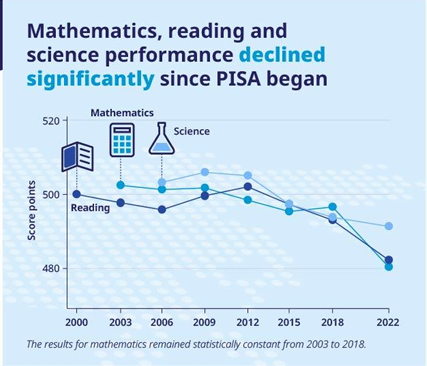
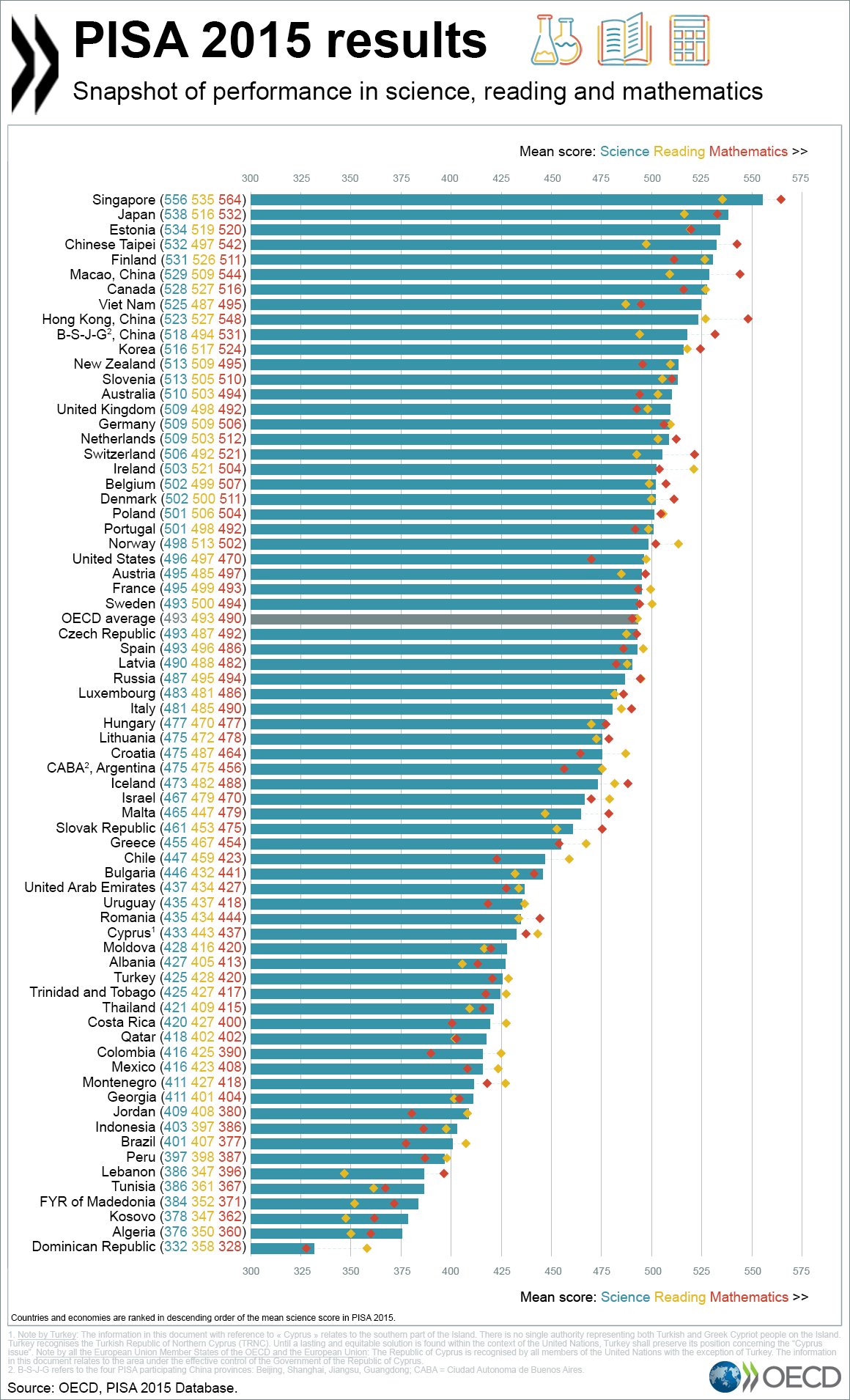
There has been an unprecedented and disturbing drop in average performance for literacy and numeracy in the OECD, as evidenced by recently published research based on data from 2022. https://www.oecd.org/pisa/. Mean performance in mathematics fell by 15 points (equivalent to nine months of learning) and in reading by 10 points (six months of learning loss). Fortunately, average scores for science were maintained.

One in three functionally illiterate

In my home country, The Netherlands, which is one of the richest and most socially progressive places on Earth, with a high commitment to education, the data indicate that one in three students are at risk of being functionally illiterate when they leave school. One in three! That’s up from one in four in the research from 2018. What an enormous loss of potential for these children and our society.  It also makes you wonder how we can spend 12 years and €100,000 per student on education with an outcome that one in three cannot read at the level required to function at school or in society at the end of the journey.

Problem pre-dates pandemic

It would be logical to think that COVID-19 might be the primary cause of this negative development. However, the trend analysis indicates that the decline had begun before the pandemic and peak performance was 10-15 years ago. There are longer-term issues at play. 

Resilience factors could guide the way forward

Some education systems (especially in East Asia and the Baltics) showed both resilience to the disruption from the pandemic, and structurally high learning outcomes. PISA observed 10 factors that contributed to this resilience, and could be helpful in bolstering future approaches, three of which particularly relate to digital, namely:

  1. They ensured good access to skilled teachers, high-quality digital learning materials and devices and developed guidelines for their use.
  2. They limited distractions from digital devices in the classroom (particularly from smartphones and social media) by policies at school.
  3. They prepared students for autonomous and remote learning.

(Screen)-time well spent?

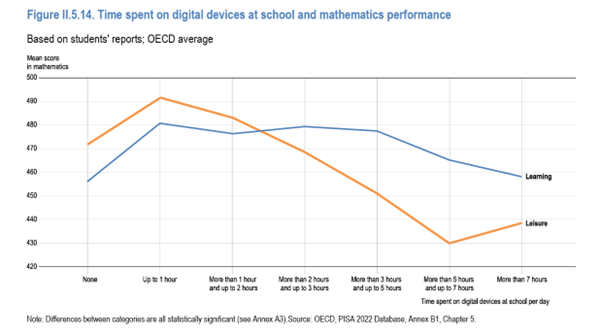
Overall, the evidence shows that using digital/devices for learning purposes in schools yields higher outcomes than not doing so, with the effect tapering off after about five hours per day.  Somewhat surprisingly, the impact of using devices for leisure purposes at school was also correlated with higher learning outcomes, although this turns more sharply negative after about two hours per day.

Most schools have articulated policies about using digital devices on site. However, the least common practices were i) not allowing the use of cell phones (34% of students attended such schools), and ii) having a specific policy about using social networks (51% of students).  In The Netherlands (2022 data), less than 10% of students attended schools where the use of cell phones was not allowed and one in three reported that every or most lessons were disturbed by digital devices.

Tick Tock, the clock is ticking to maintain a fully literate and numerate society

With good quality materials, a focus on learning outcomes and sensible rules of engagement, the use of digital in classrooms enables a positive impact on learning.  

However, smartphones and social media are disturbing the classroom and learning experience and this is likely contributing to why one in three of the kids around here could be functionally illiterate when they leave school.

No time to lose

We need to think again how we systemically approach this better for current and future students and what we can do to bolster the life-chances of this cohort of students with lower literacy and numeracy skills.  Education is a long play, with impact not only on individual lives but crossing generations. There is no time to lose.

Teachers Want to Go Digital Where it Brings Most Benefits

In the fifth annual Sanoma Learning Impact Framework (SLIF), we decided to focus on the main tasks the teacher performs in her profession. In total 7075 teachers responded to the survey, which was again carried out in all of the markets in which we operate: Belgium, Finland, The Netherlands, Poland and Sweden.

Core activities

The main tasks for teacher are: lesson planning, teaching the whole class, exercising, testing, assessment and giving guidance personally or in small groups. Of course there are other tasks too, such as administrative work and professional development, but these are the most frequently repeated activities.

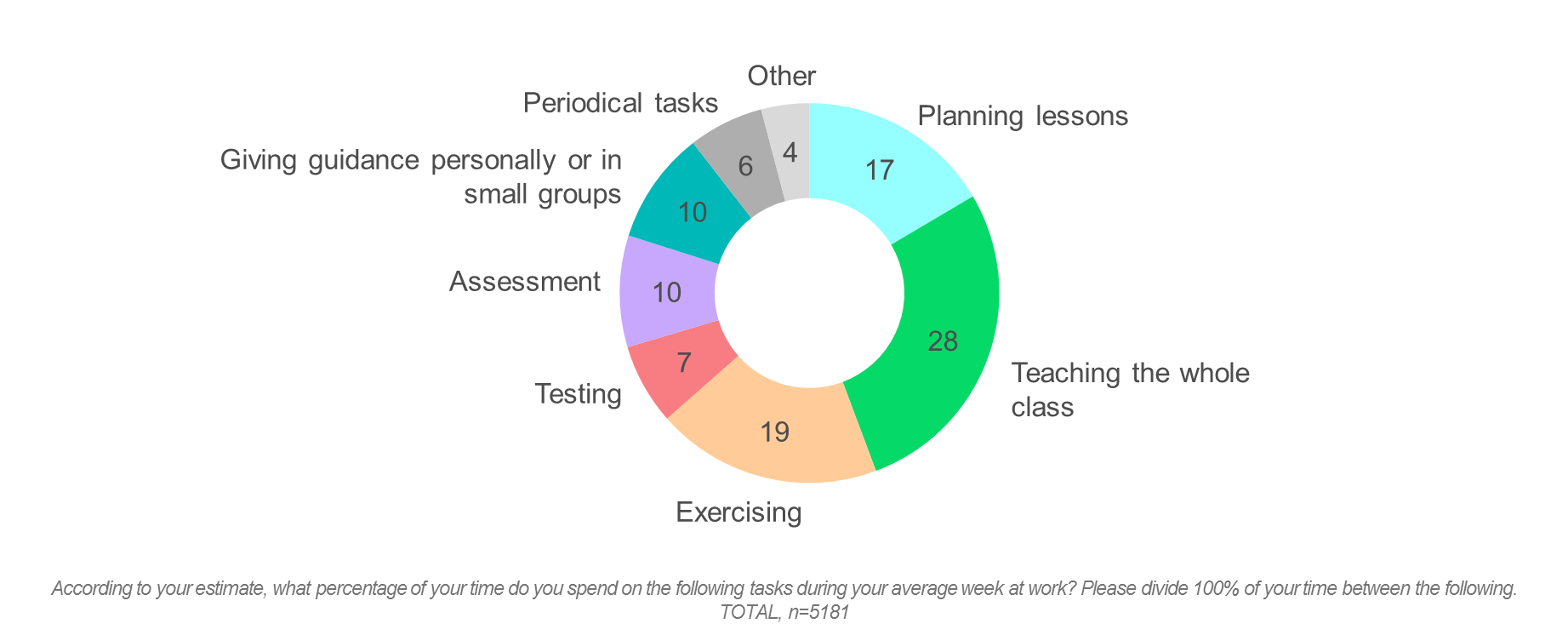
Figure 1 depicts the amount of time teachers estimate they spend on each activity. Teaching the whole study group takes most of the teachers’ time, but still only less than a third.

activities

Figure 1. Percentage of time spent on different tasks

As part of the digital transformation, we are as an educational publisher very interested in whether teachers prefer print or digital materials to support them in their work. Our experience so far is that they value both, and in last year’s SLIF we came to the conclusion that blended learning is the way to go.

As-is/to-be: medium vs activity

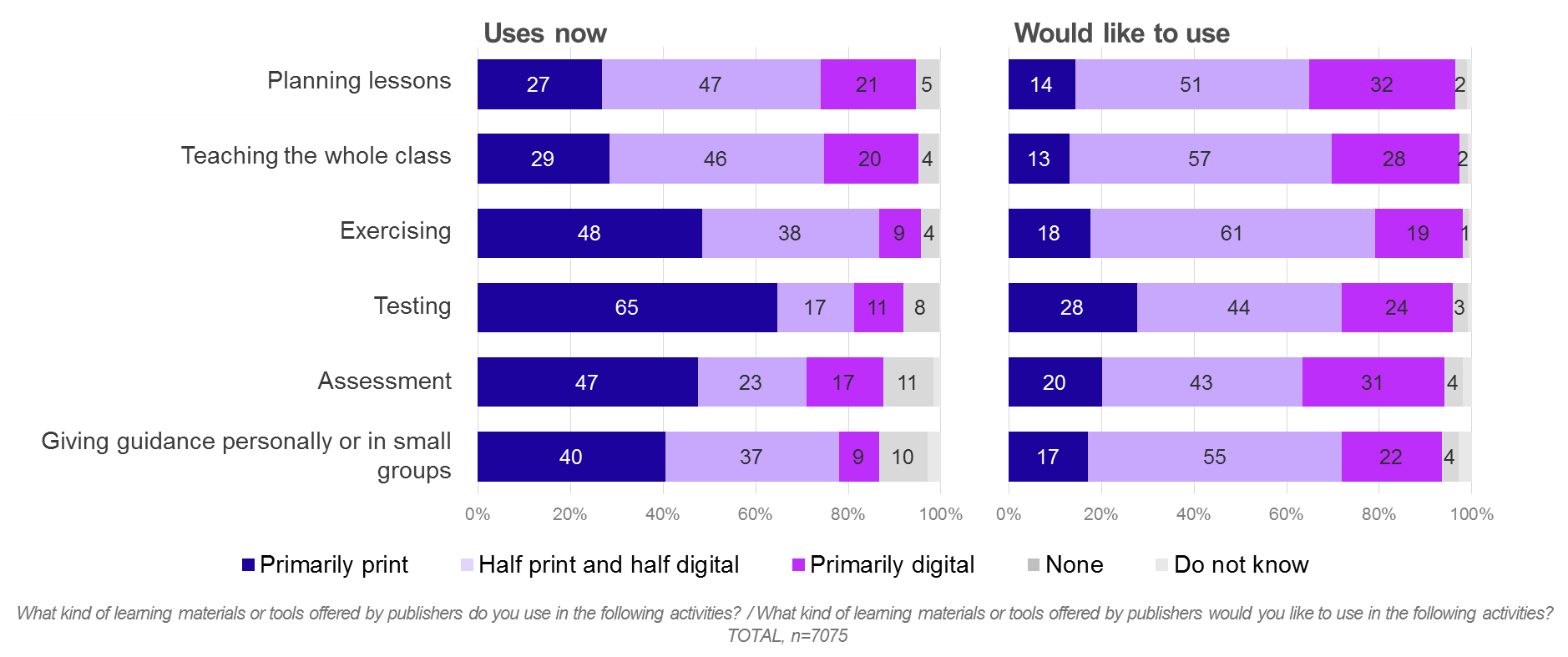
This time we decided to be more specific and map the print vs. digital axis with the activities a teacher carries out. This provided us with revealing results, as depicted in Figure 2.

present_vs_ideal

Figure 2. Materials and tools offered by publishers: Current use vs. Willingness to use

First of all, teachers would like to use more digital materials in all tasks than at present. Secondly, and perhaps more interestingly, the gap between current and desired state is the greatest in tasks where pupils/students have a relatively more active role, namely exercising, testing, and assessment.

Currently 65% of teachers are using printed tests/exams. 28% say they use half & half or primarily digital tests/exams. Contrasting this with the desired state is staggering and the percentages get flipped: only 28% would like to use primarily print and 68% half or primarily digital. A similar phenomenon can be seen in exercising and assessment.

Digital where it makes most impact

What to make of this? We think the answer is simple. Both exercising and testing generate a lot of new content and insights for the teacher to go through. This makes assessment time-consuming for the teacher. With both questions and answers in a digital form, time is saved, insights are increased and pupil/student engagement is enhanced. Teachers are selectively looking to use digital for maximum impact.

Santtu Toivonen, Lead Insight Manager, Sanoma Pro

John Martin, CEO, Sanoma Learning

Creating a European Champion in Learning

CMD cover

We’re an ambitious company and we are working on building a European Champion in Learning.

Last week we held our annual Capital Markets Day event in Helsinki – which is a good chance for us to share our plans with the investment community.  It was a positive day.  The team was in good spirits and there were lots of great questions from the participants.

I talked about our approach to building a European Champion. Check out the video of the session here.

Our starting point is strong: we serve 10m pupils and 1m teachers in some of the world’s best and most advanced education systems.  We’re a front runner on the digital transformation and have a strong financial performance and track record.  We have a solid plan and believe we can add even more value for our customers in the future.

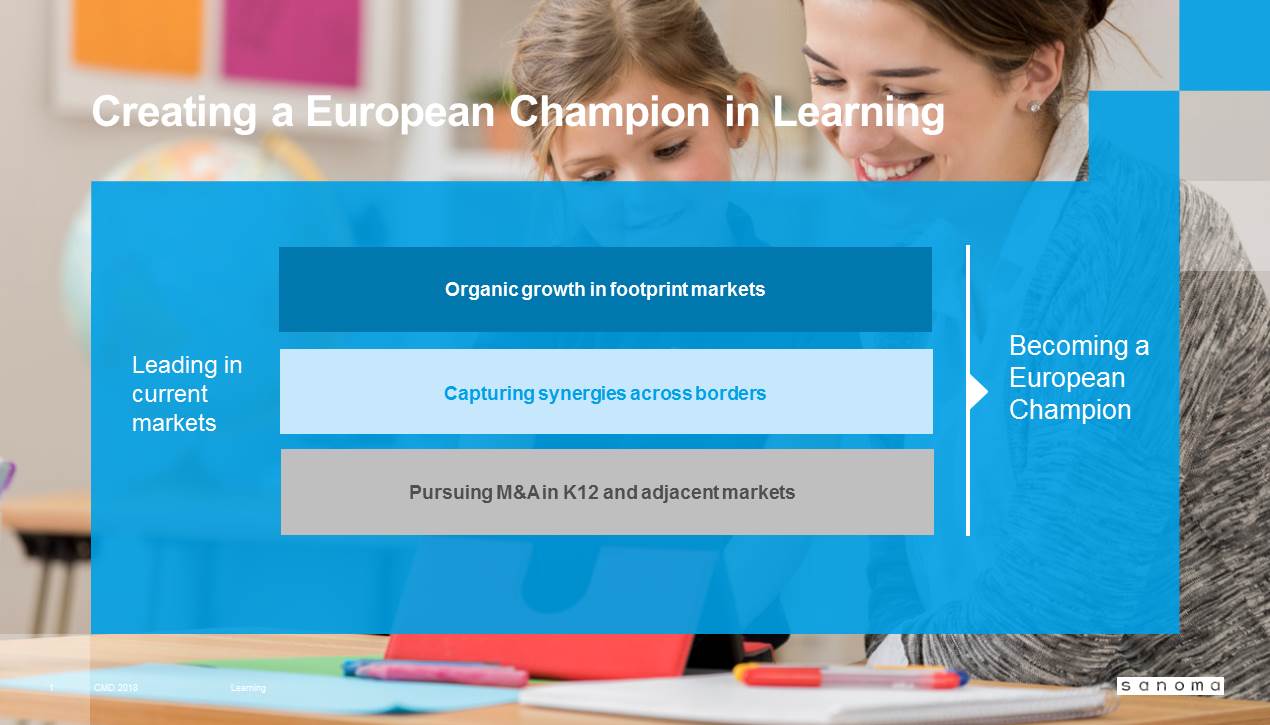
We have a three pillar strategy to build this European Champion:

  • Win in local markets, by serving our customers well
  • Work together across borders to create one integrated company
  • Make selective acquisitions in current and new learning markets

We’re really excited about the opportunities for the business and our team is going for it!

I’m interested to hear your views and if you see opportunities that you think we should be developing too.

CMD strategy


Winning Spirit of Nowa Era at 25

Magda

MD of Nowa Era Magda Walczak inspiring the team at the event

Last week we celebrated the 25th anniversary of Nowa Era.  It was really fantastic to be there together with the team, especially in such an exceptional year!

Past to Present

25 years ago it would have been almost impossible to imagine the success that Nowa Era has become today.  I wonder in those early days whether Mariusz and Magda even dreamed

  • We would become the market leader
  • Serving nearly every school in the country in some way
  • With such an outstanding quality of offering.

Present to Future

If you think what the team has achieved in the last 25 years – just imagine the next 25!

The key to the success of Nowa Era is our people

  • Who are doing extremely important work in enabling high quality education
  • In talented and hard-working teams
  • And striving to do it to the very best of their ability.

Spirit of Nowa Era

I call this the “winning spirit of Nowa Era“. I believe it will help us to make the next 25 years even more successful than the first 25.

With respect and appreciation

With respect and appreciation I would like to thank the teams for their commitment and outstanding achievements.  We are extremely proud of you.

Five Reasons Why Blended Learning is an Ongoing Success in Finland


This week I joined the education event Dare to Learn in Helsinki with colleagues from Sanoma Pro. With 3000 participants from over 20 countries it was well organised and people were in a positive spirit. Thanks to the organisers for having done a great job!

Finland has a world-class education system with several factors underpinning the success including skilled and respected teachers, high levels of equity and trust in the system and an holistic view to the development of children. Education professionals from around the globe are interested to learn about the Finnish ways.

I think that blended learning is an enabler of excellence in Finnish education and gave a keynote talk on this topic, with the headlines:

1.   Blended learning plays to the natural strengths of the local education system, enabling the excellent teachers, taking advantage of the high quality curricula and materials and putting to work the technology available in schools and homes.

2.   Blended learning models are practical and flexible as schools transform to a more digital future. Our research indicates that teachers are increasingly ready and willing for the digital transformation. We’re also witnessing the emergence of new pedagogies such as phenomenon-based learning, and blended solutions can be very helpful enablers of these new pedagogies.

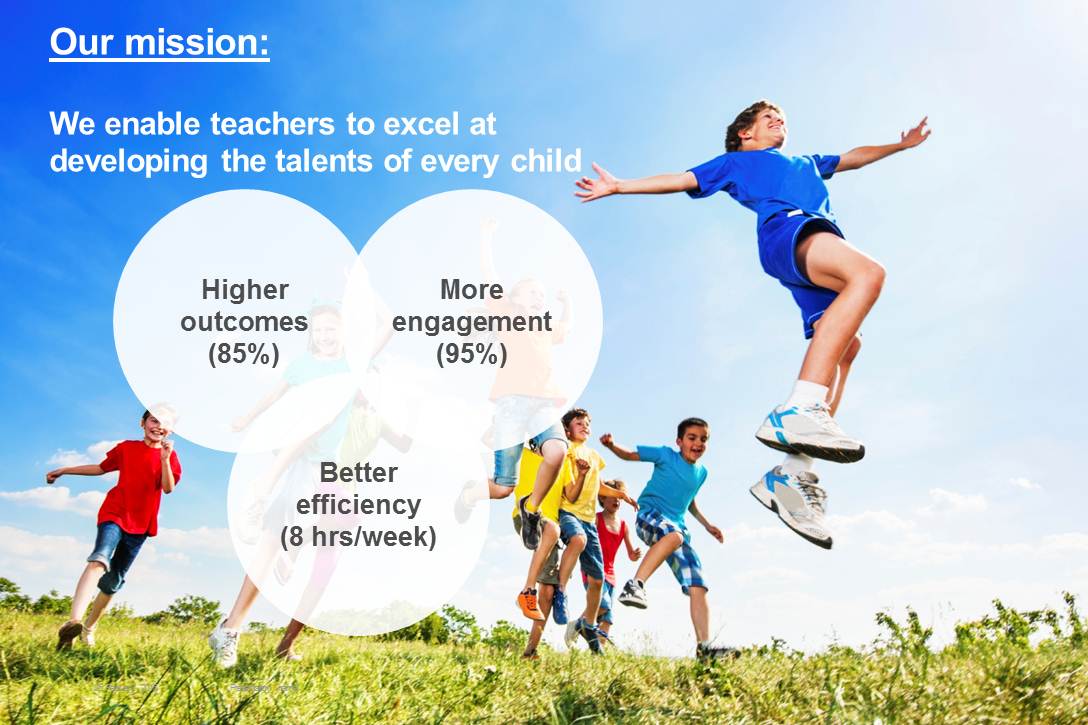
3.   Blended learning supercharges great teachers (and there are many of them in Finland). A Sanoma Learning solution typically saves a teacher about 8 hours of working time each week – time which can be channelled into individual attention to pupils. And with dashboards and personalised learning pathways, teachers have excellent insights and tools to guide interventions.

4.   Blended learning motivates and engages pupils in their learning endeavours. Our learning impact surveys have indicated that 95% of teachers typically report that integrated learning methods help them to engage pupils with learning. Some like printed books while others prefer online materials. Nowadays boys often lag behind girls in learning. Our analytics indicate that gamified solutions integrated into the approach such as bingel are especially motivating for boys, providing a way to bridge this gap.

5.   Blended learning supports pupils’ achievement and outcomes. Blended learning is a step towards personalized learning, which takes pupils’ personal achievement level and preferences into account. In our surveys, 85% of teachers have reported that such solutions help the pupils to achieve their curriculum goals.

 By applying blended learning methods and techniques, Finland can stay on top of its game in education. Teachers can make the most of their teaching and pupils stay motivated, which helps them to achieve their learning goals.

* Blended learning is mix of various event-based activities, including face-to-face classrooms, e-learning and self-paced learning.