Tag Archives: Learning

Inspiring kick-off Sanoma’s Learning Lab in Leiden

Today we kicked-off of the Learning Lab at the Da Vinci College in Leiden, The Netherlands. I was super-excited about this for both professional and personal reasons. I’m passionate about our goal to improve learning as we transform to a more personalized future. I like and respect the forward-looking Da Vinci College in my home-town – the “education city” of Leiden. And this is a great collaboration between Learning and Digital at Sanoma, the teams to which I have committed my professional life in recent years.

Inspiring introductions

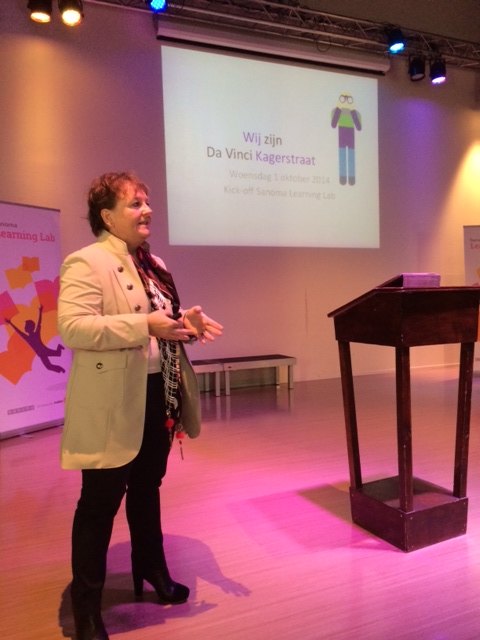
annick2We started with some inspiring introductions from the school, Sanoma and facilitator MakerLab. One of the absolute highlights of the day for me was the introduction and welcome to Da Vinci College Kagerstraat by Rector Annick Dezitter. I’d met her before on a visit to the school when we had discussed the personalization of learning. In her introduction, she talked openly and passionately about the future and had a very engaging personal style. I imagine she is an inspiring Rector! She is originally from Belgium and the two Belgians in our Learning Lab team (Johan Merlevede, Chief Transformation Officer in Sanoma Learning’s Leadership Team – the overall sponsor of the Learning Lab, and Joris van Heukelom, Partner at MakerStreet) both proudly reminded me that they are Belgian too, after her speech :-). I very much appreciated her warm welcome and inspiring words.

Lassi Kurkijarvi, innovation hero, at the kick-offAnother highlight was from my former colleague and founder of Sanoma Lab, Lassi Kurkijarvi. He was my first hire at Sanoma Digital and is a mobile native with a can-do mentality and a big heart. I love working with that guy and have learned a lot from him about engaging people. I really liked to see how the style and content of his session had deepened and progressed from our very first accelerator a couple of years ago (it was already good then). I love to see people grow like that!

Selecting the ideas and team leaders

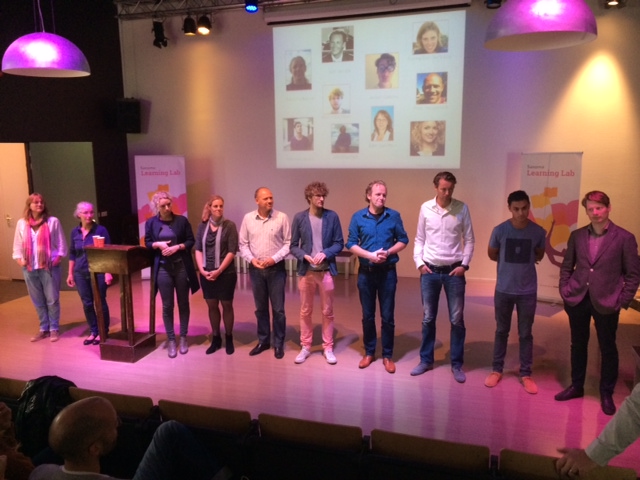
The ten idea owners who will lead the teams from HollandNext, each of the 30 participants pitched their ideas and 10 were chosen to lead teams to develop their concept in the next stage. Seven were selected by the crowd and three through wildcards. It was really fast-paced and exciting! It was great to hear the ideas and to get a sense of the person behind the idea during the pitch. I was very happy with the selection of people and ideas. The 10 team leaders include four teachers, three Sanoma employees and three external “open” applicants. A great mix of talent!

Working out

After lunch the real work began with the first workshop. The teams were formed and the first steps were taken. I’m curious where this will lead us. The spirit and energy were good.

Looking forward >>

We will be continuing with similar kick-offs in Gdansk, Antwerp, Helsinki and Stockholm in the coming days. We will then develop the concepts, five of which will eventually win a place to build a prototype of their idea at bootcamp in Amsterdam in December. I’m truly excited about this! Thanks to everyone who is joining us and respect to you! Looking forward >>

Leading the digital transformation in learning at Malmberg

lijn3Excellence and innovation

Sanoma Learning’s reputation internationally is built on two pillars. First of all, we are a leading and integral player in some of the World’s best-performing education systems including Finland, The Netherlands, Belgium, Poland and also in Sweden. Secondly, we are frontrunners in the digital transformation – with about € 50 m of new media and roughly € 100 m of multi-channel solutions sales (on a total sales base of roughly € 300 m) we are arguably Europe’s leading edtech company today.

“Now is education’s internet moment.”

We are passionate about education and are keen to play a leading role in building the next generation of learning solutions. Our purpose is to enable teachers to develop the talents of every child. And as we develop our learning solutions we keep three goals in mind: i) helping pupils and teachers to achieve great results, ii) supporting the ways of working for time and cost efficiency and iii) engaging pupils and teachers on the journey of learning. We believe digital will be a great enabler in realizing these goals.

Malmberg in The Netherlands at the front of the transformation

Of the markets in which we operate, we see that conditions in The Netherlands are the most mature for adopting digital learning solutions. Our daughter company Malmberg has taken a leading position in the digital transformation and this has been well-received by our customers.

I’ve been super-enthusiastic about the relationship that Sanoma Learning has established with Knewton with Malmberg as trailblazer. I’m really excited to see the prototypes of the next generation solutions we will develop! I am sure they will help to take a quantum leap forward in improving results, efficiency and engagement. I’ve also been happy with the trailblazing role that Malmberg has taken in developing the next generation of editorial tools that we will deploy across Sanoma Learning. Together, these initiatives will help us to serve our customers better and make our business more future proof.

High Five!

In the meantime, school year 2014/2015 has now started and we have gone live with five new big digital initiatives at Malmberg! I wanted to write a few words about them here.

1. Forward (VOoruit) in Secondary Education

VOIn August we went live with our new platform, playing five of our main courses on pc’s, laptops, tablets and smartphones. It looks really great! During the next year we will be migrating more courses onto the platform and eventually expect to power it with Knewton technology, bringing market-leading adaptive learning technology to The Netherlands. The platform covers the complete learning/teaching process from instruction to testing and also includes adaptive practice testing and learning analytics. This is going to really help pupils and teachers! Adoption has exceeded expectations an it’s really been a step up in terms of user experience.

We believe this platform takes us a step ahead of the competition and are going to use it to win a position in the market for maths, which is the biggest market in which we don’t yet have an offering. The time is ripe for renewal in that market. We are building the course now and will launch it next school year.

2. Language Blocks (Taalblokken) in Vocational Education

taalblokkenThis year we have renewed our didactic concept, concept and platform for Taalblokken. We have focused on usability and differentiation. Our first usability analysis has just been completed and both students and teachers have rated the solution with 8/10. Great! A few years ago, Taalblokken and Rekenbloken (languages and maths) were our first courses to play digital first/digital only, and they have been a big success for teachers and students and also helped us to grow our business. We have the ambition to sell 25% more student licences this year, and the signs are that we will achieve that.

3. Pluspunt Digitaal in Primary Education

pluspuntWe are market leader in primary education and our platform is now used by more than 1 m pupils in The Netherlands. We have just created a fully digital tablet version of our winning maths course Pluspunt and are testing it with 40 schools. We expect this course will help teachers and pupils to get better learning results, save time and stay motivated. We also notice that they trust the brand and like that they can deploy print and digital as they wish.

4. Final year testing (eindtoets) in Primary Education via ICE

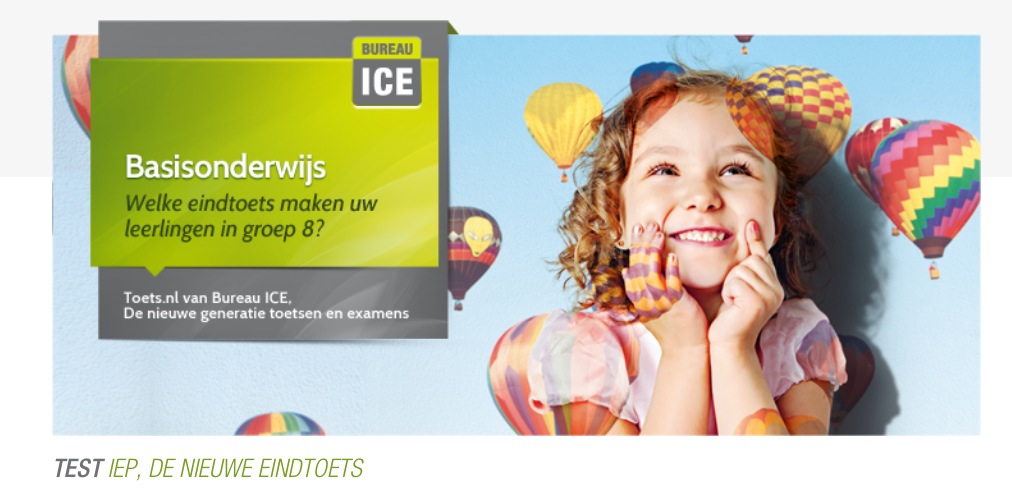
iepThe government has taken the good decision to open the market for the final year test to new entrants. ICE has an excellent reputation for quality, usability, innovation and digital and we are introducing a new solution to be deployed in 2015. This will be great for our customers and the competition will be good for the market. Cito, here we come!

5. Taking the Primary Curriculum into the home with Family Pluym

pluymWe’ve extended our language and maths courses to the home via a fully digital learning environment following the learning lines and pace of the school curriculum. We started with a soft launch last week and will be rolling it out in the next month. I really like the user experience and believe that parents are increasingly looking to support the learning of their children in the home environment. Our market research and user testing have shown that parents and children like the extension of the trusted school brand into the home too – you know that it is high quality and in time and in tune with the school. This is a potentially new market for us and I am very curious how this will develop.

Investing in the future of learning

2014 is a crucial year for us in investing for the digital future. The first signs are that our customers appreciate and have adopted the renewed offerings.

I admire the frontrunner role that Malmberg takes at Sanoma Learning and in the Dutch market. Customer focus and innovation sit deep in the genes of our people. Respect!

Looking forward >>

Sanoma’s Learning Lab hits the right note

learning-labI love the start of the new school year: it feels like a time of new beginnings and new opportunities. I’m especially excited about the coming semester because we will be running our Learning Lab in partnership with five great innovative schools!

Improving the impact of education on learning

We’re a key partner to schools and frontrunner in the digital transformation in some of the World’s best performing education systems, including Finland, The Netherlands, Belgium, Poland and also Sweden. We’re deeply committed to supporting excellence and equity in education. And we see that many stakeholders in education are looking for renewal: for improved learning outcomes, for better engagement and for new ways of working. Our goal with this Learning Lab is to co-create new concepts, together with our partners, that help to improve and evidence the impact of education on learning.

In time and in tune with teachers

Our target was to recruit 150 participants. However, the Lab has been heavily over-subscribed: we have received about 350 applications! We will increase capacity to take account of this. Interest has been especially strong from teachers. The subject and timing of this innovation lab seems to be very much in line with the needs of our customers. We really appreciate your trust in working together with us in developing new ways of teaching and learning.

Five innovative partners

Thanks to all the individuals and also to the five partner schools for showing their innovative colours and joining us on this journey of discovery. The partner schools are:

It’s great that you have taken on this challenge together with us.

Looking forward >>

I can’t wait for the kick-offs at the beginning of October. We’re going to learn new skills, broaden our networks and take a positive step to improving learning.  And we’ll have a lot of fun on the way!  I’m excited to be working with you on this initiative in the next few months!

Inspiring leadership in education

This week I attended the Global Education Conference in Boston sponsored by Harvard and Goldman Sachs. This was one of the most inspiring conferences I’ve attended in recent years. Sessions were spread over two days and included hot topics such as “financing disruption”, “creating value in a world of content abundance”, “bridging the skills gap” and “the promise of accessible education”.

I could happily write a post about each of them. But I will write about just one. The absolute highlight of the meeting for me was the opening keynote by Geoffrey Canada, CEO of the Harlem Children’s Zone, a charter school network of 12,300 students in New York. He has been instrumental in improving the performance of his students over a period of two decades such that 95% of high school seniors these days are accepted into college. He gave the best live keynote speech I have ever seen.

GeoffreyCanadaMuch of the focus of the conference was on technology, and I certainly believe that technology can be a great enabler in improving education.


However, Geoffrey’s impact comes from excellent leadership. In particular in taking actions to re-set the normative behaviour amongst the stakeholders including the local community. In a nutshell, in changing expectations in the community from “you have to be a genius to go to college” to “if he can do it, I can do it”. And amongst teachers from “don’t blame me, this is a mission impossible” to “my job is to get these kids into college”.

I personally believe that excellent education can be delivered when skilled teachers, motivated pupils and high quality learning materials play together effectively for the benefit of the learning of the pupil. The role of the school leader has not been strong on my radar. But of course, these three cornerstones rely on selecting and leading the right teachers and ensuring that a healthy culture and practices are in place in schools and their communities! The role of the school leader is pivotal. I should re-examine my beliefs!

Canada is a brilliant and inspiring speaker. You know that he wants the best for his pupils. You know that he will do whatever it takes to make it happen. He is highly engaging and has tremendous energy. He’s firm but fair. It’s not about him, it’s about the future of the kids at his school. I liked the clarity of his message. “Your job is to get these kids into college. The military is good. Vocational training is good too. But your job is to get these kids into college. That is what I expect from you”. I liked that he saw it as a journey. Year-on-year he saw impact. But transformation is a journey and the impact 20 years later was massive.

What would the equivalent message be for my own team? The essence of it is “help teachers to excel at developing the talents of every child in their class”. I believe this is the right direction and will be the journey of learning in the coming decade. How to achieve and measure that? If you have inspiring ideas then you are welcome to join our Learning Lab this coming Autumn!

Most of Canada’s keynote was energetic and funny. He is also a poet and took a more serious tone at the end by reading one of his own poems “Don’t blame me”. Inspiring and touching. Thanks Mr Canada, a brilliant leader, for making a positive impact on thousands of lives, and for inspiring me too.

DON’T BLAME ME
February 2007

The girl’s mother said, “Don’t blame me.
Her father left when she was three.
I know she don’t know her ABCs, her 1,2,3s,
But I am poor and work hard you see.”
You know the story, it’s don’t blame me.

The teacher shook her head and said,
“Don’t blame me, I know it’s sad.
He’s ten, but if the truth be told,
He reads like he was six years old.
And math, don’t ask.
It’s sad you see.
Wish I could do more, but it’s after three.
Blame the mom, blame society, blame the system.
Just don’t blame me.”

The judge was angry, his expression cold.
He scowled and said, “Son you’ve been told.
Break the law again and you’ll do time.
You’ve robbed with a gun.
Have you lost your mind?”
The young man opened his mouth to beg.
“Save your breath,” he heard instead.
“Your daddy left when you were two.
Your momma didn’t take care of you.
Your school prepared you for this fall.
Can’t read, can’t write, can’t spell at all.
But you did the crime for all to see.
You’re going to jail, son.
Don’t blame me.”

If there is a God or a person supreme,
A final reckoning, for the kind and the mean,
And judgment is rendered on who passed the buck,
Who blamed the victim or proudly stood up,
You’ll say to the world, “While I couldn’t save all,
I did not let these children fall.
By the thousands I helped all I could see.
No excuses, I took full responsibility.
No matter if they were black or white,
Were cursed, ignored, were wrong or right,
Were shunned, pre-judged, were short or tall,
I did my best to save them all.”
And I will bear witness for eternity
That you can state proudly,
“Don’t blame me.”

The killer app in education is the teacher

edtech-logoLast week the second EdTech Europe meeting was held in London. It was an inspiring day and attracted high quality participants including quite a large audience of start-ups, established operating companies and investors. Thanks to Charles McIntyre, CEO of IBIS Capital and Benjamin Vedrenne-Cloquet, Founding CEO of Edxus Group, for having arranged this excellent meeting!

I was a speaker on one of the panels and also a member of the Advisory Board, so I was happy it was a success. I loved engaging with the entrepreneurs running the edtech ventures. It’s inspiring to hear their stories and feel their energy. And it was also a great networking event for meeting peers from across Europe.

Technology, platform, content, data?

This was a meeting about educational technology, so there was rightly a lot of discussion about the transformation of education and the roles that technology, platforms, content and data will play. What will be the “killer app” of education in the future?

The killer app in education today is the teacher

Today I believe that the “killer app” of K-12 education is the teacher. Great teachers engage individuals and classes, ensuring that they are motivated to learn. They stretch and support individual pupils so that they reach the best learning outcome they can. And they guide the ways of working such that learning time is spent usefully.

Technology will both enable and disrupt teachers in the future

Effective use of technology, platforms, content and data can help to raise learning outcomes (e.g. data-driven personalised learning), bring efficiency to the ways of working (e.g. automation and performance dashboards), and support engagement and motivation (e.g. gamification and storyfication). The teacher is therefore likely to get both enabled and disrupted by technology in the future.

Yet although the role of the teacher will change, I believe they will remain the “killer app” of education in the future too. They are likely to remain the leader of the classroom. They will probably more-or-less remain as the primary guide and gatekeeper to the learning activities that are carried out. And their relationship with classes and individual pupils will remain pivotal to engagement and motivation.

Enable teachers to develop each child

Our ambition is to use edtech to enable teachers to excel at developing the talents of every child, resulting in higher outcomes, better engagement and new ways of working. That’s something I believe in and would be keen to invest in.

Lifelong learning

Last week was the anniversary of the week that my father died – a long time ago in the meantime. He was a good and decent man and our family grew up in a loving home. These days I think about him when there is something happening in the family and during that last week of May that has just passed.

I got my passion for learning from my father. He was not educated, but he believed in the power of education.

  • He made me want to contribute to creating a better world
  • He encouraged my curious mind
  • He expected me to have high expectations of myself
  • He taught me to work hard and to be persistent.

I remember the happy times we had together in the past. I am thankful that our family is in good health and good spirit today. And I am grateful that you gave me a life-long love of learning.

Rest in peace Dad x.

Learning outcomes accelerator: co-creating new solutions with schools

The future of learning is personal

personalAs we move from the industrial age to the knowledge age, our ways of working in education will change too. Amongst others, technology will enable us to tailor pedagogy, curriculum and learning support to the needs and aspirations of each individual learner. Developing the talents and potential of individuals and helping them to make progress in their lives will be key.

Our thinking needs to shift. From inputs …

Governments have traditionally put a lot of emphasis on the inputs into education. How much do we spend? How many pupils per classroom? How many hours of class time? How much do we spend on learning materials? How many devices in the school? These things are all important.

… to outcomes

input-to-outcomesHowever, the value is in the outcome not the input. Are we helping individuals to make progress in their learning career? Are we preparing them for effectively for work? Are we enabling them to become good and fulfilled citizens? These are the big outcomes questions.
Maybe these questions are so big that we only know the answers when it’s too late. Therefore, on a more practical level, we should break it down into something more manageable. For example, for each activity (“course” or “lesson”):

– does this contribute to a good learning result for all of the individual pupils?
– in a way that is engaging and motivating for pupils and teachers?
– and in a way that is effective in terms of time, cost and energy?

By bringing these outcomes into focus, we can reshape education for the next generation.

Enter the Learning Outcomes Accelerator

At the OPPI Learning Festival in Helsinki last week (great initiative!), we announced the launch of an open Learning Outcomes Accelerator:

“how can we improve and evidence the impact of education in the new era?”

In each of the countries in which Sanoma Learning operates (Finland, The Netherlands, Belgium, Poland and Sweden) – pretty much an all-star cast for PISA :) – we would like to work with one school where at least one teacher/class would participate.

Also, we would like to ask academics (with expertise in outcomes, learning analytics, pedagogy and so on) to join us to bring an extra richness to our thinking and approach. And 75 professionals from Sanoma, with expertise about course and curriculum development, design and user experience, and lean startup methodologies will join us in creating new prototypes.

How does the accelerator work?

Participants at bootcamp

Participants at bootcamp

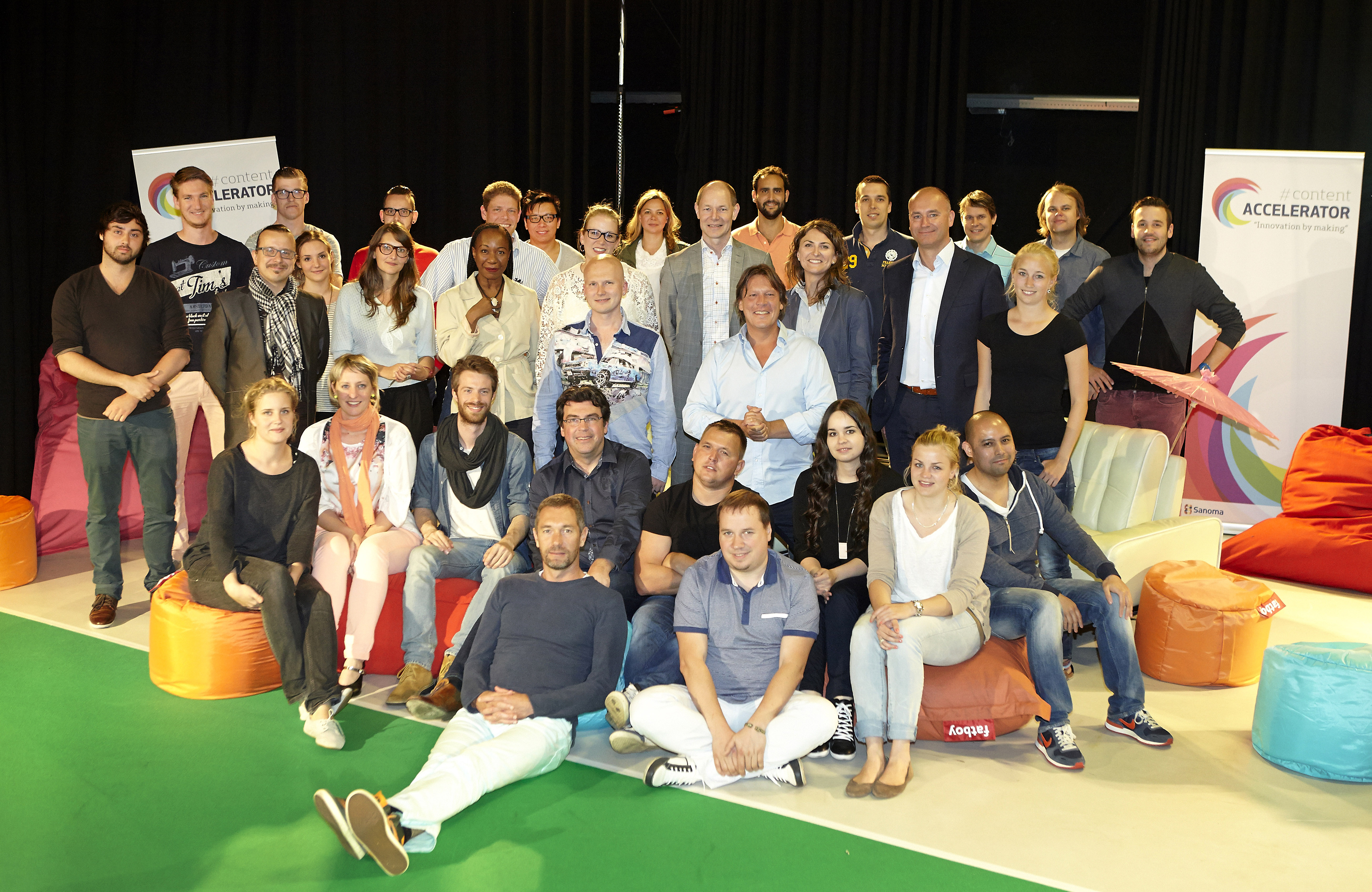
We will launch (in September, dates to be finalized) with five “live” kick-offs, one in each of the main schools participating. This will be followed by a seven week program of ideation and training, during which hundreds of ideas will be created, tested and improved. Towards the end of the process the best five ideas will be selected by public voting and the winners will be invited (expenses paid) for a four-day bootcamp in Amsterdam to build their prototype. I’ve previously blogged about how an accelerator works and what happens at bootcamp. It’s really exciting and inspiring to be part of it!

What is it, what isn’t it?

The accelerator will be above all about learning by doing! It will be fast-paced, highly practical and we will go from idea to functional prototype in less than 10 weeks. It will be structured in terms of the goals, process and support. And open in terms of ideas. It will be a journey of discovery and experimentation and this is what makes an open accelerator so exciting.

It’s not a big academic exercise. We won’t write a book about it. (Even if books are good too.)

Register and help us co-create new solutions for outcomes

If you would like to join the accelerator and you’re either a teacher at a school in one of the five countries mentioned earlier, or an academic from there or elsewhere, please let us know at sanomalearningoutcomes.com. We will strive to have decided which five schools to work with on this particular accelerator by the end of June. Participation is free of charge. We will be accepting applications until 1 September.

I was positively surprised by the interest from other groups at OPPI too. For example, some Foundations, Universities, other companies, schools in other countries and educational journalists also wanted to get involved. If you are from one of these groups and have something exciting to bring to the accelerator, then please take contact with me and let’s see if there are possibilities for us to adapt the program so you can join us.

Looking forward >>

I believe that by bringing outcomes into focus, we can reshape education for the next generation. I hope you will join us on this exciting journey!

Flipping 2.0

flipping 2.0I’m curious about how we can ‘personalize’ learning: how can we help each individual learner to best develop their talents?

‘Flipped learning’ has caught my attention as one potential route, characterized by a more student-centric classroom, higher-level thinking as a goal, and good use of face-to-face interaction between students and teachers.

For this reason I recently read Flipping 2.0: Practical Strategies for Flipping Your Class, compiled by Jason Bretzmann, with authors contributing to sections on 1) Flipping in the core content areas, 2) Can anybody flip? and 3) Just for teachers.

I would like to recommend this book to teachers interested in flipping their classrooms and to other creators of educational resources looking to support personalized learning. I thought it was surprisingly accessible and there were three things I particularly appreciated about it:

1. Expert

All of the contributors have in-depth and first-hand experience of transitioning to a flipped classroom and describe that transformation clearly.  I thought the cases were helpful and real-world descriptions of the benefits and pitfalls. This is not a book of idealized concepts written by hands-off consultants but a very credible “how-to” handbook.

2. Practical

I especially liked the practical nature of the book. Amongst others, it’s a great resource for working out which technical resources might work best for teachers and students. There’s a lot of useful practical advice on creating learning materials, engaging students and dealing with challenges connected with flipped learning such as access to technology.  Where there’s a will, there’s a way.

3. Passion for teaching and learning

I love it when people are passionate about what they do. The contributors to this work share a passion for teaching and learning and that oozes through the pages. You feel throughout the book that they are striving to be great teachers and are constantly looking for ways to excel and improve in that role. Respect!

By the end of the book I personally wanted to create my own lessons and I’m not even a teacher! Apart from thinking how we could support the flipped classroom at Sanoma Learning, it also made me wonder if I could use some of these learnings in my own job. Somehow a ‘flipped board meeting’ doesn’t sound quite right :-), yet we do say that we want to spend less time going through powerpoint slides and more time on discussing and improving the strategies. Worth an experiment …

Sanoma Startup Challenge: the Future of Learning

20140105-230333.jpg

We recently announced the launch of a startup challenge, focusing on the future of learning. The goal of the challenge is to identify Europe’s most promising startups in K-12 education and to work with them in finding ways to help them to grow.

We’re encouraging applications from European startups that have a live product and growing customer base, but are still smaller than € 2 M in annual revenues and have been established within the last five years.

The application round is now open and will close on 1 March. Five finalists will be invited (expenses paid) to Amsterdam on 23-25 April to work with executives and experts from Sanoma Learning and SanomaVentures and to pitch their startup to The Next Web Conference audience and jury. The final winner will be announced immediately after the pitches and will receive a cash prize of € 25.000. We will also explore the options with the finalists for closer collaboration with Sanoma in supporting their growth ambitions.

Education is at the dawn of a new era, partly enabled by technology. As interim CEO of Sanoma Digital and CEO Designate of Sanoma Learning I am excited about working together with high potential startups in the edtech space and hope that we can build some successful and long-lasting relationships through this initiative!

For more information on the learning startup challenge, including the application procedure, click here.

Good luck to all applicants and I hope to see you in Amsterdam in April!

Sanoma’s #contentaccelerator bootcamp: making it happen!

Participants at bootcamp

Participants at bootcamp

Last week we ran the bootcamp for the #contentaccelerator. After seven weeks of ideation and training, of building and testing minimum viable products, we sent the five winners to bootcamp to build prototypes of their concepts – to take the next step in making it happen.

On a personal note – these weeks are amongst the absolute highlights of my year. We take some of the most talented people in the organization and give them the opportunity and tools to turn their idea into a prototype. I believe in innovation by doing. Not only is this the best way to move fast and develop close to the customer. It’s also the best way of learning new skills.

Focus on delivery

The first impression of a visitor to the bootcamp is that we put the participants in a cool space and give them four days of playtime to see what they make of it. However, the fact of the matter is that bootcamp is tough and demanding. Deliverables and discipline are at the core of the way of working. Preparations for the bootcamp have been stringent. We have selected the best ideas and leaders by a competitive and transparent process. Teams with complementary skills are formed including a visual designer and interaction designer best suited to the team and assignment. Each day starts by establishing clear deliverables for that day, and we are very strict in maintaining discipline to ensure that the results can be presented at end of the day. It’s structured, focused and intense.

Five concepts turned into prototypes

The outcome of the week is that we have built five great prototypes that have been tested with customers. They include i) a content marketplace (“if content is King, come and join the other Royals”); ii) a fashionista community (“you spot the look, we spot the shop”); iii) a service to hear the news in a new way (“have you heard the news”?); iv) an educational talent discovery app (“discover the talents of your children”) and v) a learning solution that mashes up the real and virtual worlds with educational quests. It’s amazing how far the teams have been able to bring these concepts in just four days. I’m tempted to link to the promotional videos here, but it’s a bit premature to make external announcements at this stage.

Proud of the teams

I’m really proud of how the teams have performed. Not only what they have delivered as prototypes. But also how they went about it; the spirit, motivation, energy and passion – the “can-do” approach has been truly inspiring. Congratulations to the team leaders and respect for the blood, sweat and tears that you have put into the last few months. Thanks to the support teams from Sanoma and Makerstreet for helping to make it happen. And once again Lassi Kurkijärvi (@lassi, Director at Sanoma) and Joris van Heukelom (@jorisheuk, Partner at Makerstreet) have been brilliant and inspiring in leading this program from beginning to end.

Fostering an innovative culture

As we continue on this journey of discovery to the roles that Sanoma will play in the futures of media and learning, it’s of the essence that we foster our creative and innovative culture. I believe the accelerators contribute to this in several ways. Directly, we are training hundreds of people on lean development methods and building new digital business lines. Indirectly, the accelerators generate discussion about innovation in the company, with supporters and sometimes detractors too. And the discussion often leads to new initiative – to more attention for innovation – what to do, what not to do, and how?

High level support is critical to the success of any program like this. I especially liked the visits of Harri-Pekka Kaukonen (CEO) and Jackie Cuthbert (CHRO) to the bootcamp. Both are strong supporters of the program and it’s great that they are visible and transparent in that. I loved the way the project leaders engaged with them, and the different styles they used in pitching their ideas and themselves – not only using facts, figures and beautiful design, but also appealing to their emotions (“Harri-Pekka, imagine your daughters using this”; “Jackie, this will help you find more great shoes”). Definitely some natural sales talent in the room!

The accelerators have proven the case that women rule at Sanoma. All five of the first round of new ventures are led by women and four of the five teams at this particular bootcamp were led by women too. Probably the sample size is too small to draw any conclusions about this phenomenon of the superior performance of women in the accelerators. Our experience on the whole is that the participants who came with the best ideas, put the most effort into developing them and sold them most effectively, came the furthest. Is there something about the accelerators and intrapreneurship that might give Sanoma a competitive advantage by creating an innovation and venturing space that particularly appeals to women, or at least supports a level playing field for talent?

Next steps

Based on the outcomes of the bootcamp we are now working on the next steps. In some cases, we will create new ventures. In others, we will likely sponsor next steps in the local business. There is one case where we believe we might need to work with an external partner to win in the market. We are currently engaging with the various stakeholders and expect to have made agreements within two weeks.

The clock never stops ticking of course. On Monday we will launch the recruitment drive for the #commerceaccelerator that we will run in the Autumn of this year, in cooperation with a number of leading European universities. Looking forward >>.