Tag Archives: Learning

Organising for the digital transformation in Belgium

de boeck blog

I’m really happy that we have acquired the educational publishing activities of De Boeck in Belgium. Welcome to our new colleagues! Click here for a short vlog about it.

logo_deboeck

De Boeck is a trusted brand with a good market position, making about € 17 m of revenues in 2015 and employing about 80 professionals. They share our passion for education and learning and there’s a very good fit with our mission of helping teachers to develop the talents of our children.

mission

Why?

Demand for multi-channel learning solutions is increasing. Our customers tell us that digital can support learning impact: improved engagement and higher learning outcomes for pupils and better workflow efficiency for teachers. A great example of using multi-channel to enable learning impact is bingel. So we made this acquisition to enable the digital transformation of learning and teaching in Belgium. We are working hard to organize ourselves effectively for this.

How?

We intend to combine the complementary high quality portfolios and well-developed learning design capabilities of Van In and De Boeck.

This will bring more scale to our significant investments in digital across these high quality portfolios.

We can realize synergies in our operations as we create a new organization ready for the future.

Looking forward >>

Bringing together two great companies, Van In and De Boeck, will help us to better fulfil the needs of our customers, today and in the future. Good luck to the new team in making this a success!

Education reform in Finland

kirsi

This week I caught up with Kirsi Harra-Vauhkonen, Managing Director of Sanoma Pro, market leader in Finland. The Finnish market is currently undergoing both a major curriculum change and digital transformation.  I asked Kirsi to explain more about what’s going on.

You’ve got an interesting background Kirsi, including positions at Nokia and Google. Tell us more.

Continuous learning is my passion, and I have been fortunate to be able to gain experience from many different positions. I have worked for example in recent years in telecommunications (Nokia), digital media (Google) and now in educational publishing. During my career, I have worked mostly in commercial and business development leadership roles. Mostly I have been leading change – be it new opportunities in the market, new ways of working or digital transformation.  I am driven by working with great people and teams.

Finnish education has a world class reputation. Why is that?

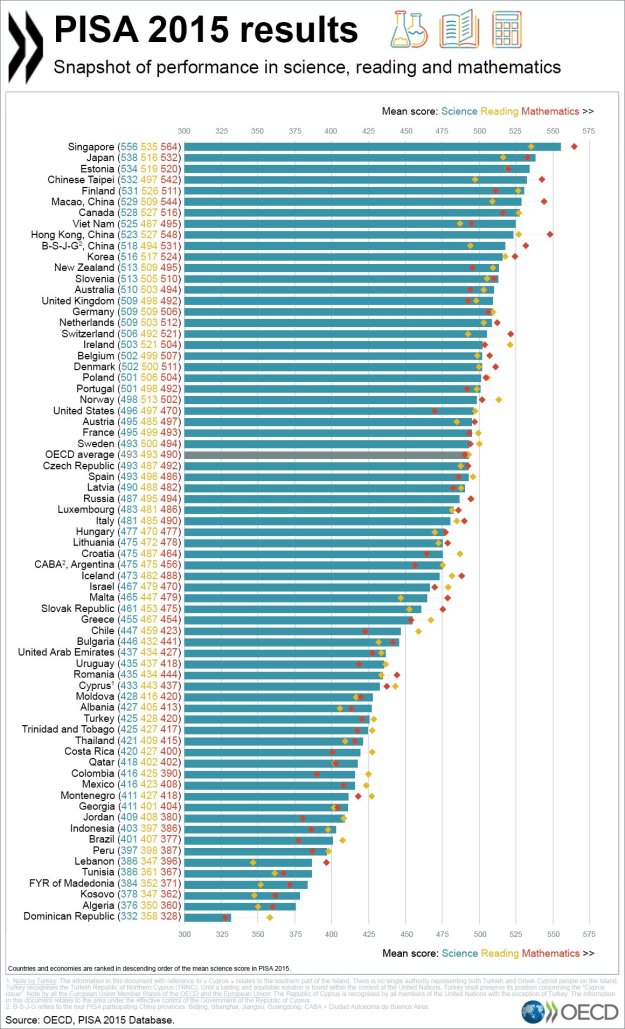
Finnish pupils have scored highly in the PISA surveys for many years. This is a result of the high quality public education system in Finland. Excellent teachers are one of the most important cornerstones of the system. All teachers have a university degree, and being a teacher is a highly respected profession. The fact that high quality education is available for everyone, is very important for Finland. High quality, versatile learning materials also play an important role in helping pupils and teachers to achieve excellent learning outcomes.

What role does Sanoma Pro play in Finnish education and why are our methods popular?

Sanoma Pro is a major publisher with a very good reputation and the most extensive offering in the Finnish educational market. We publish learning materials for all grades K-12 and also for vocational education. In addition we also have the Oppi & Ilo edutainment line for the consumers as well as tutoring services by Tutorhouse.

Our learning materials are used in almost every school and class, and our digital learning environment has more than 100 000 active teacher and pupil users. Our solutions are developed through very intensive collaboration with our customers, and our authors are the best professionals in their own subjects.

Our solutions are popular because they are high quality, they fit the curriculum perfectly, they are easy to use, and they have a good mix of print and digital elements that match the ways and needs of the classroom.

And they provide excellent benefits by enabling learning impact: they help pupils to achieve good learning outcomes, they engage and motivate pupils to learn, and they save time for teachers in their professional work.


There’s curriculum reform coming this year and next. What’s happening and how are we supporting the change?

The reform is a combination of driving change in the pedagogy and in the learning goals and related learning contents. First of all the reform is encouraging strong engagement of pupils and thus changing the role of the teacher to become more like a coach for the active pupil learners. Another theme is to update the learning objectives to equip children with such skills and knowledge that better meet their needs of the future. Also the need for more theme-based learning is emphasized as well as the aim to bring digital into the everyday work at schools.

We have integrated these themes in our methods, in addition to the new learning contents, and provide a lot of supporting tips and tools to help the teachers to adapt to the new ways of teaching.


What are the most important digital initiatives we are working on?

We are very excited about our new digital learning solutions. It’s now possible to use fully digital learning materials for teaching and learning in all of the primary subjects in the new curriculum. In addition, for the teachers who prefer a hybrid solution, we are launching the gamified, curriculum-fit exercise environment Bingel. Bingel supports seamlessly the Sanoma Pro learning methods and makes exercising engaging and inspiring for pupils.

In upper secondary we have Kompassi, the digital testing and assessment tool that provides teachers an easy way to create and assess tests, saving a considerable amount of their time and providing students with the opportunity to get familiar with the digital testing. The first national digital matriculation tests in Finland will take place this Autumn.

What are you most proud about with Sanoma Pro?

I am very proud of our extremely professional and talented team. Going through a phase of digital transformation in the market simultaneously with the very intensive curriculum change is not an easy task, but the team has shown great effort and we have been able to bring all the print and digital products to the market, while also innovating new concepts.

Our new learning solutions bring a lot of new opportunities and support for the teachers to renew their way of teaching, and to engage and inspire the pupils. I am very proud of this achievement, and having delivered this as a team!


Exciting times

Thanks for talking us through this Kirsi.  These are exciting times in Finnish education and it’s great to hear more about our commitment to working together with our customers in bringing new innovations to the marketGood luck to all our people in Finland!

Working together to develop scalable technology at Sanoma Learning

One of the key trajectories in our strategy is using technology to help pupils and teachers. We believe technology is an enabler of what we call learning impact: engaging pupils, improving learning outcomes and supporting the workflow of the teacher. Developing and deploying the right technology in the right way is therefore critical to our mission.

Key parts of our technology are developed together and scaled across our units. This is not easy but brings benefits in terms of speed, quality, cost, skills and shared learning.

This week I caught up with new recruit Heikki Rusama, in the team of our Chief Business Technology Officer Arnoud Klerkx, who recently moved from Rovio in Finland to Sanoma Learning’s co-development team in The Netherlands, to learn more about this work.

Tell us about your background and why you joined Sanoma Learning

I’ve been interested in learning since my teenage years and studied educational science to originally prepare for a role in academia. I’m keen to work in a role that will allow me to combine my passion for education with technology.

I found such a role when previously working at Rovio Learning, the entertainment company behind the Angry Birds. However I joined Sanoma for two reasons: to me it is important that learning is the company’s core business and secondly I see potential for further international growth in learning. Therefore, Sanoma Learning feels like a perfect fit for me.

What’s your role at Sanoma Learning?

My role as one of the Business Technology Consultants is to help business units to grow in digital learning by providing building blocks for the current and the future applications. This I do by leading some co-development initiatives like Edubase (learning engine), Identity & Access Management, and later this year Learning Analytics.

How does this bring value to our ways of working?

One of the many strengths of this company is the deep understanding of education including the local differences. Through our co-development program we identify and build common, scalable technology.  This helps us to develop higher quality solutions, faster and at lower cost and also to share learnings across our footprint which includes some of the World’s best education systems. If we are able to take co-development to the next level, we are going to create more Bingels in the future.

What are your first impressions of working with us?

I really enjoy my work. Like today, when I had meetings with Business Technology teams from Van In (Belgium) and Sanoma Utbildning (Sweden). Not only are they inspiring people to work with, I really admire the drive and passion they have for learning and technology. With teams like these, the co-development agenda will succeed.

Where do you think we stand on the digital transformation?

The future of our business seems bright yet increasingly complex. I am confident that we are tackling the right questions. We’re clearly a frontrunner on the digital transformation, which is going to be a long journey. Our deep understanding of learning combined with our technology capabilities make us strong. Further building on our co-development abilities will prepare us better for the future, by enabling us to make better products faster.

Thanks for the feedback Heikki. I believe enabling our learning methods with technology to help our customers is the way forward.  The co-development agenda is a great way for us to scale investments, skills and learnings as we progress.

P.S. Leicester City has a five point lead at the top of the Premier League.  Go Foxes!

Learning impact

mission

We believe it’s important to constantly improve the products and services we offer to our customers. More recently we have developed and introduced Sanoma Learning’s Impact Framework (SLIF) as a guide in this journey. This week I caught up with Sendhuran Govindan to learn more about the SLIF. Sendhuran’s a super-smart and nice guy, a clear thinker with a practical pair of hands.

Sendhuran2
Tell us about your background and role at Sanoma Learning Sendhuran

First, thanks John for having me on this virtual interview and for the opportunity to talk about SLIF. I am currently the Head of Strategy at Sanoma Learning. I joined Sanoma Learning 2 years ago and am passionate about our mission to develop the talents of every pupil. As Head of Strategy, I work with the leadership team to develop and execute our long-term strategy. I also lead specific strategic projects, one of them being SLIF.

My background is in strategy consulting and technology. I have spent over 10 years advising companies undergoing transformation due to technology, regulations, and other market conditions. Education is undergoing digital transformation, and it’s an exciting time to be here.

Why did we initiate the SLIF?

We have a long tradition at Sanoma Learning of developing excellent learning methods (an integrated set of learning resources for a subject, including textbooks, workbooks, software, supplementary resources, etc.). Some of our companies, like Van In and Malmberg, have been recognized leaders in educational publishing for over 100 years! As we shift towards making more hybrid and digital methods, we want to ensure that these new methods also deliver the high learning impact we are known for. We initiated SLIF to help us do that.

SLIF is our new way of developing methods and of evaluating their learning impact. Before we start developing any method, we set clear learning impact objectives and identify the features needed to achieve them. We then develop the method with the required features. After the method is launched, we evaluate the learning impact to see if the method and the features actually deliver on the objectives. By doing this, we can find out what works and what doesn’t, allowing us to continuously improve our methods further. This is very important as we are on the cutting edge of education technology. We have to ensure our innovation delivers learning impact, we are obsessed with that!

You mentioned Learning Impact. Can you elaborate?

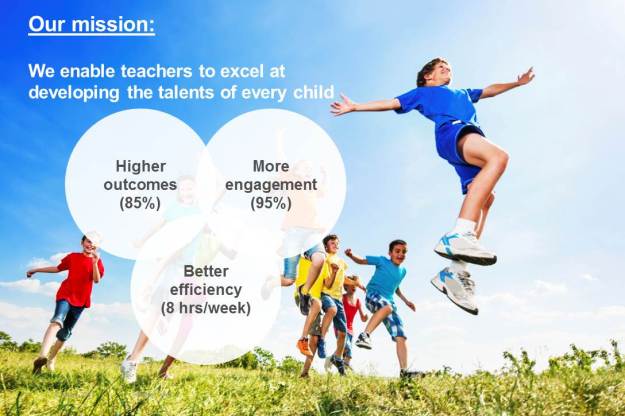
With Learning Impact, we refer to 3 things: engaging pupils, improving learning outcomes, and improving teacher workflow efficiency.

We design and develop our learning methods to engage and motivate pupils to learn. For example, the story-fication in Bingel (our award winning learning platform), motivates students to do more practices exercises. This increased motivation, coupled together with our well-designed methods, help pupils learn better and reach higher learning outcomes.

Additionally, we design our methods to help teachers achieve more in their hectic schedules. For example, in most of our software, exercises are automatically corrected, and the teachers are provided with detailed insights on student performance. In some cases, our software even provides personalized recommendations per pupil. This saves the teacher a lot of time, which can be used to provide individual coaching to pupils.

What were the main results from last year?

Last year was the first year of SLIF. We incorporated SLIF in 3 of our 6 businesses. And we conducted pilots in 3 others. We found that it helped our publishers sharpen their focus on learning impact, and helped them think of how technology can be effectively used.

Additionally, we conducted our Sanoma Learning Impact Survey to evaluate the learning impact of our top 20 methods across Europe. We found that our methods had significant learning impact.

“85% of teachers said our methods helped improve engagement of pupils.”

“95% said that our methods helped them improve learning outcomes of their classes.”

“Teachers said that our methods helped them save 8 hours / week across planning, homework assigning & correction and test creation & correction. This gives teachers more time to individually coach pupils.”

What are we planning moving forward?

We have an exciting multi-year roadmap for SLIF. Currently, we evaluate our methods at a high level. We also have several different ways to evaluate the learning impact (surveys, pilots, big data, etc.). As we advance our learning analytics, we will standardize our impact evaluation and also drill down deeper to evaluate the impact of specific method components. This will make it much easier for us to improve our products in the future!

But our short term priority in 2016, is to complete the roll-out of SLIF to all our businesses and to expand our Sanoma Learning Impact Survey.

Using evidence to support improvement

Thanks Sendhuran for talking us through this. I see the importance of using evidence in assessing what works best for pupils and teachers and believe the SLIF can be a helpful guide.
Sexiest Job at Sanoma (re-visited): Edtech Developer

edtechdeveloper

Sexiest Job at Sanoma: Data Scientist’ including an interview with Sanoma’s Queen of the Quants, Ulla Kruhse-Lehtonen, was one of my first blogposts and also the best read posting so far. I guess a lot of people are searching for “Sanoma” or “data scientist” :-).

Data scientists definitely have some of the sexiest jobs at Sanoma. However, and I might be a little biased, I think that the sexiest jobs these days are those of the edtech developers, led by Sanoma Learning’s Minister of Education Technology, Arnoud Klerkx.

Our team believes that edtech has the potential to bring many benefits to education

Supercharging the teacher as the killer app in education

We believe the teacher is the killer app in education and that edtech can supercharge her as a professional. For example by automating processes such as preparing lessons, checking homework, and giving insights into the learning of individual pupils. Edtech can help to channel the time and energy of the teacher to her relationship with her pupils.

Helping to motivate pupils to achieve their potential

With edtech we can personalize learning pathways for pupils, and engage them in new ways such as gamification and social thereby helping to develop the talents of each child.

Giving insights to other stakeholders

We can give better insights to parents into how their children are progressing and help headmasters to better evaluate school performance. Taxpayers will get new insights that will support them in assessing value. This should help us to create a better learning experience in the future.

Edtech is booming

Encouraged by these opportunities, edtech markets are starting to take off. IBIS Capital estimates that today there are more than 3000 e-learning companies in Europe alone. Last year, industry analysts estimate that more than $ 2 bn was invested in edtech venturing. And deals such as LinkedIn’s acquisition of Lynda.com for $ 1.5 bn have hit the headlines. Learn Capital estimates total market capitalization as a percentage of global annual spend at 2% for education companies compared with about 81% for media & entertainment and 80% for healthcare. They believe we are at the beginning of a huge wave of investment in edtech. Now is a good time to be a part of the industry.

The business of progress

Overall this is a truly exciting space to work in. Imagine you are a talented young developer today. Would it rock your boat to create technology that will help schoolkids to develop their talents and fulfil their potential? To play a role in helping to shape the next generation and have the chance of contributing to building a more fulfilled, happier, healthier and more prosperous society?

This is what excites me about the edtech space and why I think the edtech developers at Sanoma Learning have some of the sexiest jobs these days. Looking forward >>.

Pearson to focus fully on education

Pearson_WebBar_Top_Blue_RGBIn recent days Pearson, the world’s largest education company, has been in the news due to plans to sell the Financial Times and talks to sell its 50% stake in the Economist Group. It’s been estimated that these divestments will yield $ 1.5 bn net proceeds. Pearson will focus fully on education in the future.

Pearson expects growing and sustained demand for education, particularly driven by an emerging middle class in international markets and the digital transformation. The opportunity is to enable greater access, better affordability and improved achievement. They are working on transforming their business by building positions in fast-growing economies, shifting to digital and services, and promising to deliver measurably improved learning outcomes. With annual global spending on education estimated to be about $ 4.5 tn, Pearson sees space to grow current revenues of about $ 7.75 bn.

What could this mean for Pearson?

1. More focused strategy

You’re a global education company or you’re a global journalism company — both great things to be, but it’s hard to ride both horses equally well,” John Fallon, CEO of Pearson, said after the sale of the FT was announced.JohnFallonWe’ve reached an inflection point in media, driven by the explosive growth of mobile and social. In this new environment, the best way to ensure the FT’s journalistic and commercial success is for it to be part of a global, digital news company.” The leadership and management of Pearson can now focus fully on the growth and transformation strategy of their education businesses: emerging markets (growth), digital and services (growth and transformation) and outcomes (transformation).

2. Focused leadership of execution

Pearson already has some attractive positions in emerging markets and has taken a leadership role in the industry on outcomes, but is arguably not (yet) a frontrunner on the digital transformation. All three of these pillars will require leadership and heavy investment in the coming years and will therefore likely benefit from an increasingly focused strategy. With a rich pool of talent and an excellent reputation the company should be better placed to focus on the transformation of the education business.

3. Faster growth

Given a stronger balance sheet, Pearson should be more favourably positioned to make further investments in organic growth and to acquire other companies in digital and services, and international markets. This should in principle lead to better growth prospects for the company and a higher valuation.

What could this mean for education markets?

Good for customers?

My view is that a successful Pearson should be good news for customers. Looking at the big picture, if Pearson is successful in enabling greater access, better affordability and improved achievement in education in countries across the globe, this must be a good thing for our people and planet. And their success will likely encourage new entrants and more innovation in the industry which should yield further benefits for customers too.

Good for employees?

I would imagine that this will be good news for employees with the skills and ambitions to support Pearson’s growth and transformation agenda and vice versa.

What about the competition?

If you’re a growing digital education or service business in an emerging market, are making a measurable impact on outcomes and looking for an exit, this is probably good news :-). However, if you are predominantly a print publisher in one of the markets where Pearson is currently strong, it’s likely you will have to raise the bar to stay competitive. It’s not easy to see a direct impact on a company like Sanoma Learning which is arguably further on the digital transformation and operates in different markets, although there could be increased competition for international opportunities in digital down the line.

Will these divestments secure Pearson’s leadership position in the industry?

At this time, the company’s position seems secure: they are global market leader, they have a good growth and transformation strategy brought into sharper focus, an improved balance sheet and competent leadership. However, with a large “legacy” business, complex operating model, new competition from agile startups and a less friendly regulatory environment, it’s not a home run. Keep an eye on McGraw-Hill Education – they’ve been making smart and agile steps in recent times too as they reposition themselves as a “learning science” company.

It will be fascinating to experience the dynamics in this industry in the coming years as the giants transform themselves, new giants such as Google and Microsoft build their positions and (edtech) ventures such as Udemy, Edmodo, Altschool and NetDragon disrupt the market.  I’m interested to hear your views on this. Looking forward >>.

Going for Gold

Inspiring Spires

image

Radcliffe Camera at Oxford University

Last week our Leadership Team at Sanoma Learning visited Oxford. We’re working together on how we will lead the transformation of learning for the next generation. It was inspiring to be in this environment of educational excellence and the sessions on Educational Neuroscience and the Purpose of the Team were especially good.

image

Team GB winning Olympic Gold in Beijing

Most inspiring of all was the session with Double Olympic Gold Medal Winner, Steve Williams at the Leander Club (he won rowing Gold in the coxless four in both Athens and Beijing). The Leander Club was founded in 1818 (15 years earlier than the oldest established part of Sanoma Learning – Van In) and is arguably the World’s most successful rowing club. Steve talked us through his journey to becoming an Olympic Champion and then took us out onto the water to row together.

image

Our teams after the rowing session

Steve is not only an Olympic Champion but also a gifted storyteller. I will try to re-tell the core ingredients of what brought his team success, but nothing can beat the inspiration of hearing it in situ. He strongly credits many other people for the success, especially their coach, team members and everybody who supports the operation.

image

Steve explaining to us how they train

Overall, I believe the distinguishing factor behind their huge success has been their mindset: a culture of excellence where they truly live by their code. This has been nurtured and cultivated and almost certainly dominates the lives of the teams – you truly feel it everywhere at the Club. In my own words, I would summarise the essence of their approach as follows:

1. Set the highest expectations (goals)

Purpose: inspire a nation

Goal: win Olympic gold

Stopwatch: performance target (time)

They have set themselves a noble purpose with a clear and highly ambitious goal and they track progress consistently on the journey – not only to check and improve performance but also to affirm progress and success. The hunger for Gold in particular is deeply embedded in the culture and symbols of the Club. For example, the names on the Honours Board at the entrance to the Club for major international events such as the Olympics, are given in two colours only: Gold (winner) and Black. There is no doubt that this Club expects its members to win Gold. It triggered us to think how we can sharpen our purpose, goals and stopwatch at Sanoma Learning. What’s our ‘Gold medal’ – our impact on learning, our reach, our size?

2. Focus on moving the boat (strategy)

The Olympics are held every four years and a race lasts about six minutes. All of the focus on the journey there and during the race itself has to be on doing the things that move the boat. Make a plan to win, cut out the things that don’t make an impact and focus on moving the boat forward. The things that don’t move the boat forward basically hold it back. What lessons can we learn from this at Sanoma? What are the things we are doing that really move the boat forward? Is everything we are doing ‘moving the boat’?

3. Get the basics right (execution)

The team develops supreme physical fitness and technical competence that helps to bring them the bullet-proof confidence that underpins a winning mindset. Part of this derives from a gruelling training schedule of six hours per day, six or seven days per week. Good nutrition and rest are taken seriously and staying mentally strong is crucial. Essentially, the team is making the kilometers so that they are better prepared than anyone else on race day. The determination and pure discipline in delivering on the basics Steve showed were inspiring and possibly obsessive (no offence intended Steve). It makes me wonder: are we as fit in all places as we need to be to succeed in the future? How can I make myself fitter on the basics?

4. Learn fast (improve)

Part of any high-performance culture is to learn fast. I was especially interested in the ‘hot wash-ups’ they do immediately after each outing on the water. Very quickly, they huddle up and ask eachother a) what went well and b) what can we improve next time? Simple and effective. Part of their code is also that people speak out early and at the right time (before a decision) and that no problem lives longer than two hours. Feedback is so crucial to learning! We did a ‘hot wash-up’ and ‘feed forward’ with our team afterwards. We learned a lot and it was interesting and (sometimes) fun too! We have an open and trusting team so it was easy to do. Imagine how much further we could develop ourselves, our team, our people and our business if we would structurally build this into our culture. Let’s do it.

5. Celebrate success (enjoy!)

Members of the Leander Club want to be winners. And they want to feel like winners. Celebrating success feeds that mindset. Check out the Honours Board. See the photographs of winning teams hanging on the walls. Read the newspaper articles pinned on the wall, telling their stories of success. Listen to how they tell their story. Feel how Steve radiates pride at being part of the Leander Club. See how they measure progress and affirm their success. Who would not want to succeed in this environment? I am sure we could do a better job at celebrating our successes and those of our customers at Sanoma Learning.

Aim higher

I was inspired by Steve and his journey. Listening to him made me want to set (even) higher standards for myself, our team and for Sanoma Learning. We’ll be working this out with the team in the coming period.

Inspire a generation

Even more fundamentally: what about our schools? Imagine Steve Williams as Headmaster of a school. Think about the high aspirations, the culture of excellence and the dedication to purpose. The ‘fitness’ on so many dimensions. Imagine the positive impact such a leader would have on the next generation of children and teachers. What could be a better ‘Gold Medal’ than that?

Re-designing education in Finland for the 21st Century

Finland has achieved remarkable success as a high-performing and inclusive education system. But what needs to be done to design a system that will serve the country well in the 21st Century?

Last Friday I joined a workshop in Helsinki organised by Esko Aho, former PM of Finland and his colleague Marco Steinberg, with special guest speaker Prof. Paul Reville, Director of Harvard Graduate School of Education’s Education Redesign Lab, to contribute to the debate on designing a new solution.

Right question

I was enthusiastic about participating because this question is exactly right, and not only for Finland. Sanoma Learning is keen to take a leading role in co-developing and operating new learning solutions and systems. And it’s inspiring to learn from the experience of experts with a passion for education and learning – not only Prof. Reville and Dr. Steinberg – but also the other talented people who joined from amongst others Sitra, Tekes, the City of Helsinki and other companies and institutions.

Revving up the Engine

Prof. Paul Reville, Director of Harvard Graduate School of Education’s Education Redesign Lab I was especially interested to hear Prof. Reville’s vision on the key areas that should be addressed by a future proof solution (or in his words, Human Capital Development Engine for K-12):

  1. To individualise/personalise/customise education such that each pupil emerges from school ready for meaningful employment and 21st Century citizenship
  2. To develop each child holistically including their health and well-being, looking not only at academic performance but also supporting disadvantages such as poverty, mental and social disadvantage and so on.
  3. To significantly increase out-of-school learning opportunities (80% of a child’s time is out of school, making the school environment itself a relatively weak intervention) including such things as summer school, tutoring, sporting, music and art and so on, especially for the less advantaged.

But what are the answers to these challenges? And how to realise change in such a complex environment as education, with many stakeholders?

Advice to Government?

We workshopped on what our advice would be to the new government in Finland on creating the next generation education system. The most important themes that emerged from the discussion (probably not the formal standpoints of any of the organisations represented) were:

  1. To enable the personalisation of learning: developing the talents of every child
  2. To train teachers for 21st Century teaching and learning
  3. To create strategic ownership for the change

How to personalise?

Looking specifically at suggestions that arose from the discussion to government on how to enable personalisation, the main themes were:

  1. To digitalise and personalise the curriculum
  2. To further develop the role and skills of the teacher
  3. To change the organisational model, enabling formal and informal learning, both within and outside the school.

Doing it on purpose at Sanoma Learning

I learned a lot about the design of education systems and about Finland during the day and was inspired by the outcomes of the discussions. I also felt that our purpose at Sanoma Learning – “to enable teachers to develop the talents of every child” is consistent with the described future proof model (or at least the role we can play in it), and that the investments and changes we are making to support this purpose are in the right direction.

Looking forward >>

After the meeting, I have the impression that on the level of the education system, i) bringing strategic ownership to leading the change ii) enabling the skills, pedagogical, curriculum, technology, organisational and cultural change iii) finding a transformational approach for schools from the standardised to the personalised model (it will take years and will not “flip” overnight) and iv) investing in and implementing the change at the right pace, will be harder challenges than concepting the “engine” itself. It’s not going to be a quick-and-easy transformation journey, but if we get it right, we could make a huge positive impact on the learning of our next generation.

Thanks to the team for organising an inspiring day!

2014 Results Sanoma Learning – good progress as frontrunner on the digital transformation

sanoma-learningFollowing the announcement of Sanoma’s full-year results earlier today, I’m pleased to share with you that Sanoma Learning delivered a good performance in 2014. Thank you to our customers for your trust in us, and thank you to our people for your contribution in making this happen!

We engaged with about 10 million pupils and 1 million teachers across Northern Europe, helping pupils to develop their talents and teachers to excel as professionals. We looked ahead and invested heavily to strengthen our position as a leader in the digital transformation. We created some new opportunities in big emerging markets, like China.  And we built new teams to lead Sanoma Learning into the future.

Sales of digital and services grew by about 15%, to more than € 50m for the first time in our history, underpinning top-line organic sales growth of 1%. Our profitability was strong with a margin of 17.6%, excluding non-recurring items but including heavy investments in the future. Around half of our business now plays on digital or multi-channel format, making us maybe continental Europe’s biggest EdTech company in K-12 education today!

Good progress locally

Malmberg in The Netherlands launched five major initiatives in primary, secondary & vocational education and in testing & assessment, giving us a strong position in the market and leading to good sales growth.

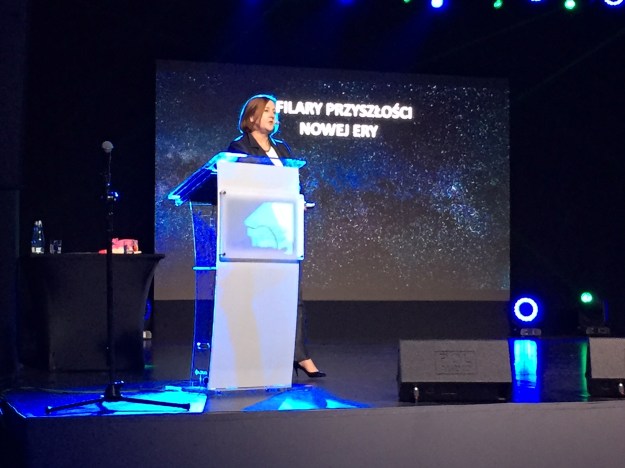
Nowa Era is executing a new strategy to address the legislative changes in Poland. Under these challenging circumstances we still delivered organic growth. Amongst others, the new exam preparation offering was a big success.

At Sanoma Pro, we built a new and digitally skilled team that has developed a multi-channel strategy to drive our transformation in preparation for the new curriculum in 2016 in Finland.

Van In in Belgium once again delivered top line sales growth, driven by a strong performance in primary education (supported by our winning gamified exercise platform, Bingel) and is now building a solution for differentiated learning in secondary education.

At Sanoma Utbildning we took big steps with our digital transformation strategy and are preparing ourselves for the next generation in Sweden.

Looking internationally, Young Digital Planet realised four deals bigger than € 1m in emerging markets, planting seeds the seeds for future growth.

Our focus for 2015

Digital is going to be very important for the future of education in all of our markets. We will invest strongly in new multi-channel offerings and our capabilities (such as the co-development program) to bring them to the market, so that we go a step further in helping teachers to excel as professionals and pupils to get the best possible learning outcomes.

We intend to make use of our reputation as leader in the world’s best performing education systems and a frontrunner on the digital transformation and will strive to establish a partnership with a local player in an emerging market to boost our opportunities for growth.

And last but not least, we intend to stay in robust financial and operational health, by winning in the market and taking care of the costs as we do it.

Respect!

I’m proud of our people at Sanoma Learning! I want to thank you again for your good and hard work and look forward to working together with you this year. Respect!

Looking forward to the digital transformation at Sanoma Learning

The second half of January is an exciting and important part of our annual calendar since there are some key shows which gives us a good opportunity to share the latest developments and discuss them with our customers. There are three things I’d like to share with you from last week which I believe are important for our customers and hence also for our own digital transformation.

Sanoma Pro at #Educa2015 in Helsinki

Our Finnish subsidiary and market leader Sanoma Pro was an exhibitor at Educa2015 last week and announced our latest innovations. The Finnish market is going through a critical period prior to the upcoming major curriculum renewal and we are keen to show leadership in the market through a future-oriented and competitive offering that will help teachers to excel as professionals and pupils to learn. Three innovations in particular were well-received.

Bingel being launched in FinlandFirstly, all of our courses will be available digitally in line with the roll out of the new curricula (2015-2017). Secondly, we will be launching the highly successful gamified learning platform Bingel in Finland later this year. (Check out the video). This platform is currently used by 75% of pupils in primary education in Flanders and on average each pupil has done more than 1000 exercises on Bingel since it was launched. Thirdly, we announced the upcoming launch of our new digital ABC book which we hope and expect will be well-appreciated by pupils, teachers and parents alike. Go Pro!

Young Digital Planet and Sanoma Learning at #BETT2015 in London

Our international subsidiary YDP was once again an exhibitor at BETT in London, the world’s leading learning technology show. Every year their stand is buzzing and this year was no exception. We arranged a breakout session where I spoke about Sanoma Learning’s vision on the digital transformation of education and as a case study Jan Trubac (Agemsoft) and Jan Machaj (Edulab) from Slovakia gave an inspiring presentation about how they are successfully working with YDP in bringing digital learning to Slovakian schools.

J Trubac from Agemsoft explaining how they localise YDP solutions in Slovakia About 70 executives joined us from leading local players across the globe (from South East Asia to South America) and we had an inspiring and engaging discussion. There’s a world of opportunity out there! We’re looking forward to engaging with some of these potential new partners further in working out how we can develop some of these opportunities together. Go YDP!

Malmberg at #NOT2015 in Utrecht

Next week Malmberg will be exhibiting at the gigantic NOT in The Netherlands. This week we announced the results into the research into the impact of our new Early Reading course Lijn 3.

Lijn 3, Early Reading in The NetherlandsThe conclusion of the research was that that the reading performance of pupils using this course were significantly better than the national average. Furthermore, 94% of teachers would recommend Lijn 3 to other teachers and they rated it 8.2/10 on average. I believe this research is highly relevant for two reasons. Firstly, we are now starting to evidence the impact that our courses have on learning, which we have hardly done in the past. Secondly, the impact is very positive, which is great news! Go Malmberg!

I love it when our people are out there with customers, working out how we can help them to make a positive impact. This is what matters. Respect!