Tag Archives: Learning

Paper – where efficacy meets equity

I was excited to read about this $270M Series D round for Canadian-based ubiquitous tutoring solution Paper – where efficacy meets equity.

A thousand blossoms blooming

Bloom’s seminal work on the 2 Sigma Problem, carried out in the early 1980’s is a classic must-read for edtech ventures today. The outcomes of the research are startling, showing that an average student under tutoring performs about two standard deviations above the average performance of a conventional class. 

Or put another way, an average student following a tutoring program outperforms 98% of students in a conventional classroom!

Since then, the private tutoring market has grown significantly, although new regulations in China last year driven by concerns around equity and student well-being did have a significant negative impact on that market. 

Efficacy AND equity

The good thing about the private tutoring market is its efficacy – it raises learner outcomes.  The disadvantage however is that the rich tend to benefit disproportionately, because they can afford it. The resulting inequity can’t be a good design principle for the provision of education.

Since Bloom, the search has been on to provide solutions that yield similar efficacy at scale.  Paper is potentially such a solution.  For a fixed price, Paper sells licenses to schools and districts to make its online tutoring support available to every student, around the clock, with no cap on usage. Students can connect with a trained tutor for homework help, writing feedback and study support across all K-12 subject areas. Teachers at schools can access these sessions, see which students need support, and adjust their instruction accordingly.

I’m enthusiastic about this approach because it enables both efficacy and equity in education. The risk of inequity isn’t completed removed of course because richer schools might be more likely to adopt the solution than poorer.  Yet with most K-12 education systems funded publicly, that risk could be mitigated by policy. A second risk could be increased competition between schools and tutoring companies for teachers.  Yet the deployment of university students and new/re-entrants into the profession could also work to increase the overall talent pool of teachers available.

Looking forward >>

I’m very interested to see how Paper will grow in the coming years and believe there could be international potential for this type of solution.

DeepMind uses AI to understand life.

Life at the molecular level that is.

Last week saw the breakthrough news that Google has essentially solved the protein folding problem with AlphaFold from DeepMind. I was especially interested in this since this was the area of my PhD.

Function follows structure

Proteins carry out a variety of functions from DNA replication to catalysis to structuring the cytoskeleton.  Each protein is built up from a unique sequence formed from 20 different amino acids. Some 200M sequences are currently known, growing by about 30M per year. The chain of amino acids folds into a unique 3D structure.  This structure determines its functionality.

Prediction: the shape of things to come

Some 170,000 protein structures have been determined to date, and DeepMind has used this dataset to create an algorithm which can predict the 3D structure of a protein based only on its sequence of amino acids, to the same level of accuracy as if actually measured using a technique such as X-ray crystallography.  A reasonably sized protein might take as many as 10300 different shapes, so that’s quite a prediction!

This is relevant because understanding the 3D structure of a protein can inform its function and arguably mis-function, thereby potentially accelerating the rational design of interventions such as drugs against disease states for example.  With 200M proteins in scope, the potential for scientific discovery is massive.

Now we can look to Google not only in search of pizza, but also for the elixir of life.

Determined structures

25 years ago I calculated the 3D structure of a protein essentially by hand (serine proteinase human stefin A, see below) – with a simulated annealing protocol using distance and angle constraints obtained from high-resolution Nuclear Magnetic Resonance spectroscopy.  This took 2.5 years! Multiplied by 200M proteins, it would take quite some effort to map the universe of proteins. The task has now been reduced from years to hours!

Family of 17 solution structures showing the backbone atoms of serine proteinase human stefin A. The protein has a well-defined global fold consisting of five anti-parallel β-strands wrapped around a central five-turn α-helix. There are two flexible regions in this structure which are two of the components of the “tripartite wedge” that docks into the active site of the target proteinase. These regions, which are shown to be mobile in solution, are the five N-terminal residues and the second binding loop. In the bound conformation they form a turn and a short helix, respectively.

The Future of Work in Europe: Back to School

Double dose of disruption

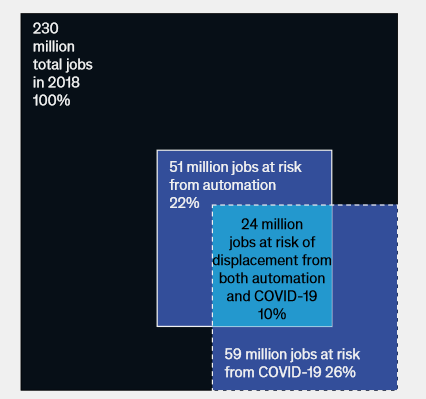
New research from McKinsey suggests that automation and the coronavirus crisis are likely to disrupt many occupations in Europe. They estimate some 51m jobs are at risk due to automation and 59m from COVID-19 to 2030, with a sizeable overlap of 24m jobs exposed to both developments.

Large overlap between jobs at risk from coronavirus crisis short term, and automation long term. @ McKinsey Global Institute

Jobs at risk of being done for

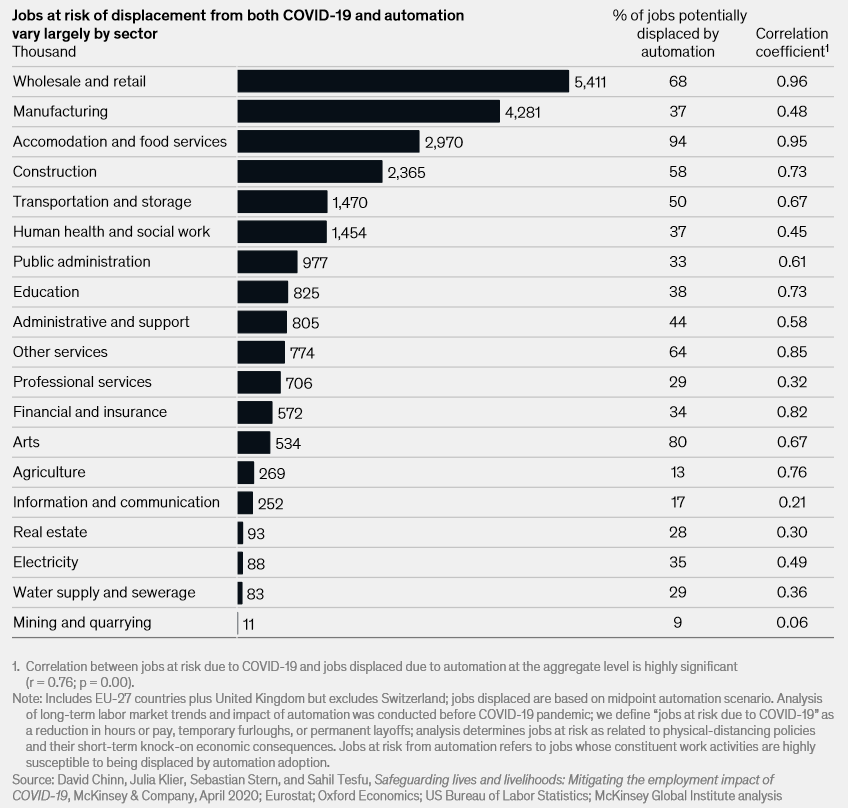
The wholesale & retail, manufacturing, accommodation & food services and construction sectors appear to be particularly exposed, with some 15m jobs at risk.

Jobs at risk by sector @ McKinsey Global Institute

Learn to earn: growth expected in high skills jobs

Some occupations are expected to show significant net job growth in the coming years, with STEM professionals (+4.0m net job growth to 2030), business and legal professionals (+3.9m), health professionals (+2.9m), managers (+2.3m) and education (+2.2m) showing significant potential. These occupations employ a relatively large share of highly educated workers.

Much of the pain is expected to sit in office support, production work and customer service & sales. The great majority of employees in these occupations have not completed tertiary education. 80% of the jobs flagged to be at risk (46m) are carried out by people not holding a tertiary degree.

Europe needs to create more training and career pathways

Education and training have a pivotal role to play in addressing the economic and social impact of this changing job market. Skills are likely to be a key factor in determining recovery from the coronovirus crisis and future prosperity.

Good quality schools, good access to tertiary (particularly STEM) and further education, and the commitment of governments, companies and individuals to ongoing skills development can all contribute to positive employment outcomes.

Re-design for the future

We have rightly seen emergency measures implemented across the World to keep our societies and economies afloat in the midst of the coronavirus crisis. This has come at a huge financial cost. With good reason, the emphasis so far has been to maintain the status quo, to minimise the economic and social chaos.

In the coming period we need to look critically at what the next generation of work will look like and to design interventions that prepare us for that future. This will likely be a job market demanding higher levels of education and skills, and where large numbers of people will need to transition from offices and shops to hospitals and schools for example. How do we organise ourselves for this change?

Best practices

I’m especially interested to learn about initiatives and best practices from institutions preparing for this transformation:

  • organisations that are re-skilling their workforce
  • schools and post-secondary institutions that are adjusting their offerings
  • successful companies that are offering services to close the skills gap
  • new education policies from governments that are intended to enable the transition to new work post-corona.

Feel free to reach out if you know of any great examples!

Looking forward >>

Teachers Want to Go Digital Where it Brings Most Benefits

In the fifth annual Sanoma Learning Impact Framework (SLIF), we decided to focus on the main tasks the teacher performs in her profession. In total 7075 teachers responded to the survey, which was again carried out in all of the markets in which we operate: Belgium, Finland, The Netherlands, Poland and Sweden.

Core activities

The main tasks for teacher are: lesson planning, teaching the whole class, exercising, testing, assessment and giving guidance personally or in small groups. Of course there are other tasks too, such as administrative work and professional development, but these are the most frequently repeated activities.

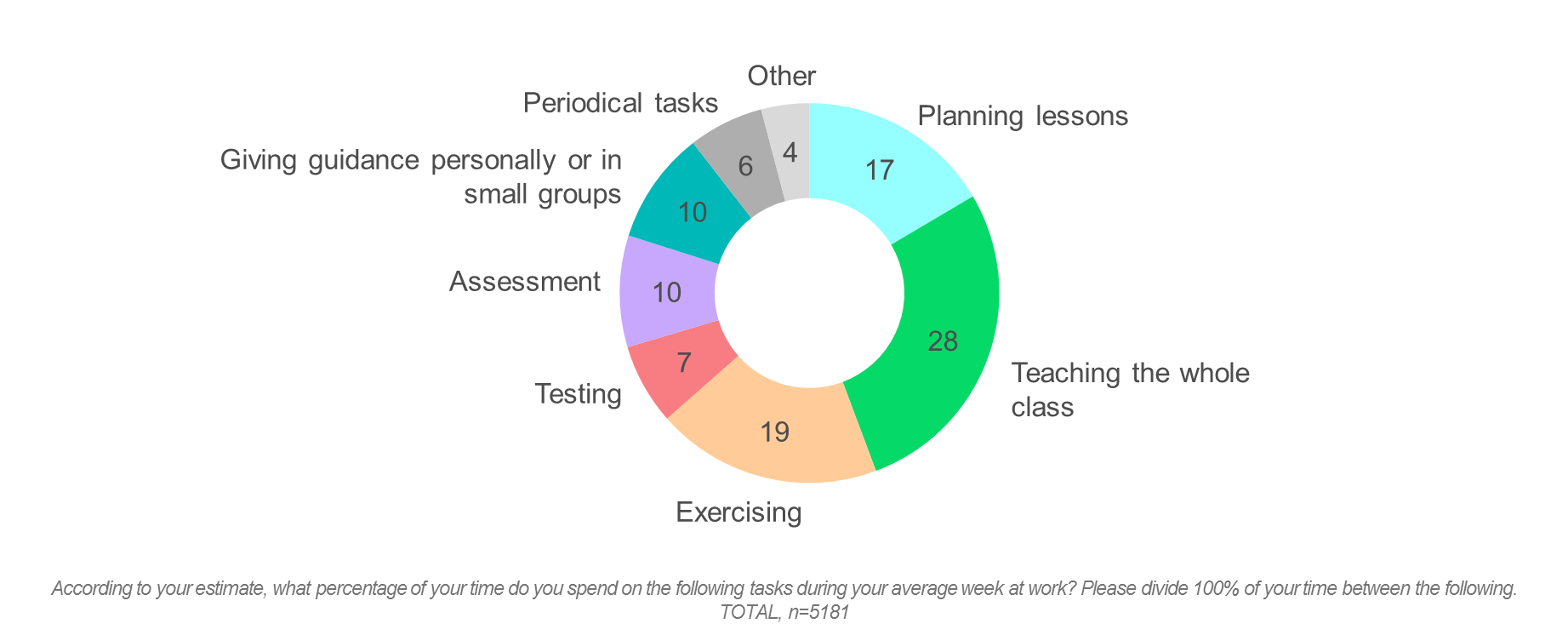
Figure 1 depicts the amount of time teachers estimate they spend on each activity. Teaching the whole study group takes most of the teachers’ time, but still only less than a third.

activities

Figure 1. Percentage of time spent on different tasks

As part of the digital transformation, we are as an educational publisher very interested in whether teachers prefer print or digital materials to support them in their work. Our experience so far is that they value both, and in last year’s SLIF we came to the conclusion that blended learning is the way to go.

As-is/to-be: medium vs activity

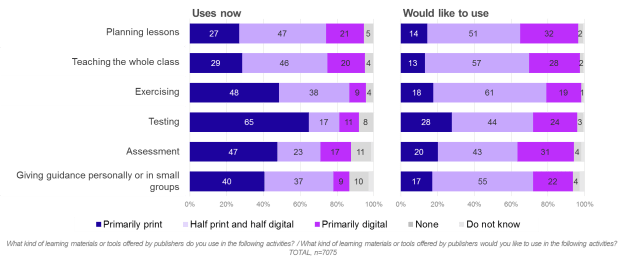
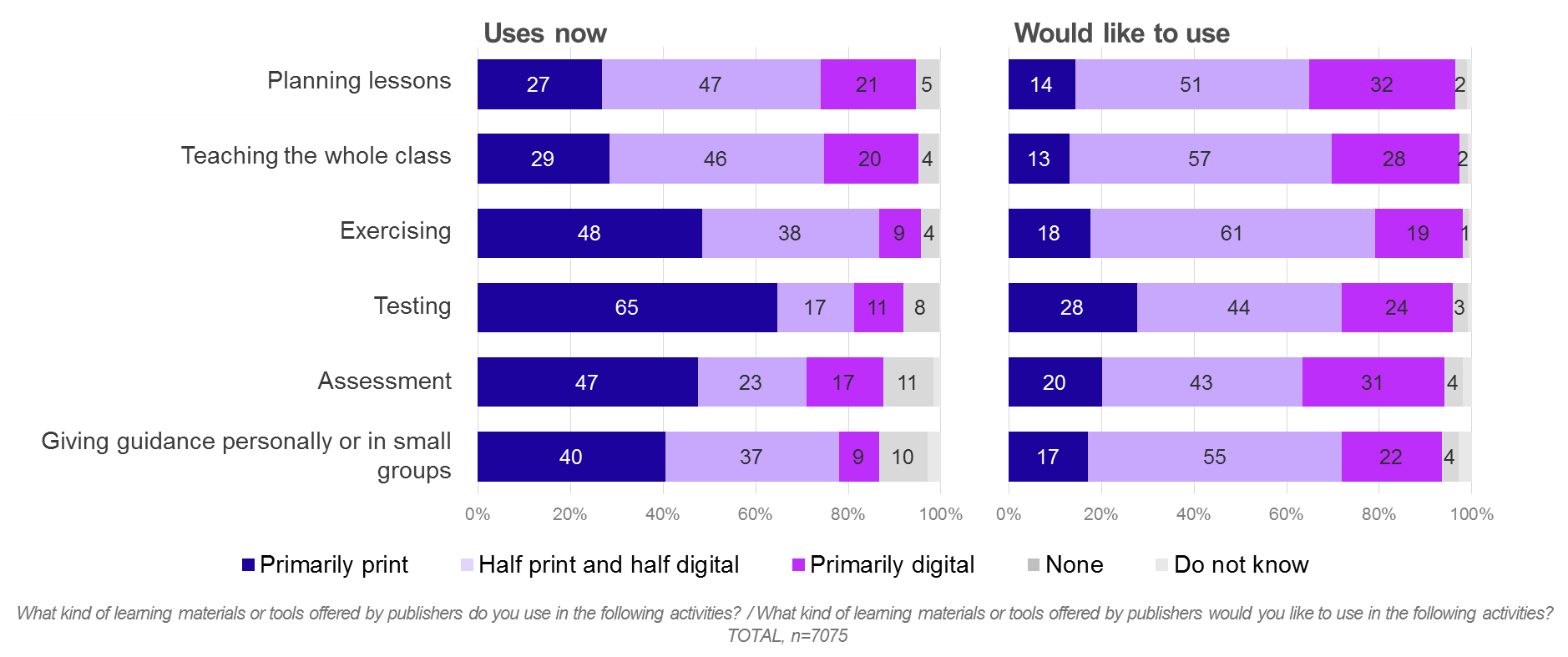
This time we decided to be more specific and map the print vs. digital axis with the activities a teacher carries out. This provided us with revealing results, as depicted in Figure 2.

present_vs_ideal

Figure 2. Materials and tools offered by publishers: Current use vs. Willingness to use

First of all, teachers would like to use more digital materials in all tasks than at present. Secondly, and perhaps more interestingly, the gap between current and desired state is the greatest in tasks where pupils/students have a relatively more active role, namely exercising, testing, and assessment.

Currently 65% of teachers are using printed tests/exams. 28% say they use half & half or primarily digital tests/exams. Contrasting this with the desired state is staggering and the percentages get flipped: only 28% would like to use primarily print and 68% half or primarily digital. A similar phenomenon can be seen in exercising and assessment.

Digital where it makes most impact

What to make of this? We think the answer is simple. Both exercising and testing generate a lot of new content and insights for the teacher to go through. This makes assessment time-consuming for the teacher. With both questions and answers in a digital form, time is saved, insights are increased and pupil/student engagement is enhanced. Teachers are selectively looking to use digital for maximum impact.

Santtu Toivonen, Lead Insight Manager, Sanoma Pro

John Martin, CEO, Sanoma Learning

Scaling European Edtech

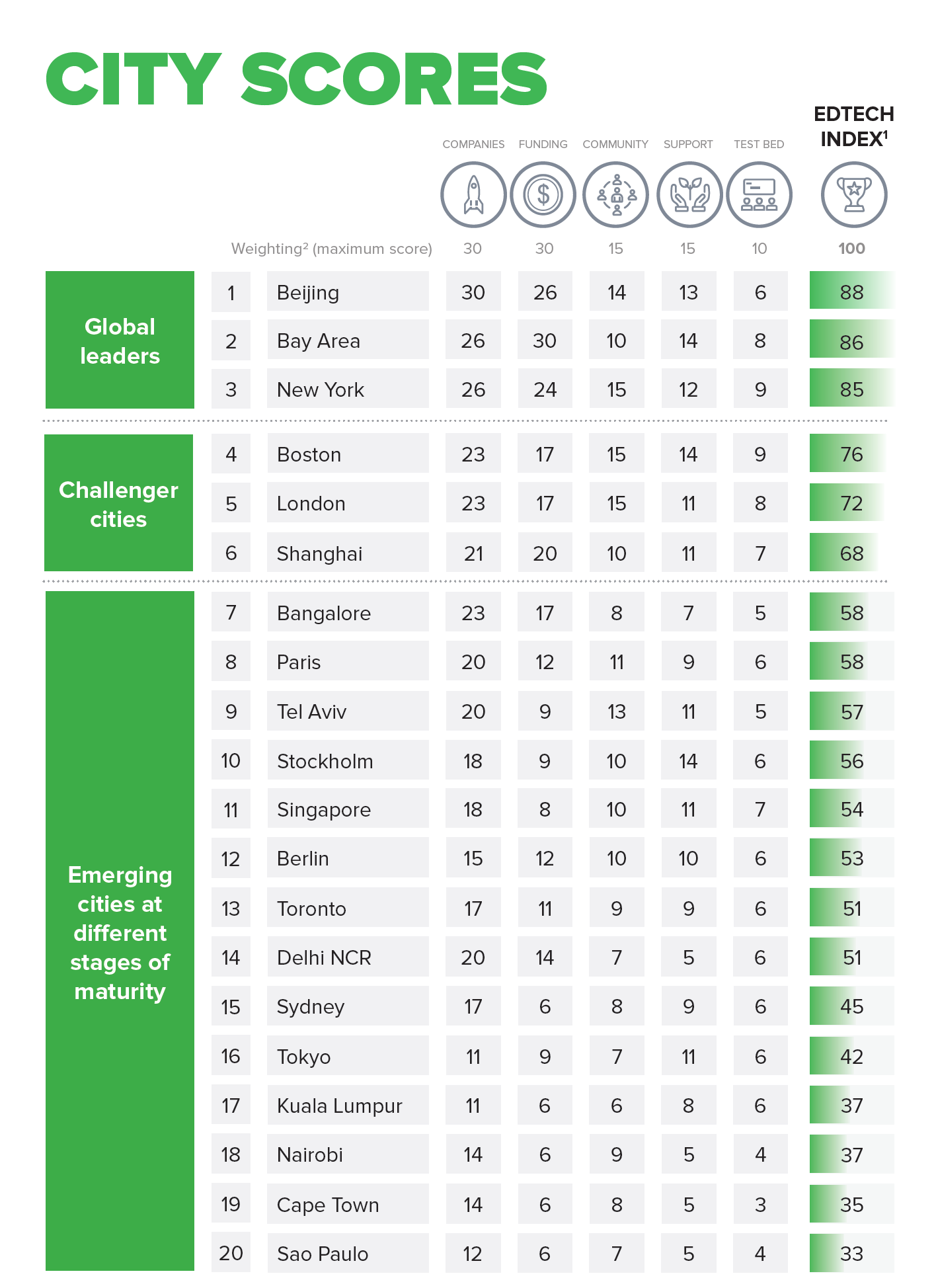
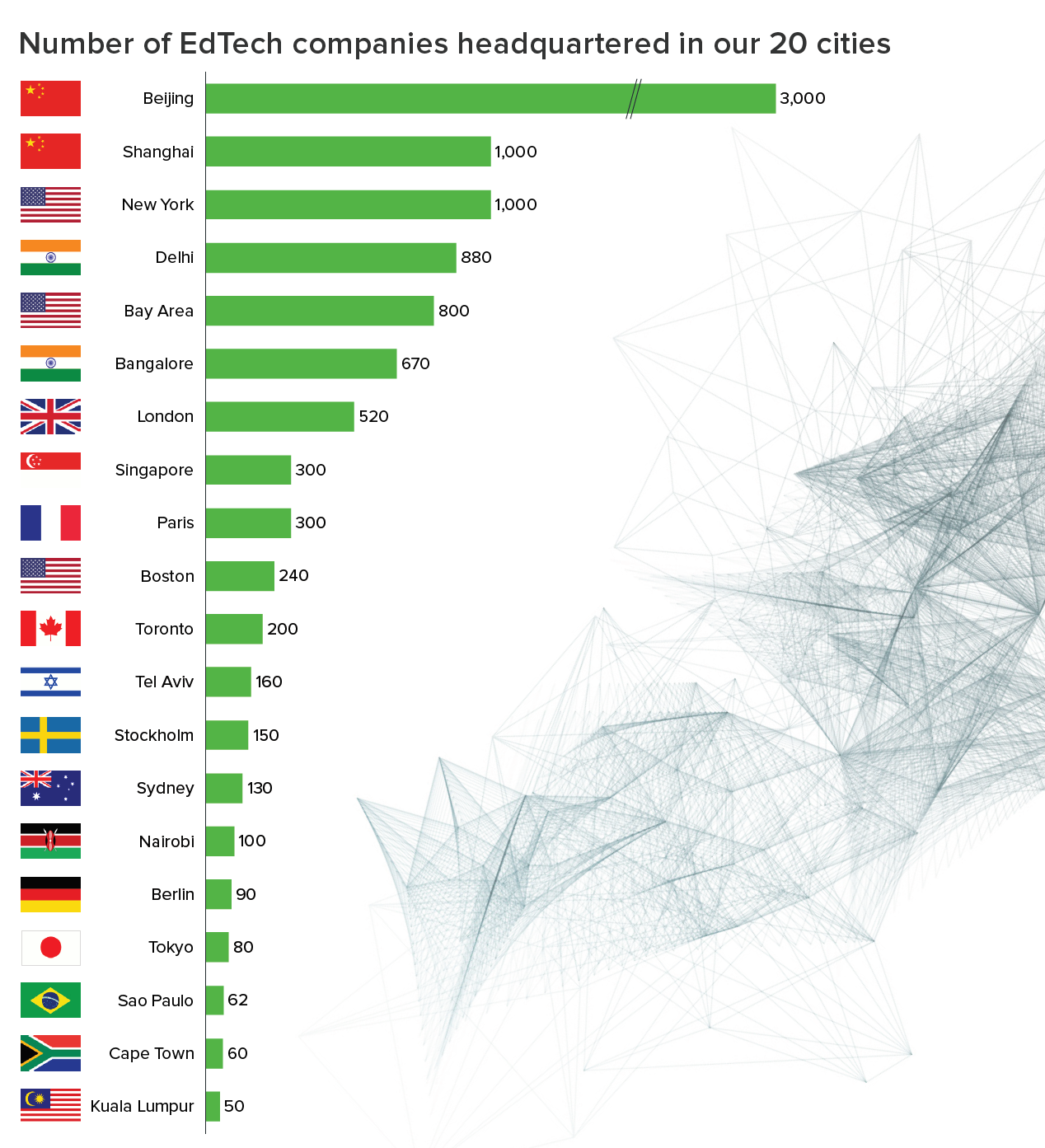
I recently came across this interesting report from Navitas Ventures – Global Edtech Ecosystems 1.0: Connecting the World of Education Technology.  Navitas analysed 20 cities with leading edtech ecosystems representing about 40% of global edtech.  Beijing, the Bay Area and New York are top of the class, with Boston, London and Shanghai challenging.  They also assessed a further 14 emerging ecosystems at different states of maturity.  It’s clear that edtech is thriving across the globe!

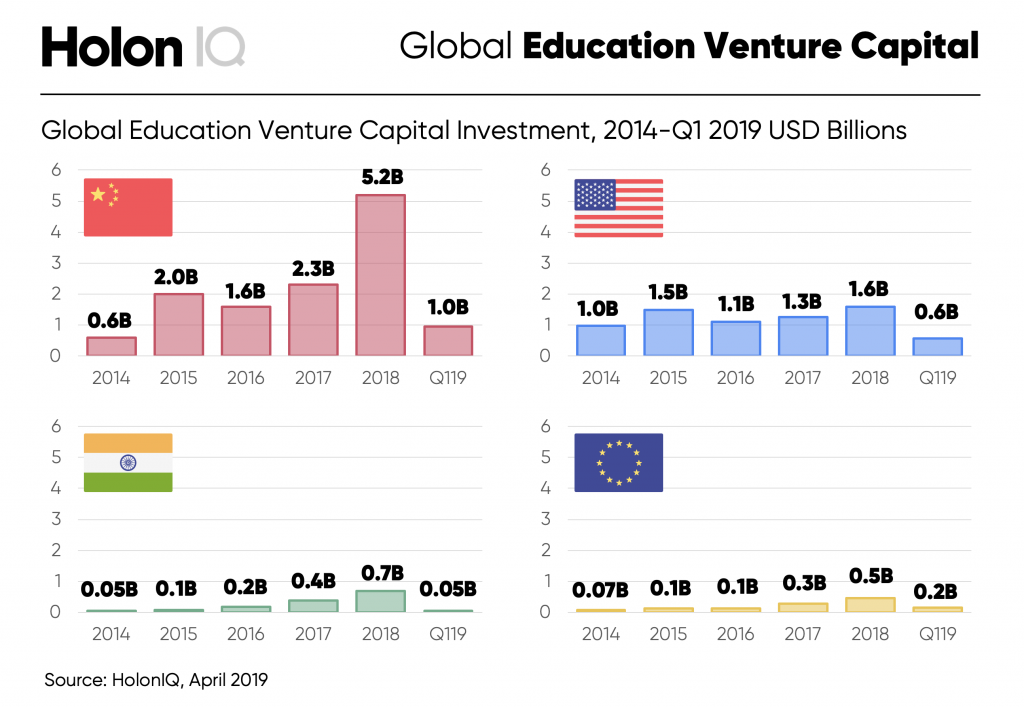
Scale is essential to success in digital and you can see that in edtech too, with the predominance of China and the USA.  In addition, given the demography and emerging status of the edtech ecosystems in India and Sub-Saharan Africa, it’s likely that together these four regions will give birth to a generation of edtech giants.  Edtech could significantly improve the life chances of hundreds of millions of people in these regions by increasing access, participation and engagement in education.  It’s a powerful promise!

HolonIQ

Source: HolonIQ

What about Europe?

Europe has some natural advantages in the edtech space.  We are home to many world-class education systems such as Finland. There’s a rich start-up scene in a number of European cities with London leading (but will Brexit make us BETT-sick?). Paris, Stockholm, Berlin, Helsinki and Amsterdam are vibrant and promising too, in fact there are more than 3000 edtech ventures across Europe today. Furthermore, there is significant and reliable spending on education through governments and ready access to venture and growth funding privately.

However, we lack scale

A lack of scale probably results in us under-serving our own customers.  It restricts our ability to expand to international markets. And it potentially exposes us to competitors grown in the big markets.  A lack of scale is restricting our potential.

European Champions

To address this, I think we need to create a European edtech network with strong go-to-market capabilities so we can effectively scale successful concepts across the continent.  I believe this network would be well served if it includes a handful of Champions to acts as magnets to talent, ideas and capital.

Learning organisation

I am interested in your ideas about how we could bring more scale to European edtech and what you think about the idea of building a European network with Champions.  How could we make that happen?  I’m also curious to learn from some of the challenger and emerging edtech ecosystems: how are they approaching this, what’s working and what’s not?  Learning is in our DNA, we need to put those skills to work if we are to bring this potential to life.

Strongest result in our history so far at Sanoma Learning

We always win

Last week Sanoma announced the financial results for 2018, which were very good with improved operational profits across all three divisions.

“Best result ever at Sanoma Learning”

For Sanoma Learning this was the best result in our history so far, with profitability increasing by 10% from € 55.6M in 2017 to € 61.2M in 2018.  This very much helps to underpin the major investments we are making in the digital transformation.

“Win locally”

I’m especially proud that a large part of this very good performance came from gains in market share in many of our countries, demonstrating that our learning materials are appreciated by teachers and pupils and that we are competitive in the market. Our Learning Impact survey showed that teachers believe our solutions support them in reaching their learning objectives (92%), enable them in their workflow (87%) and help in student engagement (83%). This really highlights the important work we are doing in enabling teachers in developing the talents of our children.

“Working together across borders”

A second driver of the good results in 2018 was the High Five program where we are working together on investing in the next generation of Sanoma Learning, and funding that journey by creating leaner processes on a number of back-office activities. This gave a solid underpinning to the results in 2018, and we will see further benefits in 2019.

“New growth through acquisitions”

In addition we announced at the end of 2018 our intention to acquire Iddink Group which  will increase the size of Sanoma Learning by about half going forward.  Iddink will help us to accelerate the digital transformation of secondary education in The Netherlands, will extend our role in Belgium and will bring us a new position and new opportunities in Spain. During the course of 2019 we expect to become the owner of Iddink.

Thank you!

I very much want to thank the teachers and pupils who work with our courses for your trust in us. I would also like to thank our teams for the good work in 2018. I know we asked a lot of you and I appreciate the important work we did together.   This has truly been a team effort!

Looking forward >>

We have a big year ahead of us not least with the launch of new platform Kampus in Finland and Sweden, Bingel in The Netherlands, new reforms in Upper Secondary Education in Poland and other reforms in Belgium.  We will be working hard to progress the High Five Program. And we expect to finalize the transaction with Iddink and further develop the business.

We have a strong plan for the coming years and are highly committed to making a positive impact on learning and teaching.  Looking forward >>

Creating a European Champion in Learning

CMD cover

We’re an ambitious company and we are working on building a European Champion in Learning.

Last week we held our annual Capital Markets Day event in Helsinki – which is a good chance for us to share our plans with the investment community.  It was a positive day.  The team was in good spirits and there were lots of great questions from the participants.

I talked about our approach to building a European Champion. Check out the video of the session here.

Our starting point is strong: we serve 10m pupils and 1m teachers in some of the world’s best and most advanced education systems.  We’re a front runner on the digital transformation and have a strong financial performance and track record.  We have a solid plan and believe we can add even more value for our customers in the future.

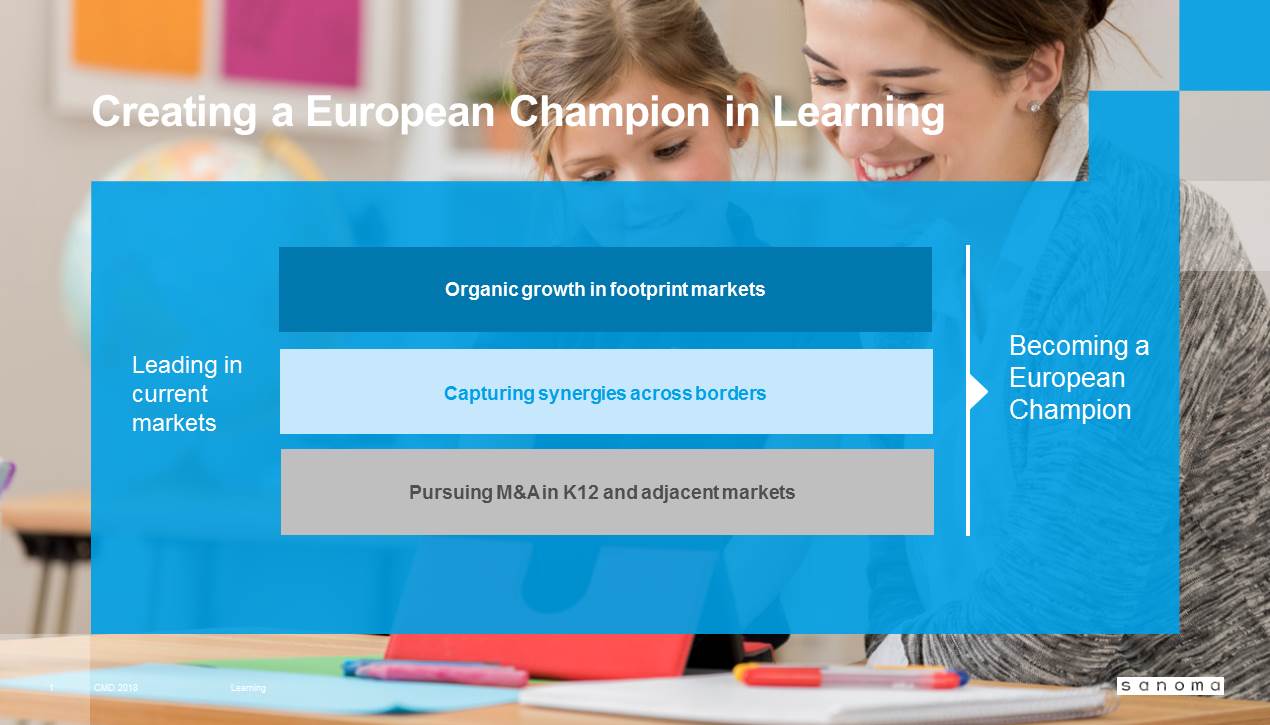
We have a three pillar strategy to build this European Champion:

  • Win in local markets, by serving our customers well
  • Work together across borders to create one integrated company
  • Make selective acquisitions in current and new learning markets

We’re really excited about the opportunities for the business and our team is going for it!

I’m interested to hear your views and if you see opportunities that you think we should be developing too.

CMD strategy


Winning Spirit of Nowa Era at 25

Magda

MD of Nowa Era Magda Walczak inspiring the team at the event

Last week we celebrated the 25th anniversary of Nowa Era.  It was really fantastic to be there together with the team, especially in such an exceptional year!

Past to Present

25 years ago it would have been almost impossible to imagine the success that Nowa Era has become today.  I wonder in those early days whether Mariusz and Magda even dreamed

  • We would become the market leader
  • Serving nearly every school in the country in some way
  • With such an outstanding quality of offering.

Present to Future

If you think what the team has achieved in the last 25 years – just imagine the next 25!

The key to the success of Nowa Era is our people

  • Who are doing extremely important work in enabling high quality education
  • In talented and hard-working teams
  • And striving to do it to the very best of their ability.

Spirit of Nowa Era

I call this the “winning spirit of Nowa Era“. I believe it will help us to make the next 25 years even more successful than the first 25.

With respect and appreciation

With respect and appreciation I would like to thank the teams for their commitment and outstanding achievements.  We are extremely proud of you.

Five Reasons Why Blended Learning is an Ongoing Success in Finland


This week I joined the education event Dare to Learn in Helsinki with colleagues from Sanoma Pro. With 3000 participants from over 20 countries it was well organised and people were in a positive spirit. Thanks to the organisers for having done a great job!

Finland has a world-class education system with several factors underpinning the success including skilled and respected teachers, high levels of equity and trust in the system and an holistic view to the development of children. Education professionals from around the globe are interested to learn about the Finnish ways.

I think that blended learning is an enabler of excellence in Finnish education and gave a keynote talk on this topic, with the headlines:

1.   Blended learning plays to the natural strengths of the local education system, enabling the excellent teachers, taking advantage of the high quality curricula and materials and putting to work the technology available in schools and homes.

2.   Blended learning models are practical and flexible as schools transform to a more digital future. Our research indicates that teachers are increasingly ready and willing for the digital transformation. We’re also witnessing the emergence of new pedagogies such as phenomenon-based learning, and blended solutions can be very helpful enablers of these new pedagogies.

3.   Blended learning supercharges great teachers (and there are many of them in Finland). A Sanoma Learning solution typically saves a teacher about 8 hours of working time each week – time which can be channelled into individual attention to pupils. And with dashboards and personalised learning pathways, teachers have excellent insights and tools to guide interventions.

4.   Blended learning motivates and engages pupils in their learning endeavours. Our learning impact surveys have indicated that 95% of teachers typically report that integrated learning methods help them to engage pupils with learning. Some like printed books while others prefer online materials. Nowadays boys often lag behind girls in learning. Our analytics indicate that gamified solutions integrated into the approach such as bingel are especially motivating for boys, providing a way to bridge this gap.

5.   Blended learning supports pupils’ achievement and outcomes. Blended learning is a step towards personalized learning, which takes pupils’ personal achievement level and preferences into account. In our surveys, 85% of teachers have reported that such solutions help the pupils to achieve their curriculum goals.

 By applying blended learning methods and techniques, Finland can stay on top of its game in education. Teachers can make the most of their teaching and pupils stay motivated, which helps them to achieve their learning goals.

* Blended learning is mix of various event-based activities, including face-to-face classrooms, e-learning and self-paced learning.

The Chinese are coming to a school near you


Last week we visited China with a small team to learn more about their education system. The timing was good with today’s announcement of the results of the latest PISA survey,  with the Chinese regions once again performing very well.

china

Amongst others we visited a variety of successful private and state-owned enterprises as well as a government department of education and – best of all – a primary school. It was an inspiring experience and we were greeted warmly and had open discussions everywhere we went.

The primary school felt very similar to those in our home countries, although the class sizes were twice as big at 50 rather than 25 students.  We sometimes have the impression of Chinese children doing heavy duty rote learning, but I was struck by the emphasis on meaning, aspiration and happiness in the school we visited.  Teachers were experimenting with project-based learning and digital, not dissimilar to recent innovations in Finland.

The companies we visited were all proud to present what they were working on, very open to answer questions and to curious to learn about us too.  Finnish education was well respected.  The tech companies looked and felt very similar to those in Silicon Valley but somehow seemed even more keenly commercial.

The government clearly has a big voice in education, with central government setting overall policy through the five year plan and the local authority we visited was actively working to understand and improve school performance across the region, driven by quite a rich set of data.

It made me wonder:

“is China going to lead the next wave of breakthrough innovations in education and learning?”

The scale of the market, commitment of the key players and innovative potential of the ecosystem  create a compelling case.

Scale

With a population of over 1.3 bn inhabitants and about 200 m students in K-12 education this is a huge market.  Each year about 17 m new students join the system, with this number likely to get boosted by up to 6 m each year due to the recent move to a “two-child” policy.

Commitment

The government is highly committed to education and the 13th 5-year plan (2016-2020) focuses on improving quality and access, with a key role for digital. Significant new resourcing is being dedicated to the transformation. At the same time, private spending on education is huge, estimated to be of the order of 1/3 of average household disposable income, driven by the “six adults – one child” phenomenon resulting from the earlier “one child” policy. The commitment to education in China seems unrivalled on the global stage.

Innovative potential

The companies and organisations we met had high quality management and development capabilities at least comparable with what we have seen in the West. There seems to be a “learning culture”, with people keen to try new things and work hard at it. There is everything to win. The transformation need is clearly articulated and well-funded.  Authorities and companies are building large networks of users and rich databases.  Surely the insights that will come from this ecosystem about learning on all levels (individual, class, school, region, nation) will power innovation in education and learning?

China: coming to a school near you

All-in-all I think it’s highly likely that China will become a powerhouse of innovation in education in the coming years – and that our education systems will also benefit from Chinese innovations in education.  Also, given the growing global importance of China, how long will it be before Mandarin is a common second language in our curricula?  One way or another, the Chinese are coming to a school near you pretty soon.